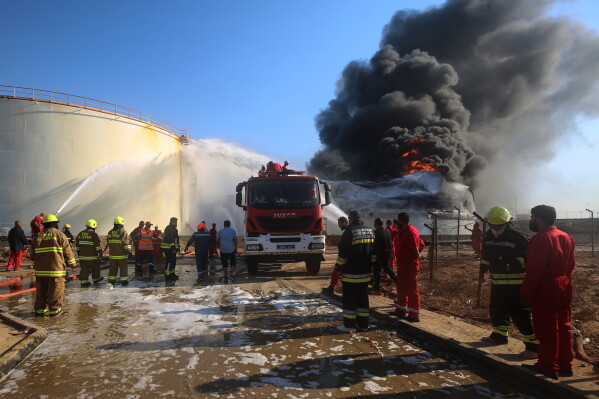
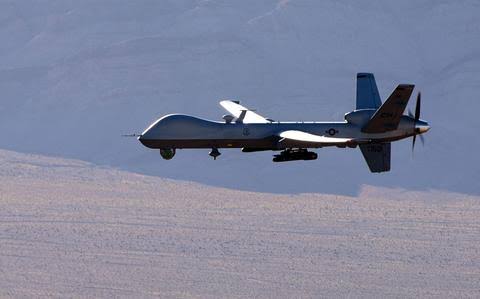
The small suicide drone that burned Zawiya’s refinery in August did not arrive in Libya that month. It was assembled there, in stages, over three years, by militias that bought counter-drone jammers before they had drones worth jamming, then built the drones anyway, then re-engineered them to beat the jammers they themselves had helped bring into the country. Read as a single summer of chaos, the campaign against Zawiya’s oil and power infrastructure looks like an unexplained escalation. Read as the fourth stage of a nearly three-year process, it looks like the predictable output of an arms race that Libyan militias have been running against each other since early 2024.
Four things follow from that reading, and each cuts against the version of events that dominated international coverage this summer. The technology did not appear in 2026; it was visible, and documented by Libyan researchers, from 2024 onward. It was not, in the main, delivered from Ukraine; it was bought piece by piece from ordinary commercial suppliers and assembled in Libya. It was not confined to Zawiya; it has been used by rival militias against each other in Tripoli and along the western coastal strip for well over a year. And the fibre-optic cable that made this summer’s drones especially dangerous was not a foreign upgrade handed to one side. It was the answer to a jamming problem that Libyan armed groups created for themselves.
A Weapon Built Over Three Years, Not Delivered in One Summer
The record starts with a defensive purchase, not an offensive one. In early 2024, Spanish police opened an investigation into a Moroccan businessman resident in Spain, Mohamed Rachad Andaloussi Ouriaghli, over the shipment of equipment worth more than two million euros from the Madrid firm Star Defense Logistics and Engineering to RADA, the Tripoli militia that controls Mitiga airport. According to reporting on the case highlighted by the Libya analyst Jalel Harchaoui and reported by the Spanish paper El Español, the shipment included both thermal-imaging reconnaissance drones and counter-drone jamming systems, sought in anticipation that rival Tripoli factions would eventually field their own small drones against RADA’s positions. RADA was arming itself against a threat that, in 2024, barely existed.
The threat, however, would emerge within a year. On 14 May 2025, in the middle of a week of citywide fighting in Tripoli following the assassination of Stability Support Apparatus commander Abdul Ghani al-Kikli, Libyan open-source researcher Mohamed Tailamun documented what he described as the first visual confirmation of a 3D-printed FPV drone in action in Libya, at the Ain Zara intersection in southern Tripoli. He called it a mass-produced weapon system and warned of the danger it posed to diplomatic and civilian sites. Photographs published days later by Libya’s Interior Ministry, showing an FPV airframe strapped to a live rocket-propelled grenade warhead with a contact-wire fuse, confirmed that the design had already moved from experiment to field use, with some units malfunctioning in the process.
By November 2025, Harchaoui was describing a broader pattern rather than an isolated sighting: armed factions in both Tripoli and Benghazi were accumulating military hardware, he wrote, and factions in western Libya in particular were buying electronic warfare systems to go with it. The fibre-optic variant, the one that would matter most eight months later, was first logged in the western region in May 2026, roughly a year after the Ain Zara sighting. On 8 May 2026, according to the conflict-monitoring organization ACLED, forces loyal to Mohamed Bahroun and forces loyal to Muhammad Kashlaf employed the same type of small drones in fighting in the areas surrounding the oil refinery.
ACLED recorded more than thirty armed clashes in Zawiya in 2026 before the August campaign began. What is often described as a sudden new small drone phenomenon was, by the time it hit international headlines, was technology that had being used in Libya for over two years.
Homegrown Hardware, Not a Shipment from Kyiv
The instinct to explain a sophisticated weapon by pointing to a sophisticated foreign sponsor is understandable, and it is not baseless: Ukrainian drone specialists have been present in western Libya since at least October 2025, operating from sites in Misrata, Tripoli and Zawiya under an agreement with the Tripoli government aimed at countering Russian shipping, and Ukrainian operators are credibly linked to at least one strike on a Russian tanker off the Libyan coast. When RFI reported in mid-August that the drones used against Zawiya’s refinery matched Ukrainian fibre-optic designs, it was drawing a line between two things that were both real. But it was the line itself that Libyan open-source researchers disputed.
Sami Zaptia of the Libya Herald set out the two readings of the same forensic photographs on 12 August. One camp read the sophistication of the wreckage as proof of a state-to-state import channel, and pointed, without evidence, at Defense Undersecretary Abdelsalam al-Zoubi. The other camp looked at the same fragments and saw commercially available components, assembled in Libya, with a mortar or RPG warhead fixed to the frame with tape and zip ties rather than fitted at a factory. Tailamun’s two years of documentation support the second reading in detail: young Libyans skilled in 3D printing and online shopping being recruited by armed groups; airframes, motors and flight controllers circulating openly on Facebook; and, crucially, fibre-optic control kits themselves available over the counter from commercial suppliers such as Alibaba, in spools sold for five kilometers to thirty kilometers of range at prices from roughly sixty to four hundred dollars, shippable to Libya by anyone with a payment card.
That last point collapses the assumption the theory of Ukrainian involvement depends on. A fibre-optic tether implied a state supplier only as long as the technology was scarce and specialized. By 2026 it was a retail product. The most concrete evidence of local assembly is the year-long gap in the record itself: Libyan militias were flying 3D-printed FPV drones with RF control links in May 2025, adapted the design to fibre optic control roughly a year later, and only then, in August 2026, used that upgraded design against Zawiya’s refinery. A shipment from Kyiv would not need a year of visible domestic iteration in between.
A War Fought City by City
The campaign against Zawiya’s oil and power infrastructure in August and September was the most damaging use of these weapons to date, but not the first, and not confined to one place. Small armed drones have now been documented in inter-militia combat across the length of Libya’s western coastal strip. The Ain Zara sighting in May 2025 came out of fighting inside Tripoli itself, in the same week that the 444th Brigade, RADA and the Stability Support Apparatus fought for control of the capital following Kikli’s killing. Zawiya has effectively hosted a running low-intensity drone war since at least February 2024, when the 103rd Battalion first clashed with forces loyal to Kashlaf; that rivalry resurfaced with drones involved on 8 May 2026, and again catastrophically from 4 August 2026, when the same battalion, now under Othman al-Lahab, fought Bahroun’s First Support Division after a drone strike killed at least five of al-Lahab’s men.
The fighting has not respected municipal boundaries. The 4 August clash spread immediately into neighboring Surman, closing the coastal motorway to Tunisia. By early September the same technology had reached Tripoli itself in a different form, with a drone striking Brega’s Airport Road fuel depot on 3 September and fibre-optic remnants found at the company’s Janzour depot the following day. Gharyan, further south, has been a recurring flashpoint in the same broader contest among western militias since at least February 2024, when the Stabilization Support Apparatus’s local branch seized a Defense Ministry compound there; it has not yet been drawn into the drone war specifically, but it sits inside the same militia network that has fielded drones everywhere else. What began as a single incident at a single Tripoli intersection is now a capability that any faction with an internet connection and a grievance can deploy anywhere along that strip.
Why Fibre Optic: The Jammer Race That Produced an Unjammable Drone
The shift to fibre-optic control is not a mystery once the sequence of purchases is laid out in order, and it is not primarily a story about Ukraine or China. It is a story about jamming. Radio-controlled FPV drones, the type documented at Ain Zara in 2025, are vulnerable to electronic warfare equipment that disrupts the radio link between the pilot and the aircraft, and RADA had already bought exactly that kind of equipment in 2024 to defend Mitiga airport. In November 2025 Harchaoui’s described a broader pattern of the same hardware purchases across western Libyan factions: as one side bought drones, the other bought jammers, and vice versa.
A fibre-optic drone defeats that entire category of defense by design. Because the aircraft is physically tethered to its operator by a length of optical cable rather than controlled over radio, there is no wireless signal for a jammer to disrupt; industry analysts covering the Ukraine war, where the same shift took place roughly two years earlier for the same reason, describe fibre-optic control as effectively immune to the jamming and spoofing equipment that stops every RF-controlled drone. Once Libyan militias on both sides of Zawiya’s rivalries had bought or built jammers, a radio-controlled FPV drone became a weapon that could be defeated by the target it was aimed at. A tethered drone could not be. Harchaoui made the connection explicit in his own analysis of the Zawiya strikes, describing the Chinese-origin fibre-optic drones spreading across greater Tripoli as impervious to the jamming signals emitted by standard electronic warfare equipment already in militia hands.
Seen this way, the fibre-optic cable dangling from the wreckage photographed at Zawiya in August is not evidence of a foreign patron. It is the technically obvious next move for any local group that had watched its own jammers, or its rival’s jammers, take down a radio-controlled drone once too often. The 2024 purchase of jamming equipment and the 2026 purchase of fibre-optic control kits are two ends of the same local arms race, separated by two years and joined by ordinary commercial supply chains rather than by a state sponsor on either side.
Conclusion
None of this rules out a foreign hand in any individual incident, and RFI’s reporting on a documented Ukrainian presence in western Libya deserves to be taken seriously rather than dismissed. But the broader claim that Libya’s small suicide drones are imported weapons in 2026 does not survive contact with the three-year record. RADA was buying jammers in 2024 against a threat that had not yet materialized. Tailamun was photographing homemade FPV airframes strapped to RPG warheads in Tripoli in May 2025. Harchaoui was warning of an electronic-warfare buildup across western Libya’s factions in November 2025, a full nine months before Zawiya burned. And the fibre-optic drones that eventually did the damage were first logged in the west in May 2026, the direct and locally explicable answer to the jammers that had been accumulating for two years already.
What Libya built between 2024 and 2026 is not a single weapon but a capability: cheap, commercially sourced, field-assembled, and now in the hands of every serious militia along the western coast, from Tripoli to Surman. The country did not need Kyiv to supply it. It needed Alibaba, a 3D printer, a mortar shell, and two years of watching its own rival factions arm themselves against each other, one jammer and one tethered drone at a time.