Libya Security Institutions Face Fragmentation
Libya enters 2026 with a security landscape more stable than at any time since 2014, yet also more structurally fragmented. Forces across the country operate with predictable patterns, key cities maintain coherent security arrangements, and major infrastructure from ports to airports, functions under identifiable chains of responsibility. But beneath this surface-level order lies an increasingly complex reality: Libya security institutions are diverging, not converging. The east and west are governed by two distinct security doctrines, shaped by different partners, political leadership, and institutional logics.
The question facing Libya today is whether its fragmented forces can develop shared procedures, coordination mechanisms, and institutional discipline that gradually move toward a unified doctrine, even without political unification.
Libya Security Institutions: Diverging Doctrines in East and West
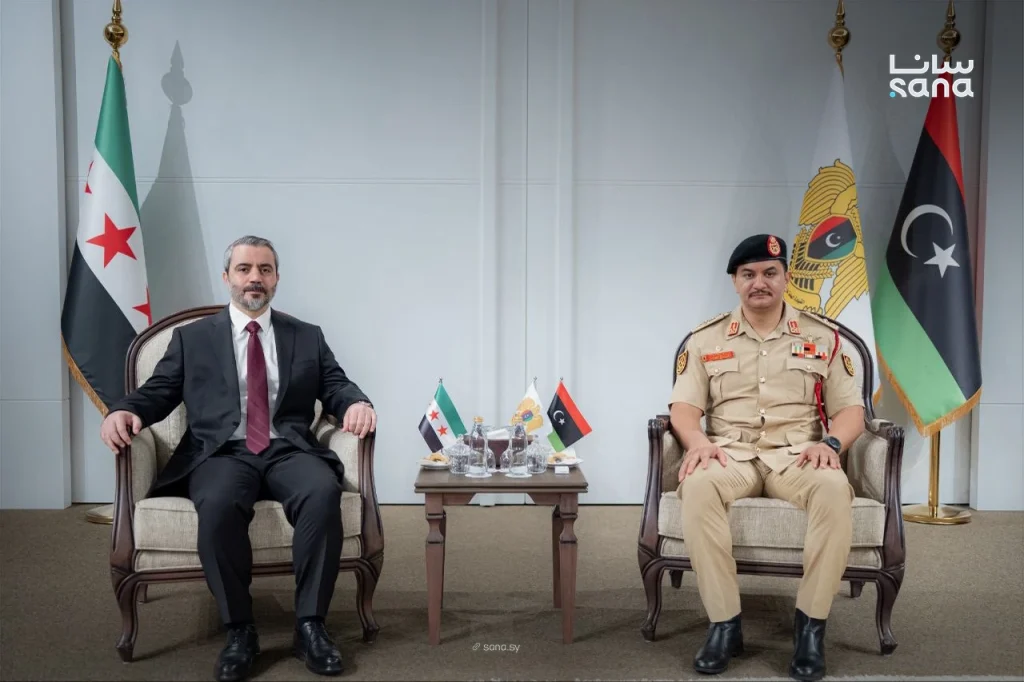
Over the last decade, two security ecosystems have crystallized. In western Libya, security is defined by a “distributed command” environment—networked security directorates, auxiliary forces, stabilization units, and specialized policing bodies. The east, by contrast, revolves around the centralized Libyan Arab Armed Forces (LAAF).
These competing doctrines are shaping operational culture. Officers learn different procedures, adopt different rules of engagement, and operate with distinct understandings of authority. Incompatible training pipelines and operational norms create long-term structural barriers to unification.
Hybrid Security: Localized Authority within Security Institutions
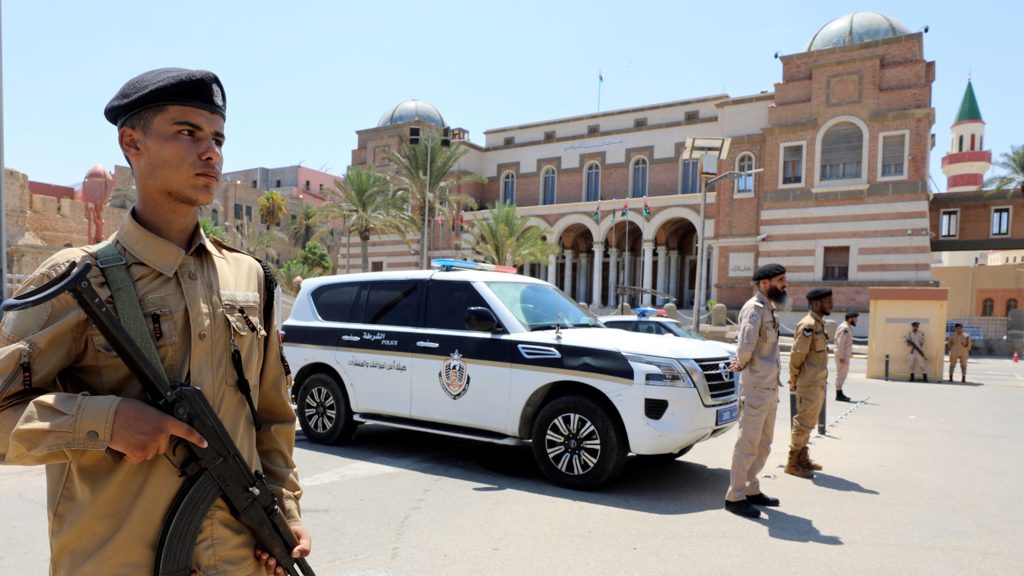
Despite divergence, Libya has developed a hybrid security system that underpins the relative calm of 2023–2025. In Tripoli, Misrata, Benghazi, and Sabha, municipal authorities play increasingly important roles in shaping local security. Auxiliary forces operate as de facto extensions of the state, securing airports, protecting ministries, conducting counter-smuggling operations, and responding to emergencies.
This hybrid system stabilizes daily life, but forces with semi-autonomous authority can complicate future unification. While hybrid structures reduce violence today, they threaten institutional coherence tomorrow. Libya security institutions now rest on arrangements that enable and constrain state-building simultaneously.
The Economics of Fragmentation within Security Institutions
Fragmentation is reinforced economically. Armed actors embedded in revenue-generating ecosystems, from port oversight to customs and municipal contracts have less incentive to integrate into a centralized framework. Local actors providing predictable security are often preferred to distant authorities. Over time, these revenue flows create economic incentives that preserve fragmentation and shape the incentives of those controlling coercive power.
International Assistance and Libya Security Institutions
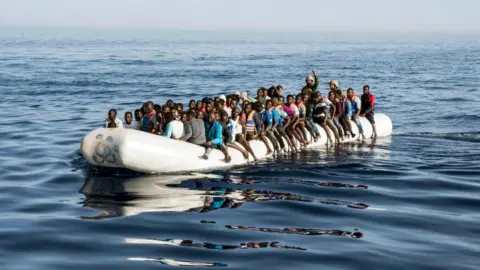
Libya receives support from multiple international partners. Italy focuses on migration and coastal security, the EU on border management and police reform, Turkey on training western-aligned units, and France on counterterrorism. However, this assistance lacks a unified framework. Different units train under different doctrines, reinforcing divergence.
Coordination programs, joint command centers, data-sharing standards, and border surveillance initiatives could help establish shared operational habits, strengthening Libya security institutions without requiring political unification.
Paths Toward a Unified National Doctrine
Practical cooperation can bridge fragmentation. Initiatives include:
- Bottom-up standardization of policing procedures, training curricula, and evidence-handling protocols.
- Joint command centers for critical infrastructure such as ports, airports, and power plants.
- A National Security White Paper to define strategic priorities and institutional reforms.
- A “security compact” outlining shared operational standards, joint missions, and reporting structures.
Even without political unity, these steps create a framework for convergence and cooperation among Libya security institutions.
Scenarios for the Future
Libya’s trajectory over the next three years may follow three paths:
- Gradual Convergence: Municipal coordination deepens, joint command centers function, and technical cooperation grows—building shared operational habits.
- Managed Fragmentation: East and west maintain separate doctrines, yet violence remains limited and institutions functional.
- Renewed Polarization: Competition over revenue, shifts in external alliances, or economic shocks could destabilize the hybrid system.
The outcome will depend on armed actors’ incentives, external support coherence, and the ability of institutions, not politicians to develop common operational frameworks.
Institutions, Not Politics, Will Define Libya’s Security Future
Libya’s political track may be stalled, but institutional evolution continues. Libya security institutions are developing operational routines and governance relationships that shape stability more profoundly than national dialogues or international summits.
If these institutions unify procedures, coordinate command structures, and build shared operational frameworks, a national doctrine is possible even without political unity. Otherwise, Libya risks formalizing its fragmentation into permanent parallel structures.