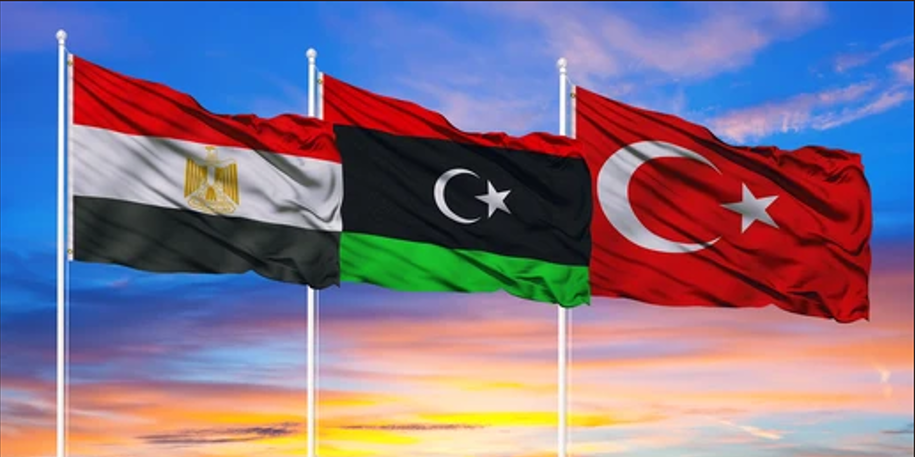
Recent diplomatic consultations between Egypt and Turkey in Cairo have once again drawn attention to Libya’s fragile political transition. The discussions, which took place in early March 2026, focused on a range of regional security issues including developments in Libya, the Horn of Africa, and the Sahel. Both governments emphasized the importance of supporting Libya’s political process and maintaining the country’s unity and sovereignty.
Although such diplomatic exchanges are not new, the timing and tone of the talks reflect a broader shift in regional politics. For over a decade, Egypt and Turkey found themselves on opposing sides of Libya’s conflict. Today, their renewed dialogue suggests a cautious convergence around the need for stability and a political settlement in the country.
A Changing Regional Relationship
Relations between Egypt and Turkey have historically been strained, particularly following political disagreements after 2013 and competing strategic interests across the eastern Mediterranean and North Africa. Libya became one of the most visible arenas of their tense relationship during the country’s civil conflict.
Egypt supported eastern Libyan political and military actors, particularly those aligned with the Libyan National Army led by Khalifa Haftar. Turkey, by contrast, backed the Tripoli-based government and provided military support that proved decisive in halting Haftar’s advance on the capital in 2020. These competing alliances entrenched Libya’s political fragmentation and turned the country into a theatre for regional competition.
Over the past several years, however, relations between Cairo and Ankara have gradually improved. Diplomatic normalization began to flourish in 2023, followed by the restoration of ambassadors and an increase in high-level visits and consultations. The Cairo meeting in March 2026 reflects this ongoing process of rapprochement and signals a growing willingness by both sides to coordinate their positions on regional security issues.
Libya at the Center of Regional Diplomacy
Libya remains a central issue in Egyptian–Turkish dialogue. During the consultations in Cairo, officials reviewed the latest political and security developments in the country and reiterated support for international efforts aimed at advancing a political settlement under United Nations auspices.
Both governments emphasized the importance of encouraging dialogue among Libyan actors and creating the conditions necessary for a comprehensive political process that could eventually lead to national elections.
This message aligns with broader international efforts to revive Libya’s stalled transition. More than a decade after the fall of the Gaddafi regime, Libya continues to struggle with competing governments, fragmented security institutions, and delayed elections. While ceasefires and diplomatic initiatives have reduced large-scale fighting in recent years, the country remains politically divided.
External powers have often shaped Libya’s internal balance of power, whether through military assistance, diplomatic backing, or economic engagement. The evolving relationship between Egypt and Turkey therefore has the potential to influence the trajectory of Libya’s political process.
From Rivalry to Limited Coordination
Despite improved diplomatic ties, Egypt and Turkey still approach Libya from different strategic perspectives. Cairo remains deeply concerned about instability along its western border and has consistently prioritized security considerations in its Libya policy. Egyptian officials view the presence of armed groups and foreign fighters in Libya as a direct threat to national security.
Turkey, meanwhile, maintains close political and military relations with authorities in western Libya. The Turkish military presence, which stems from a security cooperation agreement signed in 2019, continues to play a significant role in shaping Libya’s security environment.
These differences have not disappeared. However, the current diplomatic dialogue suggests that both countries may be exploring ways to contain and manage their competing interests rather than escalating them. For Libya, this shift could reduce the risk of renewed proxy competition between regional powers.
The possibility of coordination between Cairo and Ankara also reflects broader geopolitical changes across the Middle East and North Africa. As regional states increasingly prioritize stability and economic cooperation, prolonged confrontations over Libya have become less attractive.
Regional Security Context
The Egypt–Turkey consultations also addressed developments beyond Libya, particularly in the Sahel and the Horn of Africa. Officials discussed counterterrorism cooperation, maritime security, and efforts to stabilize fragile regions affected by armed conflict.
This broader agenda highlights how Libya’s political transition is connected to wider regional security dynamics. Instability in the Sahel, migration flows across the Mediterranean, and competition over energy and maritime resources all intersect with developments inside Libya.
For Egypt, maintaining stability in neighboring countries is closely tied to domestic security concerns. For Turkey, engagement across Africa has become an increasingly important component of its foreign policy strategy. The convergence of these interests helps explain why Libya remains a central topic in bilateral consultations.
Implications for Libya’s Political Process
The renewed dialogue between Egypt and Turkey does not guarantee progress toward political reconciliation in Libya. The country’s internal divisions remain profound, and Libyan actors themselves ultimately hold the key to any lasting settlement.
However, the shift in regional diplomacy could create a more favorable environment for political negotiations. In the past, rivalries between external powers often reinforced Libya’s internal fragmentation. Competing foreign alliances allowed different Libyan factions to seek support from external patrons rather than compromise with domestic rivals.
If regional actors begin to align their positions more closely, this dynamic could gradually change. Reduced external competition may encourage Libyan leaders to engage more seriously in political dialogue.
At the same time, significant obstacles remain. Libya’s institutional landscape remains fragmented, and questions surrounding elections, constitutional arrangements, and security sector reform continue to divide political actors. Even with stronger regional coordination, progress toward a unified political framework will likely remain slow.
A Cautious Diplomatic Opening
The Cairo consultations should therefore be seen as part of a gradual diplomatic recalibration rather than a breakthrough moment. Egypt and Turkey are exploring areas of cooperation while maintaining their own strategic priorities in Libya.
Nevertheless, the significance of these talks lies in what they reveal about the broader regional environment. Libya is no longer viewed solely as a battleground for competing foreign agendas. Instead, it is increasingly framed as a shared security concern requiring coordinated diplomatic engagement.
Whether this shift will translate into tangible progress for Libya’s political transition remains uncertain. Yet the renewed dialogue between two of the country’s most influential external actors suggests that the regional context surrounding Libya’s conflict may be slowly evolving.
For Libya, a reduction in external rivalry could represent an important step toward creating the conditions necessary for long-term political stabilization.