The Importance of Effective Border Governance
Libya border management strategy is becoming one of the defining policy challenges as the country enters 2026, shaping not only security outcomes but also trade flows, migration dynamics, and regional cooperation. For more than a decade, Libya’s borders have been treated primarily as military problems. Increasingly, they are being redefined as systems that require governance, coordination, and economic integration.
Stretching across six countries and multiple conflict zones, Libya’s borders reflect the state’s broader institutional weaknesses. Yet they also offer a strategic opportunity. If managed effectively, borders can reduce insecurity, formalize trade, and anchor Libya more firmly within regional economic networks.
Why Libya Border Management Strategy Matters Entering 2026
For years, border instability was seen as an inevitable by-product of Libya’s internal conflict. Smuggling, irregular migration, and armed movement were addressed episodically through force or temporary arrangements. These approaches produced limited results and often displaced problems rather than resolving them.
By late 2025, policymakers increasingly recognize that unmanaged borders undermine every dimension of state authority. Revenue is lost through informal trade. Communities along border regions remain economically marginalized. Armed groups exploit gaps in oversight. Migration pressures become harder to manage when routes remain informal and opaque.
As Libya looks toward 2026, border governance is no longer a peripheral issue. It is central to restoring state credibility and reducing chronic instability.
Libya Border Management Strategy and Southern Border Dynamics
The southern borders with Niger, Chad, and Sudan pose the greatest challenges. Vast terrain, limited infrastructure, and historical reliance on informal trade networks complicate enforcement. Communities in Fezzan have long depended on cross-border movement for survival, making heavy-handed security approaches counterproductive.
Recent shifts in Libya border management strategy emphasize engagement over exclusion. Rather than sealing borders entirely, authorities are experimenting with controlled crossings, local coordination, and economic incentives. The goal is to distinguish between licit trade and criminal activity rather than treating all movement as a threat.
Pilot initiatives supported by international partners aim to integrate border communities into formal economic systems. Training programs, registration mechanisms, and infrastructure upgrades are slowly replacing ad hoc arrangements. While progress is uneven, these efforts mark a departure from purely militarized approaches.
Trade Corridors Versus Smuggling Networks
One of the most important strategic choices facing Libya is whether borders remain conduits for smuggling or become channels for formal trade. Smuggling thrives where regulation is absent, enforcement is inconsistent, and legal alternatives are limited.
A functional border system creates incentives to operate legally. Customs posts, transparent tariffs, and predictable procedures reduce the appeal of informal routes. For traders, certainty matters more than speed. For the state, even modest customs revenue strengthens fiscal capacity and legitimacy.
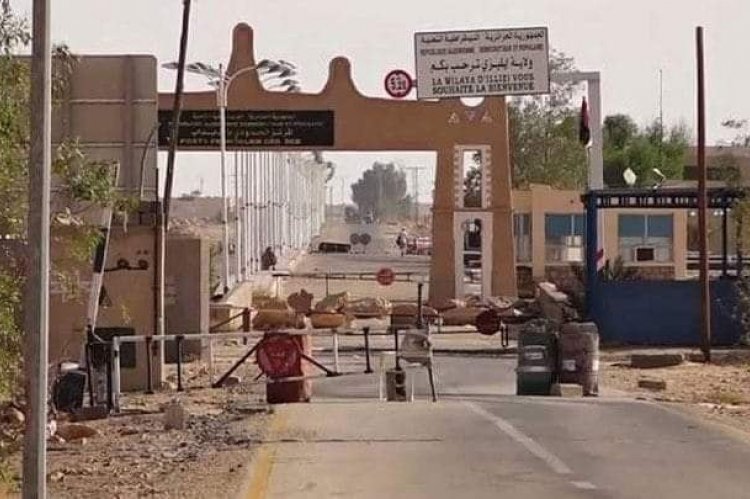
Libya’s western borders with Tunisia and Algeria demonstrate this contrast. Where crossings are regulated and infrastructure exists, trade is more formal and violence is lower. These examples increasingly inform thinking about southern and eastern borders.
Libya Border Management Strategy and Migration Management Beyond Crisis Response
Migration remains one of the most politically sensitive aspects of Libya’s border challenge. For years, responses were driven by emergency pressures rather than long-term planning. Interdiction, detention, and external pressure dominated policy.
A more sustainable approach is now emerging. Libya border management strategy increasingly treats migration as a governance issue rather than a security anomaly. Registration, data collection, and coordination with international agencies are slowly improving visibility over flows.
This does not mean migration pressures are diminishing. Rather, authorities are gaining better tools to manage them. Improved border oversight allows for humanitarian screening, labor matching, and return programs that reduce chaos and exploitation.
For Libya, this shift reduces reputational risk and strengthens its negotiating position with European partners.
Regional Cooperation and Libya Border Management Strategy
No border system functions in isolation. Libya’s neighbors face similar challenges, and unilateral approaches have repeatedly failed. Recent years have seen greater emphasis on coordination with Tunisia, Egypt, Niger, and Chad.
Joint patrols, intelligence sharing, and harmonized customs procedures are still limited, but the direction of travel is clear. Regional frameworks supported by the African Union and European partners aim to standardize practices and reduce fragmentation.
For Libya, cooperation reduces the burden on domestic institutions. Shared responsibility lowers enforcement costs and limits displacement effects where pressure in one area simply pushes activity elsewhere.
Technology, Data, and Institutional Capacity
Modern border management relies as much on information as on physical presence. Libya’s adoption of biometric registration, vehicle tracking, and digital customs systems remains partial but expanding.
Data integration across agencies is a major challenge. Border forces, customs authorities, and interior ministries often operate in silos. Improving coordination is less about new technology and more about institutional alignment.
International support focuses increasingly on training and systems integration rather than equipment alone. This reflects lessons learned from earlier phases where hardware outpaced governance capacity.
Economic Implications for Libya Border Management Strategy
Effective border governance can transform border regions from liabilities into assets. Formal trade generates jobs, stabilizes communities, and reduces reliance on armed groups. Legal crossings attract investment in logistics, storage, and services.
For southern Libya, this transformation is especially important. Economic inclusion reduces incentives for smuggling and militia recruitment. When communities benefit from legal trade, they become stakeholders in stability rather than spoilers.
These dynamics reinforce the broader security dividend of economic integration.
Risks and Constraints Heading Into 2026
Despite progress, risks remain significant. Political fragmentation continues to complicate authority over border policy. Overlapping mandates and competing security actors create gaps that criminal networks exploit.
Resource constraints also limit scalability. Infrastructure development, personnel training, and technology deployment require sustained funding. Without consistent investment, pilot programs risk stalling.
Perhaps the greatest risk is policy inconsistency. Sudden shifts driven by political pressure can undermine trust built over time. Border governance requires patience, predictability, and coordination across multiple levels of authority.
Strategic Outlook for Libya Border Management Strategy in 2026
As Libya enters 2026, border management stands at a crossroads. Continued reliance on reactive security measures will perpetuate instability. A gradual shift toward governance, economic integration, and regional cooperation offers a more durable path.
Libya border management strategy does not promise quick results. Its value lies in cumulative gains that reduce volatility over time. Each regulated crossing, each formal trade corridor, and each coordinated patrol strengthens state authority incrementally.
If sustained, these efforts could reshape how borders are perceived. Not as fault lines of insecurity, but as interfaces of cooperation connecting Libya to its neighbors and the wider Mediterranean.