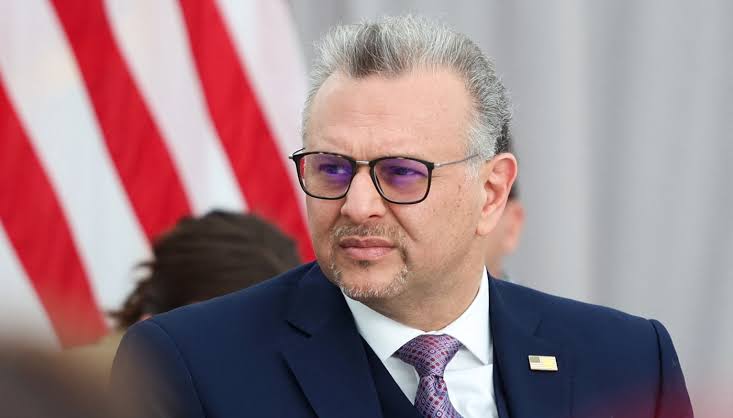
US Senior Advisor for Arab and African Affairs Massad Boulos says Libya has made significant progress in economic and security coordination between the country’s eastern and western regions, alongside progress toward a UN-facilitated electoral framework.
His comments point to a potentially important shift in Libya’s long-running institutional divide. But coordination between rival centers of power is not the same as reunification. The harder question is whether recent agreements can develop into permanent institutions, integrated security structures and a political process capable of producing a unified state.
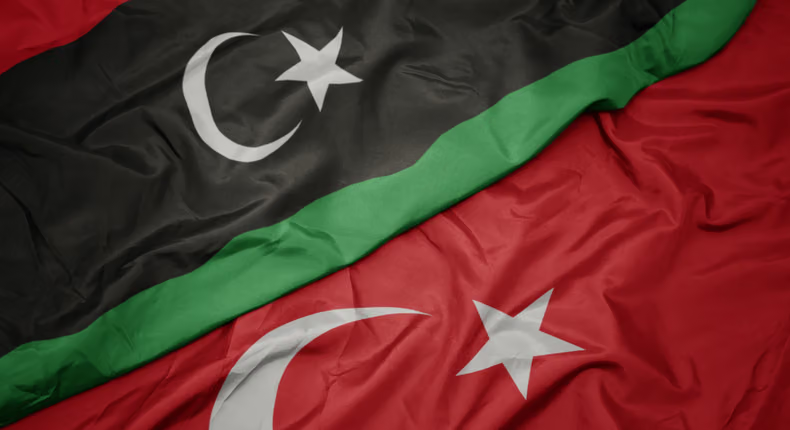
Boulos made the comments after co-hosting a Libya-focused side event on the margins of the United Nations General Assembly in New York with Turkish Foreign Minister Hakan Fidan and UN Special Representative for Libya Hanna Tetteh. Representatives from Egypt, France, Germany, Italy, Saudi Arabia, Qatar, the UAE and the UK also attended.
From financial coordination to institutional integration
One of the clearest signs of increased East-West coordination came earlier this year with the agreement on Libya’s first unified national budget in more than a decade.
The agreement created a common financial framework for the country’s divided authorities and demonstrated that rival institutions can reach practical arrangements when their interests overlap. The agreement was worth nearly LYD190 billion and represented a major step toward coordinating public spending across Libya.
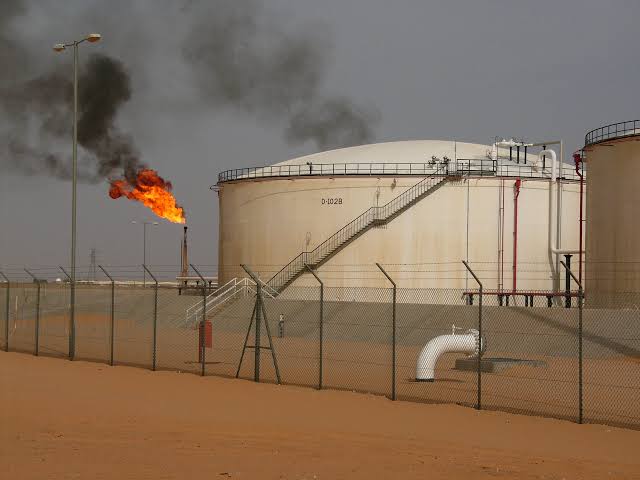
The economic dimension matters because Libya’s political division has long depended on control over state resources. Public salaries, government spending, oil revenues and access to financial institutions all sit at the center of the country’s power structure.
A unified budget can therefore do more than organize government spending. It can create a mechanism through which eastern and western authorities become more dependent on the same financial framework.
But the budget alone cannot resolve Libya’s institutional fragmentation.
The country still faces competing political centers, fragmented security structures and powerful networks operating outside a fully unified state framework. The challenge now is to turn financial coordination into broader institutional integration rather than allowing separate authorities to simply cooperate when it serves their immediate interests.
A June assessment by the Middle East Council noted that the unified budget came alongside increased international engagement, joint military activity and renewed interest from international energy companies. At the same time, it warned that Libya’s institutional divisions and the influence of armed groups remain major obstacles to a deeper settlement.
Security integration is the harder test
The security track may prove more difficult than economic coordination.
Boulos has repeatedly identified cooperation between eastern and western security forces as part of Washington’s approach to Libya. In July, he discussed with Prime Minister Abdulhamid Dbeibah the need to strengthen military and security cooperation between the two sides, while also highlighting coordination with US Africa Command.
The issue is significant because Libya’s security landscape remains divided between competing military and armed formations with different chains of command, territorial bases and political relationships.
Economic agreements can function without resolving these differences. Security integration cannot.
Any meaningful integration would require agreement over command structures, responsibilities, deployment and the role of armed formations within a unified state. It would also require enough trust between Libya’s rival security centers to prevent integration efforts from becoming another mechanism for competition.
Recent developments nevertheless show that cooperation is no longer limited to political dialogue.
Joint military activity involving eastern and western forces has provided one example of practical security coordination. The two sides also participated in Exercise Flintlock in Sirte earlier this year, giving international partners an opportunity to encourage cooperation between Libyan forces.
The significance of these developments lies less in any single exercise than in the possibility of creating repeated channels of contact between forces that previously operated largely within separate security systems.
That process remains fragile. Reports in September of heightened military readiness among forces linked to Khalifa Haftar demonstrated how quickly Libya’s security environment can become uncertain. No official explanation established that the reported movements represented preparations for confrontation, but the episode highlighted the continuing sensitivity of military activity in the divided country.
Elections remain the unresolved political question
The third element in Boulos’s comments is the electoral track.
He said the progress between Libya’s eastern and western sides also includes work on a UN-facilitated electoral framework. This is important because institutional coordination without a political endpoint could simply create another prolonged transitional arrangement.
UNSMIL has spent much of 2026 working on mechanisms intended to overcome the political deadlock and establish a path toward national elections. Its 4+4 process has brought representatives from eastern and western Libya together to discuss electoral and institutional questions.
Presidential Council President Mohamed Menfi also told Boulos during a September meeting in New York that any settlement should develop within a broader national process and lead to elections while respecting Libya’s legal and constitutional frameworks.
That distinction matters.
A negotiated arrangement between powerful political and security actors can reduce immediate tensions, but it does not automatically resolve the question of political legitimacy. Elections are ultimately intended to provide a mechanism for renewing that legitimacy.
The central challenge for Libya is therefore connecting the three tracks now developing in parallel: economic coordination, security cooperation and the political process.
If they remain separate, progress in one area may not survive setbacks in another. A dispute over political appointments could undermine security cooperation. A conflict over public spending could weaken economic coordination. Security tensions could again disrupt the political process.
If the tracks reinforce one another, however, they could gradually create the institutional conditions for a more unified state.
For now, Boulos’s comments show that international actors see enough movement to push the process forward. The more important test will come when cooperation requires the rival centers of power to give up parts of the institutional separation that has sustained Libya’s political order for years.
That is where coordination would have to become integration.
And that remains the real measure of whether Libya’s current East-West rapprochement can produce lasting state unity.