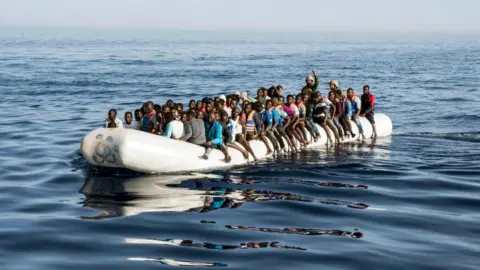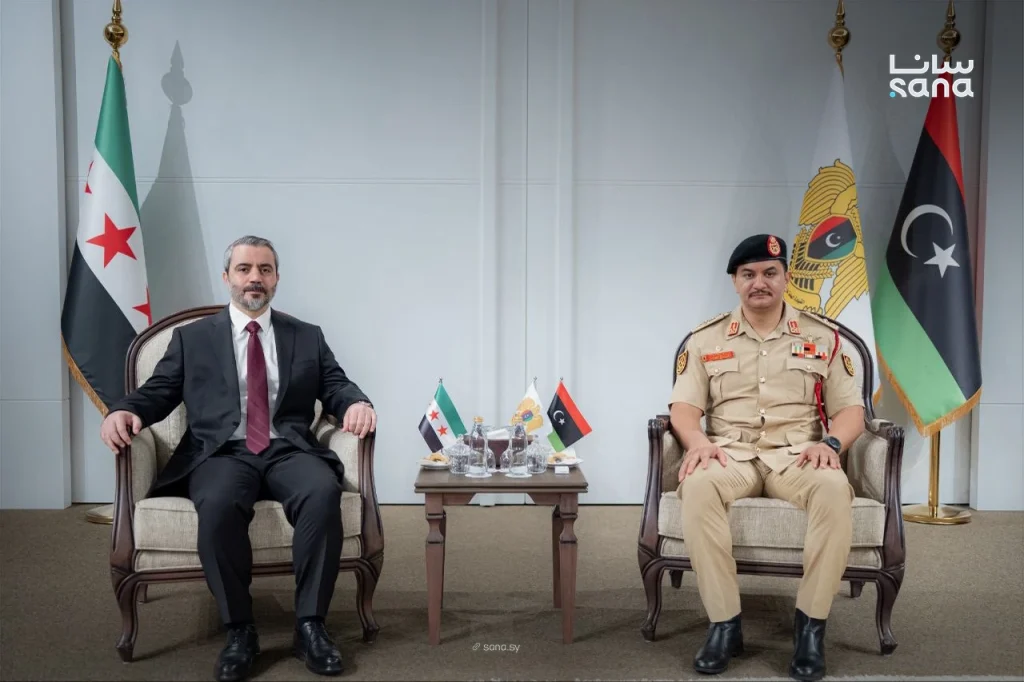
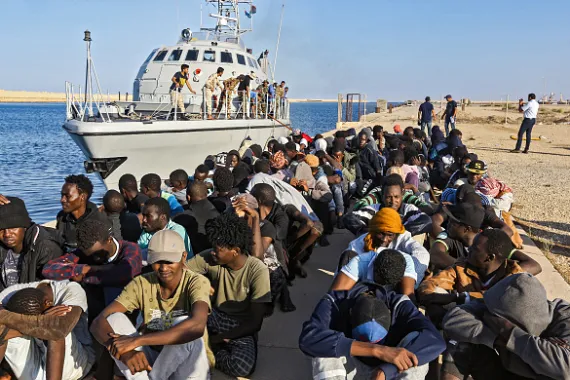
A new migration meeting in Rome this week highlighted how Libya has become central to Mediterranean security policy once again. Officials from Libya, Italy, Turkey, and Qatar gathered under the Quadripartite Cooperation Committee framework to discuss illegal migration, border security, smuggling networks, and operational coordination.
The meeting may appear technical on the surface, but it reflects a much deeper geopolitical shift around Libya’s role in Europe’s migration strategy. According to statements released after the talks, the four states discussed stronger intelligence coordination, logistical support, coast guard cooperation, and the possible creation of a joint operations center focused on migration routes and trafficking networks.
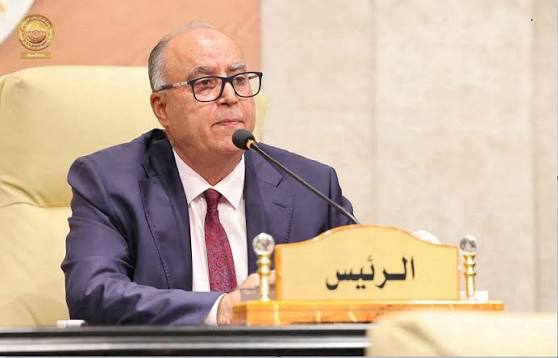
The Libyan delegation included senior officials close to the Government of National Unity, while Italy sent national security adviser Fabrizio Saggio. Turkey and Qatar also dispatched high-level representatives. The format itself matters. It shows how migration has become one of the few files where several competing regional actors can still coordinate inside Libya despite wider political disagreements.
The timing also matters.
Migration pressure across the Central Mediterranean continues to shape European politics in 2026. Italy still views Libya as the main gateway controlling irregular migration flows from Africa toward Europe. Rome therefore wants stronger operational coordination with Libyan authorities even while Libya itself remains politically fragmented and institutionally divided.
The Rome talks reveal another important trend. Migration cooperation now moves faster than Libya’s political reconciliation process. European governments increasingly prioritize immediate security coordination over long-term political solutions. That approach has allowed Libya’s migration file to evolve into one of the country’s most strategically important international issues.
Libyan officials used the Rome meeting to repeat a position they have stressed for years. They argued that Libya cannot become a permanent settlement zone for migrants and insisted that migration remains both a sovereign and national security issue. Authorities in Tripoli also requested greater international support for border management institutions, the Interior Ministry, and coastal security operations.
Smuggling Networks Continue to Exploit Libya’s Security Gaps
Over the past two years, migration has transformed from a humanitarian challenge into a domestic political and security issue inside Libya. Armed groups continue to profit from smuggling routes in western and southern Libya. Human trafficking networks remain deeply connected to local militias, cross-border criminal economies, and informal security structures.
Authorities in Tripoli frequently announce anti-smuggling operations. Yet many trafficking networks survive because they operate inside fragmented security environments where state institutions still lack full control.
Southern Libya remains especially vulnerable. The country’s vast desert borders with Niger, Chad, and Sudan create ideal conditions for trafficking corridors. Smugglers move migrants, weapons, fuel, narcotics, and contraband through overlapping routes that remain difficult to monitor consistently. This explains why European governments increasingly focus on Libya as a frontline security partner rather than simply a transit country.
Italy views migration through both a security and domestic political lens. Prime Minister Giorgia Meloni has made migration control one of the defining pillars of Italian foreign policy. Rome now sees stability in North Africa as directly connected to political stability inside Italy itself.
Turkey’s participation in the quadripartite framework also reflects Ankara’s broader Mediterranean strategy. Turkish officials already maintain strong defense and political ties with western Libyan authorities. Migration coordination now adds another strategic layer to that relationship. Ankara understands that migration diplomacy can strengthen its leverage with European governments while preserving influence inside Libya.
Qatar’s role appears more diplomatic. Doha continues to position itself as a mediator and stabilizing actor across regional crises. Participation in migration discussions allows Qatar to remain engaged in Libyan affairs without taking a direct military posture.
Still, the central challenge remains unresolved. Libya does not possess unified security institutions capable of fully controlling migration routes across the country. Rival armed factions continue to compete for influence. Border infrastructure remains weak in large parts of the south. Smuggling economies remain profitable for local actors.
Europe’s Migration Strategy Faces Growing Criticism
The Rome meeting also highlights the growing contradictions inside Europe’s Libya policy.
European governments increasingly depend on Libyan authorities to reduce Mediterranean crossings. The European Union continues to support Libyan migration management programs financially and operationally. European officials describe these efforts as part of a broader strategy to improve border governance, combat trafficking networks, and support humanitarian programs.
Critics argue that the reality looks very different.
Human rights organizations continue to accuse some Libyan detention facilities and armed groups of severe abuses against migrants. International scrutiny intensified again this week following developments linked to the International Criminal Court case against former militia commander Khaled Mohamed Ali El Hishri, who faces accusations related to torture, murder, rape, and abuses against detainees at Mitiga prison.
The case revived criticism surrounding Europe’s long-running cooperation with Libyan security actors involved in migration enforcement. Several international organizations argue that European states outsourced border security responsibilities to fragile Libyan structures without fully addressing accountability concerns.
European governments consider Libya indispensable for limiting migrant crossings across the Mediterranean. At the same time, international criticism over detention conditions, militia influence, and migrant abuse continues to grow. That creates a difficult balancing act for both European policymakers and Libyan authorities.
The Government of National Unity also understands that migration cooperation strengthens its international relevance. Security coordination allows Tripoli to present itself as a necessary partner for Europe even while Libya’s broader political process remains stalled domestically.
In practice, migration has become one of the GNU’s strongest diplomatic tools.
Libya’s Migration Role Will Continue to Expand
Despite new agreements and coordination mechanisms, the deeper structural drivers behind migration remain unchanged.
Conflict, economic instability, climate pressure, and weak governance across parts of the Sahel and sub-Saharan Africa continue to push migrants northward toward Libya. Migration flows may fluctuate month to month, but the broader pressure across the Mediterranean corridor remains strong.
That means Libya will likely remain central to European migration policy for years ahead.
The Rome meeting therefore represents more than another diplomatic gathering. It demonstrates how migration has become one of the main frameworks shaping Libya’s international relationships in 2026. Security cooperation now advances faster than political reconciliation. European states increasingly treat Libya as both a frontline security buffer and a strategic partner despite the country’s unresolved internal divisions.
For Libya itself, this creates both opportunity and risk.
Migration cooperation can bring funding, diplomatic engagement, equipment, and international support. But it can also deepen foreign dependence on fragmented security structures while increasing scrutiny over human rights conditions and militia involvement.
As Mediterranean migration pressures continue, Libya no longer sits at the edge of the issue.t now stands at the center of it.