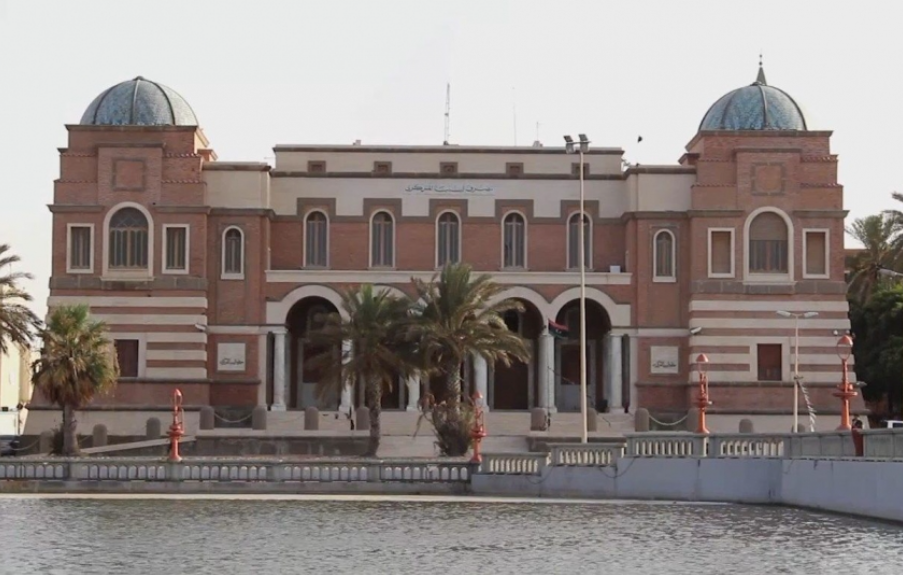
Libya’s Central Bank governor, Naji Issa, has met with High State Council (HSC) head Mohamed Takala as political institutions move to prevent a new crisis around the country’s financial system. The meeting comes days after Issa submitted his resignation, raising fresh concerns about institutional stability and the political struggle over Libya’s public finances.
The HSC said its members rejected Issa’s resignation and urged him to continue his duties. During the meeting, Issa outlined pressures surrounding public spending, liquidity, foreign exchange and the management of state resources. The participants also stressed the need to protect the Central Bank of Libya’s independence from political interference.
For Libya’s security environment, the significance goes beyond monetary policy. Control over state finances has repeatedly shaped political confrontations, armed mobilization and competition between rival institutions. A renewed dispute over the Central Bank could therefore create risks that extend well beyond the banking sector.
Financial Fragmentation Is Also a Security Problem
The meeting produced a proposal for a joint technical committee involving the HSC, the House of Representatives, the Central Bank and other relevant institutions. The committee would develop a comprehensive package of economic and financial reforms and oversee implementation.
That proposal matters because Libya’s political divisions have repeatedly translated into competition over public funds. Rival administrations have used access to state resources to maintain political networks, finance public spending and reinforce their positions. When institutions cannot agree on how oil revenues should support the state, financial disputes can quickly become political and, in the worst cases, security crises.
Libya saw the consequences of that dynamic in 2024, when the previous Central Bank leadership dispute escalated into a major confrontation. The attempt to remove former governor Sadiq al-Kabir triggered a broader crisis with eastern authorities and contributed to the shutdown of oil production and exports.
That history makes Issa’s position particularly important. He became governor in 2024 after rival Libyan institutions reached an agreement on new Central Bank leadership with UN involvement. His departure, if it happens without a clear institutional process, could reopen questions that Libya has spent years trying to contain.
The House of Representatives’ finance committee has also rejected Issa’s resignation and called for a comprehensive economic reform plan. Both legislative camps now appear to favor continuity at the Central Bank, at least for the immediate future.
Spending, Oil Revenues and the Risk of Renewed Political Confrontation
The core security issue is not simply whether Issa stays or leaves. It is whether Libya’s political factions can agree on rules governing public spending and state revenues.
The HSC meeting highlighted the need to rationalize government expenditure, protect public funds, reduce waste and corruption, and improve transparency and accountability. These issues sit at the center of Libya’s broader political-security problem because state spending provides the resources that sustain institutions, public-sector employment and networks of influence.
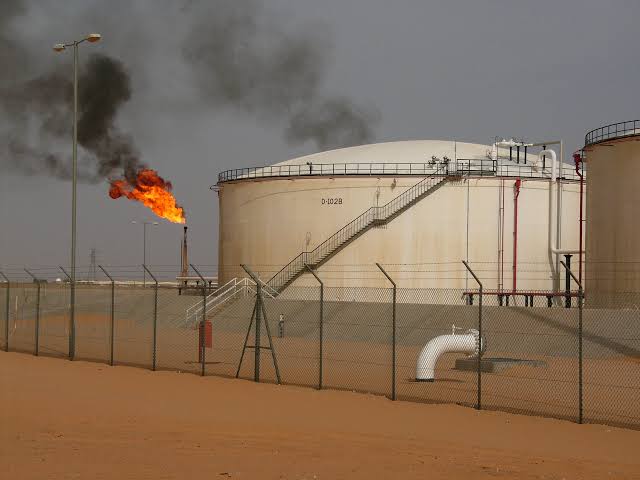
Libya’s economy remains heavily dependent on oil revenues. That makes control over government spending and access to foreign currency particularly sensitive. If rival authorities return to unilateral spending or challenge the Central Bank’s decisions, the dispute could quickly affect the exchange rate, liquidity and confidence in the banking system.
It could also increase pressure on the political settlement. A weakened Central Bank would make it harder to maintain consistent financial policy across the country and could encourage competing institutions to seek greater control over economic resources.
The recent developments therefore represent an important test of whether Libya’s political actors can keep financial disputes inside institutions rather than allowing them to spill into the security sphere.
Reform Could Strengthen Libya’s Institutional Security
The proposed committee offers a potential mechanism for reducing that risk, but its effectiveness will depend on whether political factions allow it to operate independently and implement decisions.
A committee that produces another political agreement without enforcement would do little to address the underlying problem. Libya needs a framework that links public spending to available revenues, strengthens oversight of state institutions and limits the ability of rival authorities to use financial resources as political leverage.
The Central Bank’s independence will also remain critical. The bank cannot provide monetary stability if its leadership faces constant pressure from competing political actors. At the same time, institutional independence must operate alongside credible oversight and transparent rules governing public finances.
Issa’s resignation bid has exposed those unresolved tensions. The fact that both the HSC and the House of Representatives have moved to keep him in office suggests that Libya’s political factions recognize the risks of another Central Bank confrontation.
For Libya’s security sector, that recognition is significant. Financial stability can reduce pressure on institutions, limit political competition over state resources and help prevent economic disputes from becoming security crises.
But the current moment will ultimately be judged by implementation. If Libya’s proposed economic reforms remain confined to statements and committees, the underlying vulnerabilities will persist. If political leaders use the opening to establish durable rules for spending, revenues and Central Bank independence, they could reduce one of the country’s most persistent sources of institutional instability.
For now, keeping the Central Bank functioning may prevent an immediate crisis. The harder challenge is building a financial system strong enough to withstand Libya’s political divisions without becoming another arena for them.