he latest disruption at Libya’s Sharara oilfield is more than another interruption to crude production. It shows how easily an armed group can turn a single point on Libya’s oil infrastructure into a national security and economic pressure point.
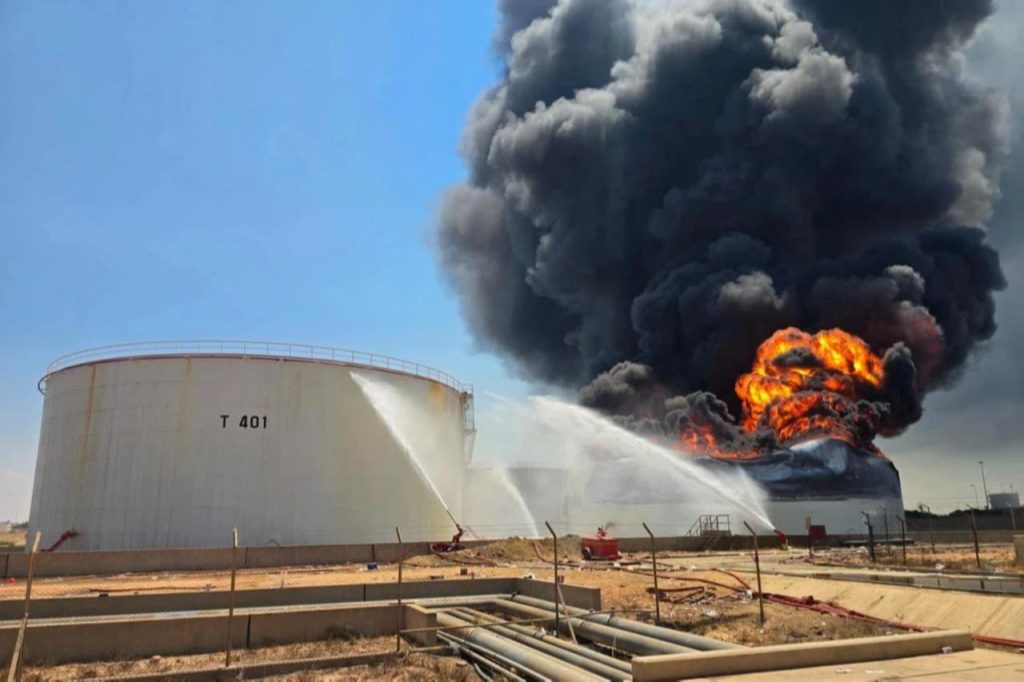
On September 21, the National Oil Corporation (NOC) said an armed group had closed Valve No. 7 on the pipeline carrying crude from Sharara to Zawiya Port. The closure created pressure inside the pipeline and sharply reduced production. Two engineers later told Reuters that output had fallen to around 100,000 to 105,000 barrels per day, a reduction of roughly 200,000 bpd from the field’s previous level.
The NOC also said its technical teams could not reach the area around Valves 6 and 7 and warned that continued closure could eventually stop production, transport and exports from the field. It also warned that the disruption could force the Zawiya refinery to shut down and said it could declare force majeure if the blockage continued. National Oil Corporation statement
For security analysts, the significance lies in the method. The incident did not require an attack on a field, refinery or export terminal. Control over a single piece of pipeline infrastructure was enough to create a major production shock.
One Valve, Multiple Security Risks
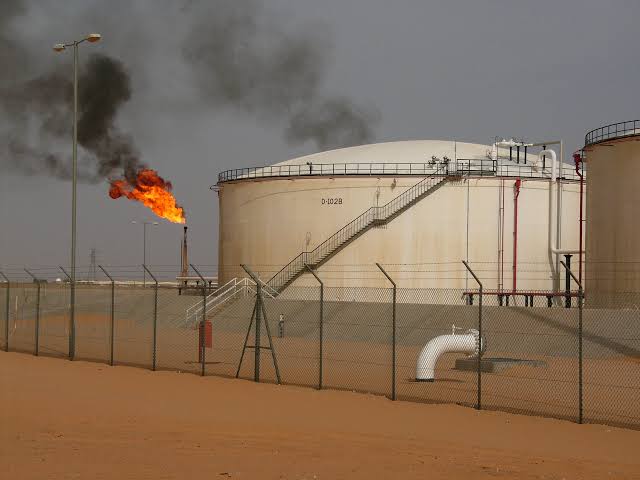
Sharara sits at the centre of a much larger security chain. The field, operated by Akakus Oil Operations, feeds crude toward Zawiya, linking production in southwestern Libya with one of the country’s most important coastal energy facilities.
That makes the pipeline more than a transport route. It is a critical infrastructure corridor whose security affects production, exports, refining and domestic fuel supply at the same time.
The NOC’s September 22 statement adds another layer. Personnel from the Petroleum Facilities Guard blocked the gates of the Zawiya Refinery and Brega Petroleum Marketing Company, while the closure of Valve No. 7 continued. The NOC said the combined disruption threatened refinery operations, fuel distribution and the movement of technical staff. It also said the daily production loss had reached around 130,000 barrels at that stage and could increase if the shutdown continued. NOC statement on Zawiya and Sharara disruption
This creates a security problem that extends beyond physical protection. Libya can maintain armed personnel around an oil facility and still leave the wider system vulnerable if competing chains of command, local demands or institutional disputes allow access to critical infrastructure.
That distinction matters. Protecting an oilfield does not necessarily protect the oil system.
The recent sequence of events makes that clear. On September 15, the NOC said members of the Petroleum Facilities Guard had closed a major Hamada-Zawiya pipeline valve, stopping production at the Hamada, Tahara and NC5 fields. The Guard linked its action to demands over its administrative and financial relationship with the state. NOC statement on the Hamada pipeline closure
Within days, another critical point on the western oil network came under pressure.
The available evidence does not establish that the same actors carried out every disruption. But the pattern exposes a broader structural weakness: groups operating around critical infrastructure can create significant economic consequences without needing to seize or destroy major facilities.
Libya’s Oil Security Is Also an Economic Security Issue
The timing makes the Sharara disruption particularly important.
Brent crude traded above $100 per barrel as markets continued to assess supply risks linked to the wider Middle East conflict and disruptions elsewhere. Business Insider Africa reported Brent at $101.48 on September 22, while Sharara output had fallen by about two-thirds from its normal level.
For Libya, higher global prices should normally strengthen the value of every barrel exported. Instead, security disruptions are limiting the country’s ability to benefit from the market environment.
That creates a double exposure. Libya loses production while international buyers face a market already sensitive to supply disruptions.
The immediate financial cost matters, but the longer-term security effect deserves more attention. Repeated shutdowns can increase the perceived risk attached to Libyan crude, complicate planning for international operators and make future investment decisions more difficult. Sharara’s partners include Repsol, TotalEnergies, OMV and Equinor, meaning that instability around the field also affects international companies with long-term interests in Libya’s energy sector.
For investors, the issue is therefore not simply whether Sharara produces 300,000 barrels per day or 100,000. The larger question concerns reliability.
A field that can operate at high capacity but repeatedly becomes exposed to local armed pressure presents a different risk profile from an asset protected by a predictable and unified security structure.
The Bigger Test Is What Happens Next
The most important question now is whether Libya treats the Sharara incident as another temporary shutdown or as evidence of a wider critical infrastructure security problem.
The NOC has repeatedly warned that forced closures damage state revenues, fuel supplies and Libya’s position as an energy supplier. Its September 21 statement also warned that prolonged disruption could expose the pipeline and associated facilities to technical and operational risks.
That warning deserves to be viewed through a security lens.
Oil infrastructure is interconnected. A blockage in the southwest can affect a refinery on the coast. A refinery disruption can affect fuel distribution. A fuel shortage can increase pressure on local communities. And prolonged economic disruption can create new incentives for political and armed actors to use infrastructure as leverage.
This makes the protection of oil infrastructure a national security function, not simply an operational responsibility for the NOC or individual security units.
Libya’s challenge is therefore larger than securing Sharara itself. The country needs a security framework that protects pipelines, valves, export routes and refineries as one connected system, with clear authority over who can access critical infrastructure and who has responsibility when a disruption occurs.
Without that structure, the vulnerability will remain even after Valve No. 7 reopens.
Sharara has once again demonstrated that Libya does not need a major attack to lose significant oil production. In a fragmented security environment, a single valve can be enough.
For a country whose state finances depend overwhelmingly on hydrocarbons, that is not only an energy-sector weakness. It is a national security exposure.