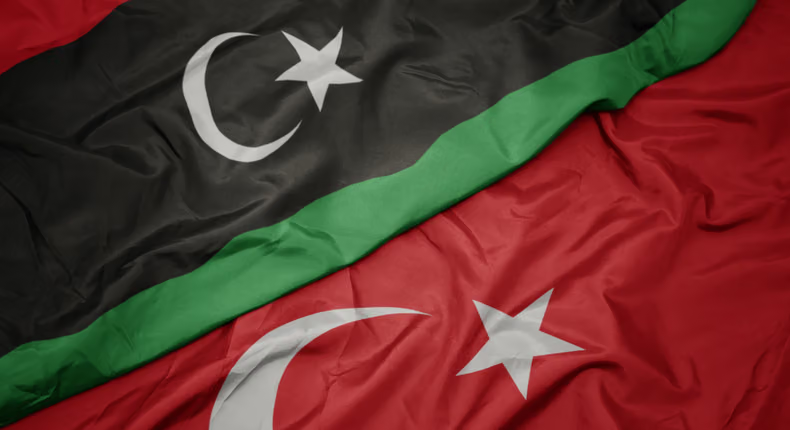
Turkey is expanding its engagement across Libya as Ankara seeks to protect its political, security and economic interests while positioning itself for the country’s next political phase.
President Recep Tayyip Erdoğan’s latest meeting with Libyan Presidential Council head Mohamed al-Menfi in New York shows how Ankara is combining its long-standing relationship with western Libya with a broader diplomatic effort across the country.
On September 21, Erdoğan told al-Menfi that Turkey would not support any political formula that it considers contrary to Libya’s interests. He also stressed the importance of stability, dialogue and reconciliation and said Turkey wanted to expand cooperation with Libya in energy, defense and mining.
The statement comes at an important moment for Libya. International efforts are again focused on unifying state institutions, creating conditions for elections and reducing the political divide between the country’s rival centres of power.
For Turkey, however, the outcome matters beyond Libya’s domestic political process.
Ankara has built significant political, military and economic interests in the country over the past six years. Its latest moves suggest that it wants to ensure those interests remain protected regardless of how Libya’s political landscape develops.
Ankara Is Moving Beyond Its Tripoli Alliance
Turkey’s relationship with western Libya remains central to its strategy. Ankara provided critical military support to the former Government of National Accord during the 2019–20 conflict, helping prevent Khalifa Haftar’s forces from taking Tripoli.
That intervention established Turkey as one of the most influential external security actors in western Libya.
Turkey still maintains a military presence in the country and continues defence cooperation with authorities in Tripoli. But Ankara’s recent diplomacy shows that it no longer wants its Libya policy to depend entirely on western political actors.
Foreign Minister Hakan Fidan’s August visit made that shift particularly clear.
Fidan travelled to both Tripoli and Benghazi, meeting Prime Minister Abdul Hamid Dbeibah, al-Menfi and other senior officials in the west before meeting Khalifa Haftar, Saddam Haftar, House of Representatives Speaker Aguila Saleh and other eastern figures in Benghazi. Turkey’s foreign ministry documented the meetings as part of its wider engagement with Libya. Read Turkey’s official account of Fidan’s August Libya visit
That outreach carries an important security message.
Ankara is trying to maintain its existing position in western Libya while building working relationships with actors in the east. This gives Turkey channels to multiple centres of power and reduces the risk that a future political settlement could leave Ankara isolated.
Fidan has described this approach as Turkey’s “One Libya” policy, arguing that Ankara should engage with Libya’s west, east and south rather than treat the country through a single political lens.
The policy also reflects a recognition of Libya’s fragmented security structure. Political agreements alone cannot determine who controls territory, military institutions, energy infrastructure and strategic facilities. Any durable settlement will require cooperation among actors with influence over those areas.
Security and Energy Interests Remain Central
Turkey’s expanding engagement also reflects interests that go beyond Libya’s political institutions.
The country occupies a strategically important position in the central Mediterranean, close to Europe, North Africa and major maritime routes. For Ankara, Libya offers both a security foothold and an important partner in Mediterranean affairs.
The 2019 maritime agreement between Turkey and the former Tripoli government remains a major part of that relationship. The agreement has faced opposition from several regional actors, but it continues to shape Ankara’s strategic calculations in the Mediterranean.
Energy adds another layer.
Turkey wants greater cooperation with Libya in oil and gas, while Turkish companies are seeking opportunities in exploration, infrastructure and construction. Ankara’s interest in expanding cooperation in energy and mining therefore fits into a wider economic strategy that accompanies its political and military presence.
This combination of interests explains why Turkey has an incentive to remain deeply involved in Libya’s political future.
A stable and unified Libyan state could provide Ankara with a stronger long-term economic and diplomatic partner. At the same time, a political settlement that threatens Turkey’s existing defence arrangements, maritime interests or commercial opportunities would create significant problems for Ankara.
Turkey Wants Influence Without Being Locked Into One Side
The main question is whether Turkey can expand its relationships across Libya without undermining the partnerships that made it a major player in the first place.
Ankara’s outreach to Haftar’s camp does not necessarily mean it is abandoning Tripoli. Instead, it suggests Turkey is trying to build enough influence on both sides to remain relevant to any future political settlement.
That approach also fits Turkey’s wider regional diplomacy. Ankara increasingly seeks direct relationships with competing actors rather than relying exclusively on traditional alliances.
In Libya, this means maintaining military and political ties in the west while opening channels with the east.
Erdoğan’s latest comments reinforce that strategy. Turkey is publicly backing a Libyan-led political process and calling for dialogue, reconciliation and elections. At the same time, Ankara is making clear that it intends to remain an active participant in Libya’s political, security and economic landscape.
For Libya, the growing Turkish role creates both opportunities and complications.
Turkish investment, defence cooperation and diplomatic engagement could contribute to stronger institutions and greater economic activity if they develop within a broader national framework. But Turkey’s substantial interests also mean Ankara will have its own priorities in any future settlement.
The significance of Turkey’s current policy is therefore not simply that Ankara supports one Libyan camp over another.
It is that Turkey is positioning itself to work with multiple centres of power while protecting the strategic interests it has accumulated in Libya.
As the international push for political and institutional unification develops, Ankara is making sure it has a seat at the table whichever direction Libya takes.