Libya’s eastern-based House of Representatives has removed Aguila Saleh from the position he held for more than a decade, ending one of the longest periods of continuity in the country’s divided political system. Lawmakers elected Al-Salhin Abdul Nabi Al-Obeidi as the new speaker after a series of contentious sessions that exposed growing disagreements over how the parliament should operate.
The change comes at a sensitive point in Libya’s political process. The House of Representatives remains one of the country’s two key legislative institutions and plays a central role in negotiations over elections, the constitutional framework and the formation of a unified government. The leadership change could therefore affect not only the internal balance of the eastern parliament but also the wider political process between eastern and western Libya.
A Long-Standing Parliamentary Leadership Comes to an End
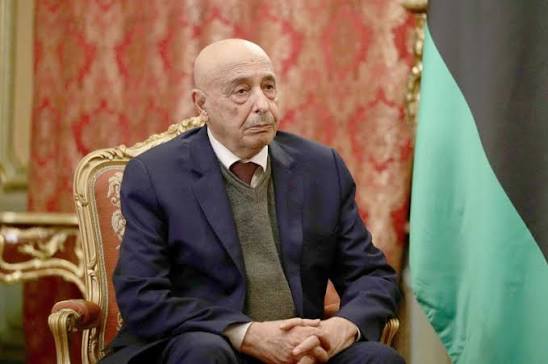
Saleh became speaker of the House of Representatives in 2014, when Libya’s political crisis produced rival institutions and eventually divided the country between competing administrations. He remained in the position through years of conflict, failed election plans and repeated international efforts to reunify Libya’s institutions.
The immediate dispute focused on parliamentary rules and the length of the speaker’s mandate. On October 5, 98 lawmakers backed an amendment that established a term for the House presidency and changed the system that had allowed the same leadership to remain in place for years. More than 100 lawmakers reportedly attended the session. Saleh rejected the meeting as unofficial and argued that its decisions had no legal effect.
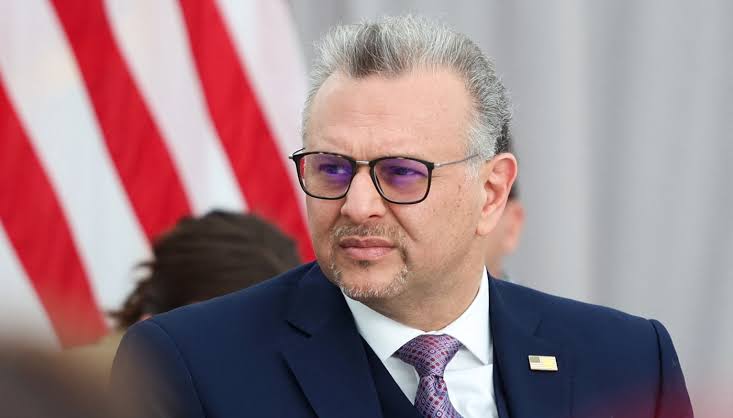
The dispute then moved quickly. A session chaired by Second Deputy Speaker Misbah Douma elected Al-Obeidi as Saleh’s replacement. Al-Obeidi represents Tobruk and has served on the House Foreign Affairs Committee. He also previously chaired the Libyan-Turkish Parliamentary Friendship Committee, giving him experience in parliamentary diplomacy and relations with Türkiye.
The change therefore carries both an institutional and political dimension. Lawmakers who supported Saleh’s removal have focused on parliamentary reform and greater accountability within the House. One lawmaker told Reuters that MPs had grown frustrated with decisions taken without sufficient consultation with members.
What the Change Means for Libya’s Political Process
The timing matters. Libya has entered a new phase of international efforts to break the political deadlock, with the United Nations pushing a roadmap that seeks to establish a clearer path toward presidential and legislative elections.
In August, representatives from the House of Representatives and the High Council of State reached a UN-backed agreement addressing key electoral and constitutional issues. The agreement also envisages elections within 24 months and aims to create conditions for a unified executive authority. The House later endorsed the Smaller Convening Agreement, which UNSMIL described as an important step toward overcoming the political impasse.
That process still faces major obstacles. Libya continues to operate with rival governments in Tripoli and the east, while disagreements over electoral rules, institutions and the distribution of political power have repeatedly delayed national elections.
The House of Representatives holds particular importance because it controls one side of the legislative process and supports the eastern administration. Any leadership change inside the House can therefore influence how the institution approaches negotiations with the High Council of State, the Tripoli-based authorities and international mediators.
For that reason, Saleh’s removal should not automatically be interpreted as a fundamental shift in Libya’s eastern political camp. The House remains an institution with its own internal divisions, while broader political and security networks continue to shape decision-making across eastern Libya.
A New Speaker, but the Same Larger Test
Al-Obeidi now faces a difficult task: maintaining the House’s institutional role while managing internal disagreements and navigating a political process that requires cooperation between Libya’s rival camps.
His previous work on parliamentary relations with Türkiye could also become relevant as Libya continues to engage with regional powers. However, it remains too early to determine whether his election will produce a meaningful change in the House’s foreign policy or its wider political positioning.
The more important question concerns whether the leadership change can improve the House’s ability to function as a coherent legislative institution. The dispute over Saleh’s tenure shows that dissatisfaction had grown inside the chamber, but replacing its speaker does not resolve Libya’s larger institutional divide.
The coming months will provide a clearer test. If the new leadership helps the House operate with more predictable rules, broader internal participation and greater engagement with the UN-backed electoral process, the change could strengthen Libya’s political transition. If the dispute simply produces another struggle over parliamentary authority, it could add another layer to the country’s already complicated institutional fragmentation.
For now, Saleh’s departure marks the end of an era inside Libya’s eastern parliament. Whether it also marks the beginning of a different approach to the country’s political deadlock will depend less on the identity of the new speaker than on what the House does with its renewed leadership.