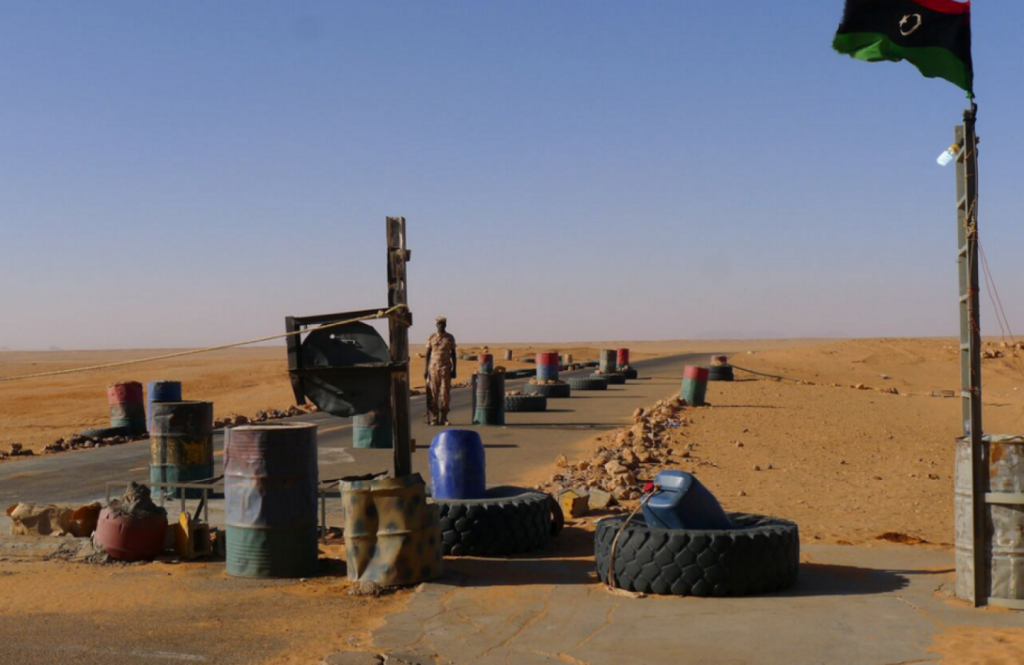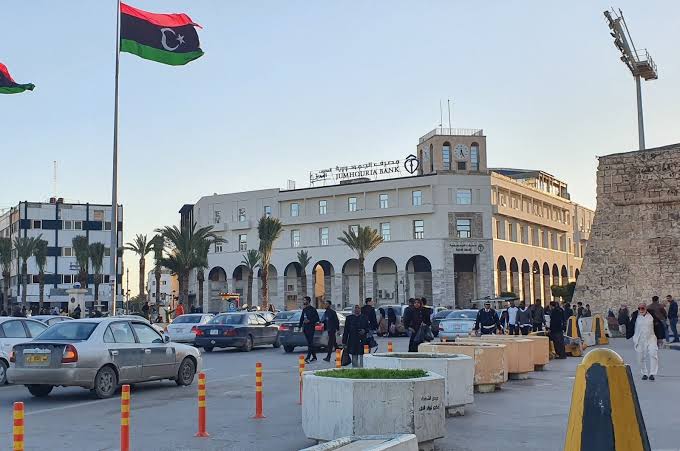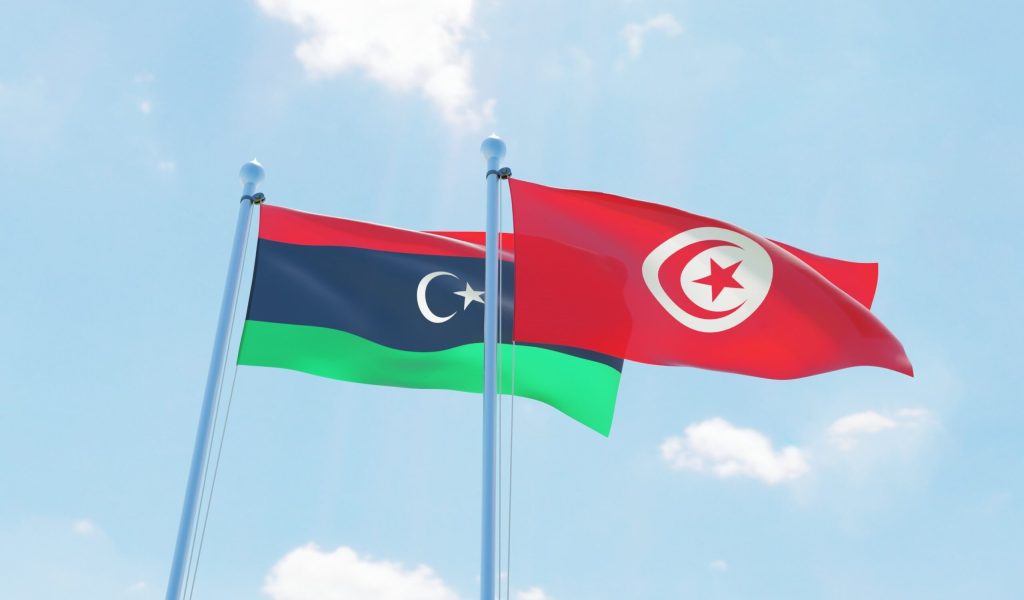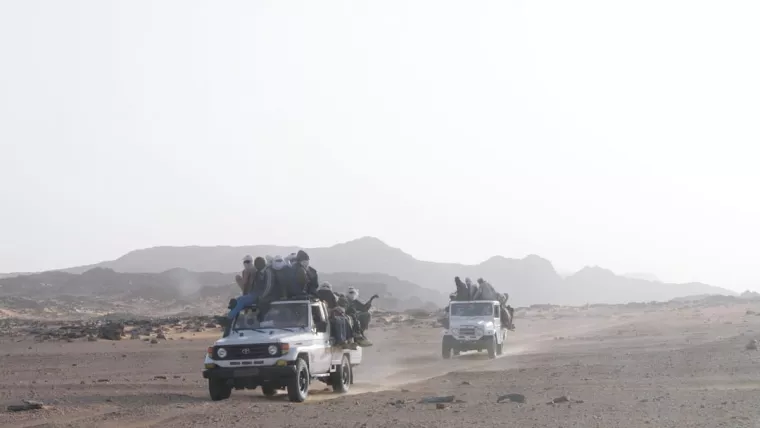
Libya’s southern borders are difficult to secure. Vast desert areas, remote communities and limited infrastructure make effective border management a constant challenge. But the risks facing Libya cannot be understood by looking at its borders alone.
Developments in Algeria, Niger, Chad and Sudan are increasingly connected to the security environment in southern Libya. Armed groups and trafficking networks operate across national boundaries, while the movement of people, weapons and goods can be affected by instability far beyond Libya itself.
Recent developments, including Algeria’s decision to deploy military units to Niger and the continuing conflict in Sudan, show how quickly the regional picture can change. For Libya, the important question is not simply what is happening in neighbouring countries, but how those developments may affect security inside Libya.
Algeria’s Military Deployment in Niger: Why It Matters for Libya
Algeria has long considered stability in the Sahel and Sahara a national security priority. Its extensive borders, energy interests and regional influence mean that developments in neighbouring countries have a direct bearing on its security calculations.
This became more visible in October 2026, when Algeria’s parliament approved the deployment of National Army units to northern Niger to protect energy and economic interests. On 30 October, Reuters reported that an Algerian military convoy had arrived in Niger. Sources told the agency that it had reached Arlit. The number of troops, the precise mission and the duration of the deployment have not been publicly disclosed.
Algeria’s interests include investments by state-owned energy company Sonatrach and the proposed Trans-Saharan Gas Pipeline, intended to carry Nigerian gas through Niger and Algeria. The pipeline remains a planned project.
The deployment signals Algeria’s willingness to take a more direct role in protecting its interests beyond its own territory. It should not, however, be interpreted as evidence that Algeria intends to intervene in Libya.
For Libya, the development is worth watching. A stronger Algerian presence in northern Niger could influence regional security arrangements and activity around important cross-border routes. It also underlines the value of regular communication between neighbouring countries.
Niger and the Growing Security Risks Along Libya’s Southern Routes
Niger continues to face serious security challenges following the military takeover in July 2023. Armed groups, including Jama’at Nusrat al-Islam wal-Muslimin (JNIM), which is linked to al-Qaeda, and the Islamic State Sahel Province (ISSP), remain active in parts of the country.
The geography matters. Much of the insurgent activity reported in Niger has been concentrated in western areas such as Tillabéri. Northern areas, including Arlit, Agadez, Bilma and Madama, have a different profile, shaped by mining, trade, migration and movement across remote desert routes.
These routes connect northern Niger with southern Libya and are used by local communities, traders, migrants and commercial operators. They can also be exploited by smugglers and armed networks. Not every cross-border journey is linked to criminal or militant activity, but authorities need the ability to distinguish ordinary movement from activity that presents a genuine risk.
The International Organization for Migration’s March 2026 flow-monitoring report recorded 384,564 observations at monitoring points in Niger and reported a 228 per cent increase in outbound movements towards Libya compared with February. These are observations, not a count of unique individuals who entered Libya. Even with that distinction, the figures point to changing movement patterns and the importance of monitoring routes towards the country.
In its March 2026 report, the UN Panel of Experts on Libya documented links between individuals and networks operating in Libya and armed or criminal actors in the Sahel. The report described cooperation involving fuel smuggling, small arms and the movement of gold from artisanal mining areas through Libyan territory.
Importantly, the Panel assessed that these affiliates had limited capacity to carry out large-scale attacks inside Libya, while remaining part of wider regional criminal and terrorist-financing networks.
That distinction matters. The threat is not limited to the possibility of direct attacks. Criminal networks can generate income for armed actors, undermine border controls and connect groups operating across several countries. Responding effectively requires reliable information, cooperation between security institutions and a better understanding of local conditions.
Chad, Sudan and the Expanding Regional Security Challenge
Chad’s security situation is closely connected to developments in Sudan and Libya. Since the conflict between the Sudanese Armed Forces and the Rapid Support Forces (RSF) began in April 2023, the war has created serious humanitarian and security consequences across the region.
Chad has received large numbers of people fleeing the conflict. In September 2026, UNHCR reported that more than 55,000 Sudanese refugees had arrived in eastern Chad since the beginning of the year. Their arrival places pressure on border communities and already limited humanitarian resources.
People fleeing conflict should not be treated as a security threat; they need protection. The wider concern is that prolonged instability and weak border management can create opportunities for trafficking, exploitation and the movement of fighters and weapons.
The UN Panel of Experts’ March 2026 report raised concerns about the use of Libyan territory in connection with the Sudan conflict. It documented the presence of RSF-affiliated fighters in Libya during the reporting period and described facilities and routes in the south reportedly used to support movements towards Sudan, including a rear base in the wider area south-west of Kufrah.
These findings concern specific actors and locations. They should not be taken as evidence that all Libyan institutions or communities are involved. They do, however, show how developments in Sudan can have direct implications for Libya’s southern security environment.
There have also been steps towards closer cooperation between Libya and Chad. In November 2025, the eastern-based Libyan General Command and the Chadian Army announced the establishment of a joint force intended to address smuggling, trafficking and armed-group activity along their shared border. The announcement was an important step, although its practical value will depend on how the arrangement is implemented.
Libya’s Border Security: Coordination Remains the Weak Point
Libya has already taken steps to strengthen its military presence in the south. The task now is to make those deployments and related security arrangements work effectively.
On 31 January 2026, an armed group briefly seized the Al-Tum border crossing with Niger. Eastern-based forces later announced that they had regained control. The incident exposed the vulnerability of remote border positions and the difficulty of maintaining security across such a large area.
In February, the Southern Military Region Command established an operations room covering Sebha, Murzuq and Ubari, with the stated aim of improving coordination and readiness among forces operating in the region.
Efforts have also been made to improve cooperation between eastern and western Libyan institutions. In May 2026, UNSMIL reported that representatives from both sides had discussed practical measures, including exchanging border guard units for joint operations in selected areas and further developing border-security coordination centres in Benghazi and Tripoli.
An October 2026 meeting facilitated by UNSMIL brought together 45 military and security officers from across Libya, alongside personnel from the Joint Communication and Information-sharing Centres. Participants reviewed progress and agreed to carry out joint field operations. The meeting and its objectives were reported by Libya Herald.
These initiatives are encouraging, but agreements and military deployments alone are not enough. Their success will depend on regular communication, clear responsibilities, reliable information-sharing and practical cooperation on the ground.
What Libya Needs to Prioritise
Several practical priorities stand out.
Improve information-sharing. Military commands, border units, police, intelligence services and civilian authorities need reliable channels for verifying and exchanging information. This can help decision-makers build a clearer picture of developments and respond before local incidents escalate.
Make regional cooperation practical. Regular contact with Algeria, Niger and Chad should focus on border incidents, trafficking routes and emerging threats. Agreements are most useful when they lead to clear procedures and working-level communication.
Engage local communities. Municipal authorities, community leaders and local security actors often understand movement patterns and conditions in remote areas better than institutions based in major cities. Their knowledge can help authorities identify changes and avoid measures that unnecessarily disrupt local life.
Keep humanitarian needs in view. Migration and displacement should not automatically be treated as criminal or security activity. Effective border management must distinguish between people seeking safety and networks that exploit instability.
Conclusion
Developments in Algeria, Niger, Chad and Sudan show that Libya’s southern security challenges are part of a wider regional picture. Algeria’s military engagement in Niger, instability across the Sahel and the continuing war in Sudan all have implications for the movement of people, armed actors and criminal networks.
Libya has already taken steps to strengthen its presence in the south and improve cooperation, including through arrangements with Chad and coordination between eastern and western institutions. The next step is to turn these efforts into a consistent system: one built on communication, verified information, trust between institutions and practical partnerships with neighboring countries and local communities.
Ultimately, Libya’s security will not depend only on how many forces are deployed along its borders. It will also depend on how well those forces and institutions work together to respond to developments that do not stop at national boundaries.