The war in Sudan, cross-border trafficking and weak coordination are testing Libya’s ability to secure its southern frontier. Cooperation between eastern and western institutions offers a starting point, but lasting security will require more than joint centres and patrols.
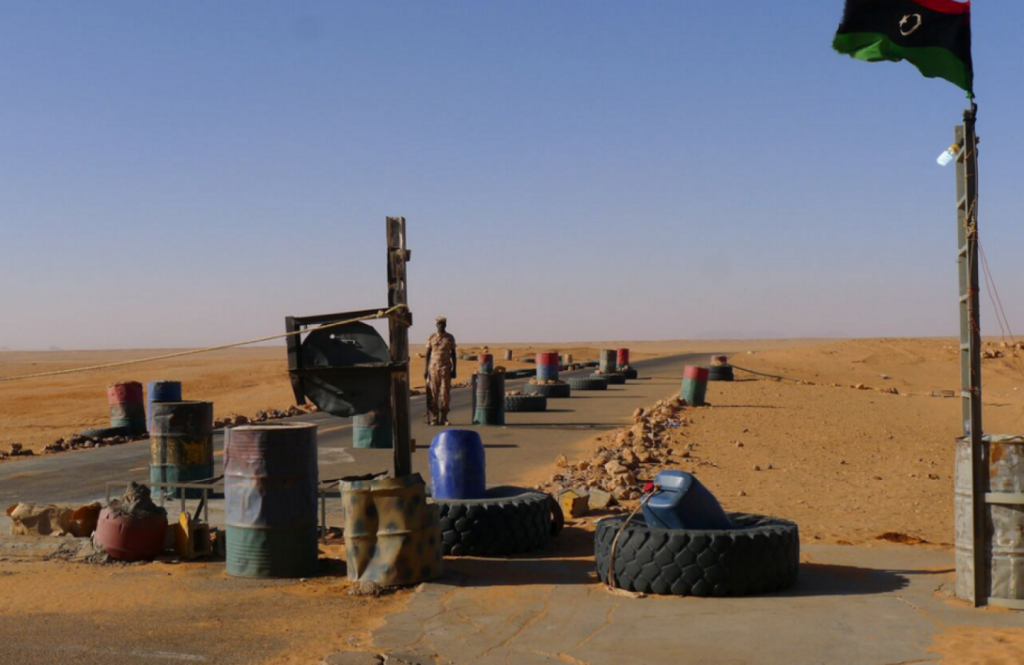
Libya’s southern border is becoming an increasingly important security challenge. The conflict in Sudan, cross-border trafficking networks and the movement of people, vehicles and goods across the Sahara are placing pressure on an area where state control remains limited. For Libya, the problem extends beyond preventing illegal crossings. It concerns the ability of security institutions to monitor territory, share intelligence and respond to threats across a border that connects several unstable regional environments.
The challenge is complicated by Libya’s divided security structure. Authorities in the east and west maintain separate command arrangements, while local security actors exercise considerable influence across different parts of the country. Yet the threats facing southern Libya do not follow the same institutional boundaries. Smuggling networks, armed groups and trafficking operations can move across jurisdictions, exploiting gaps in communication and enforcement.
This creates a practical national security problem: even when individual forces maintain control over their areas, fragmented coordination can leave wider gaps in border management.
Sudan’s war is changing the regional security environment
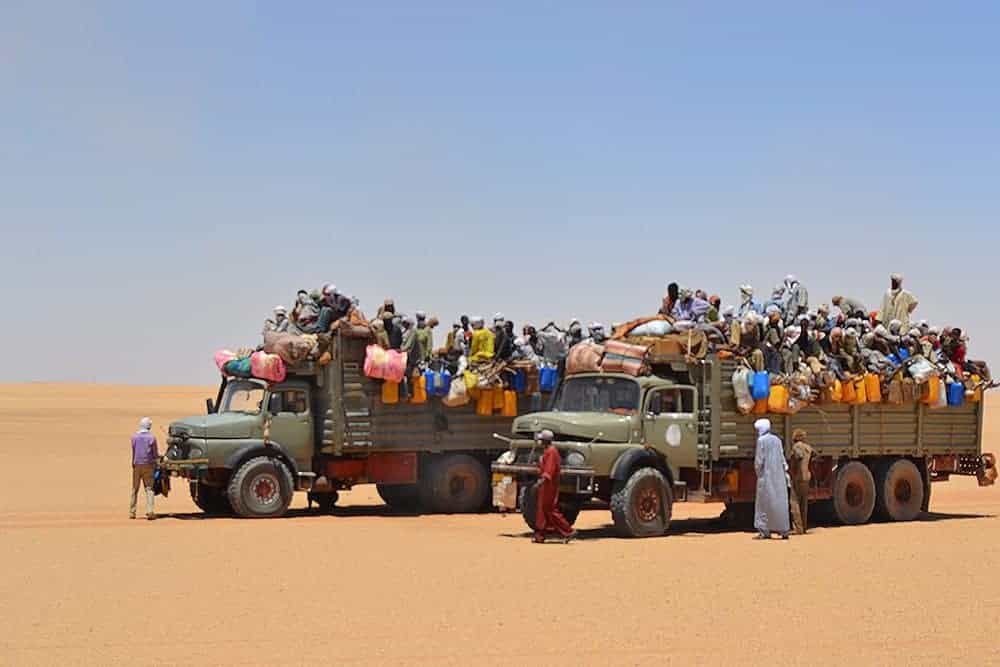
The war in Sudan has added another layer of pressure. Since fighting began in April 2023, the conflict has displaced millions and disrupted established trade and movement routes across the region. Southern Libya, particularly the area around Kufra, has become an important destination for people fleeing Sudan, while the wider border region remains exposed to cross-border criminal activity.
The security implications extend beyond migration. Conflict zones create opportunities for weapons trafficking, illicit trade, human smuggling and the movement of armed personnel. Routes that serve commercial and local communities can also become logistical corridors for networks operating outside formal state control.
The International Organization for Migration’s April–June 2026 border assessment recorded a 23 per cent increase in incoming migration movements across Libya’s borders compared with the previous quarter. It also documented continued movements of people, goods, vehicles and livestock along several cross-border corridors, including routes connecting Libya with Chad and Algeria. These findings illustrate how difficult it is to separate security management from the wider economic and social activity taking place across the Sahara.
However, migration should not automatically be treated as a security threat. Many people crossing into Libya are seeking employment, safety or a route away from conflict. The greater concern is the ability of criminal networks to exploit vulnerable people and operate through poorly monitored routes. Effective border policy must distinguish between legitimate movement, irregular migration, human trafficking and organized criminal activity.
Libya’s southern border therefore requires a broader approach than increasing patrols. Authorities need reliable information about who and what crosses the frontier, where established routes operate and how criminal networks move between neighbouring countries.
Cooperation is possible, but coordination must become operational
There have been efforts to address the institutional problem. In April 2025, a joint technical coordination team of military and security officials from the Government of National Unity and the Libyan National Army established an information-sharing centre in Tripoli with support from the United Nations Support Mission in Libya (UNSMIL). The initiative aimed to support border security, counterterrorism and efforts to address irregular migration.
In October 2025, representatives from military and security institutions across Libya agreed on a location for a second joint centre in Benghazi. According to Libya Herald’s report on the agreement, the two centres were intended to facilitate information-sharing and support coordinated responses to border security challenges.
The initiative is significant because it creates a practical channel for cooperation between institutions that remain politically and administratively divided. However, establishing communication centres does not automatically produce an integrated security system.
UNSMIL’s May 2026 assessment of military and security unification identified parallel armed structures, weak enforcement mechanisms and border vulnerabilities among the main obstacles to improving security coordination. Participants also highlighted the destabilising impact of foreign interference and the presence of foreign fighters and mercenaries.
The findings point to a central problem: technical improvements alone cannot resolve fragmentation when political and institutional arrangements continue to limit coordination.
Joint centres are a useful starting point, but their effectiveness will depend on what happens beyond the meeting rooms. Information must reach the personnel responsible for border operations. Authorities must agree on procedures for responding to threats, establish clear responsibilities and maintain communication when incidents cross administrative boundaries.
Libya also needs stronger cooperation with neighbouring countries. Its southern frontier connects directly to Chad, Niger, Sudan and Egypt, making regional intelligence-sharing and coordinated border management essential. No single Libyan institution can monitor these routes effectively without working with neighbouring states and addressing the networks that operate across them.
The wider challenge is to build a security system that can function despite Libya’s political divisions. This requires consistent procedures, better local intelligence and the ability to respond to shared threats without relying entirely on political agreements at the national level.
As discussed in LSB’s analysis of security risk management in Libya, managing security risks requires more than a visible security presence. It depends on reliable information, coordination between local actors and the ability to adapt to changing conditions.
Libya’s southern border is a test of whether security cooperation can deliver practical results before a broader political settlement. The country’s eastern and western institutions may continue to operate under separate command structures, but the threats facing the border are common to both. If information-sharing remains limited or cooperation depends on temporary political arrangements, criminal networks will continue to exploit the gaps.
Securing the south will not come from patrols alone. It will require institutions that can exchange information, coordinate decisions and maintain a sustained presence across the territory. The question is no longer simply who controls the border, but whether Libya’s security institutions can manage it together.