Nearly one million migrants live in Libya, many working in its economy. Weak documentation, exploitation and trafficking networks create a security challenge that cannot be addressed through border enforcement alone.
Libya’s migration debate often centres on its position as a departure point for people attempting to reach Europe. But this view overlooks a much larger reality: Libya is also a destination and a place of work for hundreds of thousands of migrants. Their presence shapes local labour markets, commercial activity and public services, while exposing weaknesses in the country’s ability to regulate movement and protect vulnerable populations.
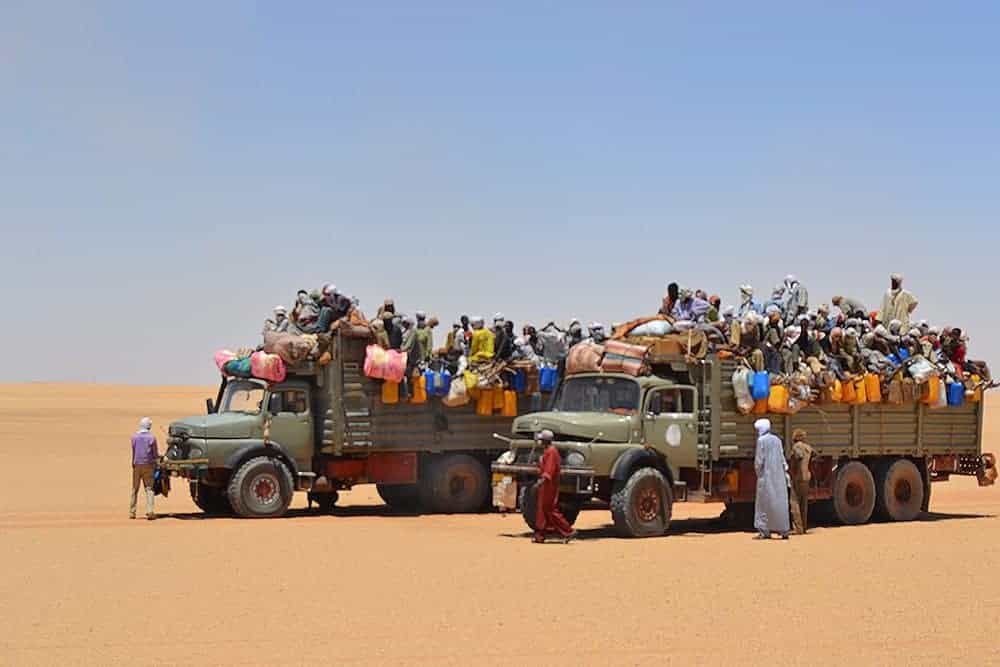
The scale is significant. According to the International Organization for Migration’s (IOM) May–June 2026 migrant assessment, Libya hosted an estimated 950,004 migrants across 100 municipalities. This represented a 35 per cent increase compared with April 2023, when IOM identified 705,746 migrants. The figures reflect a population shaped by economic opportunities, regional instability and the continuing conflict in Sudan.
These numbers challenge the assumption that most migrants in Libya are simply passing through. Many remain for extended periods, find employment and establish connections with local communities. Their circumstances vary considerably, from people seeking temporary work to those fleeing conflict and people hoping to continue towards Europe.
For security policymakers, this distinction matters. A country that treats migration primarily as a transit problem risks overlooking the administrative and economic conditions that determine how people live, work and move within its territory.
Migration is part of Libya’s domestic economy
Migration in Libya is closely connected to demand for labour. Construction, agriculture, domestic services and other sectors rely on migrant workers, particularly in areas where employers need flexible and relatively accessible labour.
IOM research covering January 2024 to October 2025 found that migrants who had lived in Libya for between one and five years formed an important part of the country’s labour market. Their research also highlighted the circular nature of migration, with some workers moving between Libya and neighbouring countries rather than following a single journey towards Europe.
This creates a policy challenge. Migrants contribute to economic activity, but many face insecure employment, limited documentation and difficulties accessing services. When workers cannot establish their legal status or seek protection without fear of detention or exploitation, they become more vulnerable to employers and intermediaries operating outside formal regulations.
The consequences extend beyond individual welfare. Weak oversight of employment and residency creates opportunities for criminal networks to profit from people’s vulnerability. It also makes it harder for authorities to distinguish ordinary labour migration from human trafficking, organised smuggling and other forms of exploitation.
Libya’s security institutions therefore face a problem that cannot be solved through immigration enforcement alone. Labour regulation, documentation, local administration and access to protection all influence the environment in which trafficking networks operate.
The real security concern is exploitation and weak enforcement
The relationship between migration and organised crime remains one of Libya’s most serious security concerns. Smuggling networks profit from people’s need to cross borders, while trafficking operations can involve kidnapping, forced labour, extortion and sexual violence.
A February 2026 report by the United Nations Support Mission in Libya (UNSMIL) and the Office of the United Nations High Commissioner for Human Rights (OHCHR), titled Business as Usual, documented continuing violations against migrants, asylum seekers and refugees. The report identified trafficking networks operating along migration routes and described cases involving torture, sexual violence and other forms of abuse. It also raised concerns about links between criminal networks and individuals connected to security structures and armed groups.
The findings point to a difficult institutional problem. Enforcement agencies are expected to manage migration and combat trafficking, but allegations involving individuals connected to official structures undermine confidence in those efforts. Where accountability is weak, criminal networks can exploit the gaps between formal authority and actual control.
The report also highlights the risks associated with policies that prioritise interception without ensuring adequate protection. Restricting movement does not necessarily eliminate demand for migration or the networks that facilitate it. It can instead push people towards more dangerous routes and intermediaries.
For Libya, this creates a distinction between controlling migration and securing the country. Effective security policy must target criminal activity, improve oversight and strengthen the institutions responsible for enforcing the law. It should not treat the presence of foreign nationals as evidence of insecurity in itself.
A security policy built around governance
Libya’s migration challenge ultimately reflects a wider problem of governance. Different authorities and local actors exercise responsibilities across the country, while national institutions continue to face difficulties coordinating policy and enforcement.
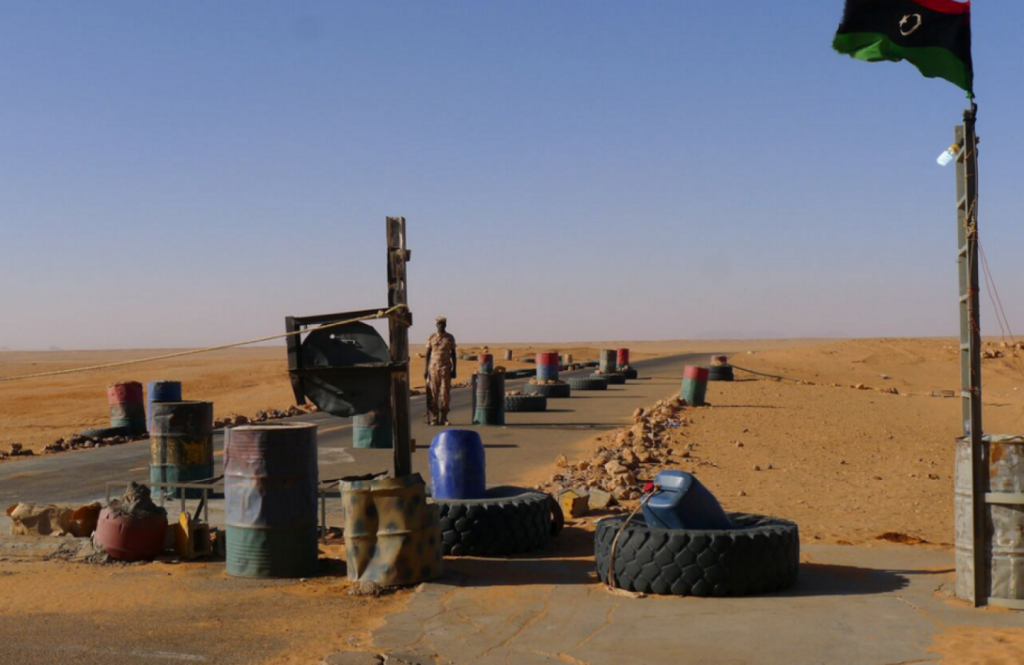
This fragmentation complicates the management of residency, border crossings, detention facilities and labour regulation. It also creates inconsistencies in how migrants are treated across different municipalities. As explored in LSB’s analysis of Libya’s southern border security, security threats often cross administrative boundaries, making coordination and information-sharing essential.
A more effective approach would combine stronger border management with better documentation systems, labour inspections, protection mechanisms and accountability for abuses. Cooperation with neighbouring countries is equally important, particularly where trafficking and smuggling networks operate across several jurisdictions.
European migration policy also forms part of this picture. Cooperation with Libyan authorities on interceptions and border management has increased the importance of accountability over how migration operations are conducted. External support can strengthen operational capacity, but it cannot replace functioning institutions or ensure that abuses do not occur.
The challenge for Libya is not simply to reduce the number of people attempting to cross its borders. It is to develop the institutional capacity to manage a large migrant population, protect people from exploitation and prevent criminal networks from using weak enforcement to their advantage.
Libya’s migration debate needs to move beyond the assumption that the country is only a corridor to Europe. Almost one million migrants living across its municipalities represent a long-term economic, administrative and security reality. Ignoring that reality will leave authorities focused on movement while overlooking the conditions that allow exploitation and organised crime to persist.