Working in Libya presents challenges that go beyond what is reported in the news. Political divisions, localised violence, changes in road access and unreliable information can all affect the safety of staff and an organisation’s ability to operate. For diplomatic missions, development organisations and private-sector companies, understanding these risks is part of making sure their work can continue safely.
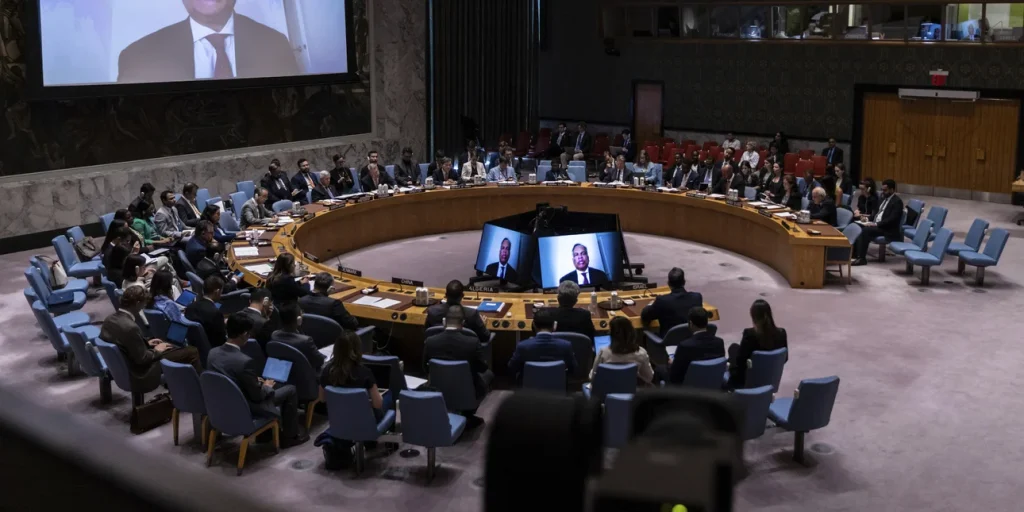
On 14 October 2026, Hanna S. Tetteh, the UN Secretary-General’s Special Representative for Libya, briefed the UN Security Council on the situation in the country. Although progress had been made in the UN-facilitated political process, significant political, economic and security challenges remained. (Read the UNSMIL briefing)
Developments at the national level matter, but they do not always tell the whole story. An announcement about political progress does not necessarily mean that conditions have improved in a particular neighbourhood or along a road that staff need to use. For organizations working across Libya, understanding the difference between the wider picture and what is happening locally is essential.
This is where security risk management becomes important. It helps organizations decide whether a planned movement is safe enough to proceed, whether a field visit needs to change or whether an activity should wait. The purpose is not to avoid every possible risk. It is to understand the risks involved and make sensible decisions before people are put in unnecessary danger.
Understanding what is happening on the ground
One of the difficulties of working in an uncertain security environment is how quickly circumstances can change. An area may appear calm in the morning, only for an incident to affect access a few hours later. Information that was accurate yesterday may no longer be useful today.
News reports and wider political analysis help explain what is happening across Libya. However, they may not capture a change in conditions on a particular road or the latest developments in a specific area. Organizations therefore need to look at different sources, including recent incident reports, local information, direct observations and updates from trusted contacts.
The important point is not simply to collect as much information as possible. It is to understand how reliable that information is and whether it is relevant to the decision being made. If two sources give different accounts of the same situation, that difference needs to be investigated rather than ignored.
There will always be things that an organization cannot know in advance. A risk assessment cannot predict every incident, but it should identify the main threats, consider what could happen and highlight where information is missing.
Risk assessments should also be revisited when circumstances change. A decision that made sense earlier in the day may no longer be appropriate after a new incident, an access restriction or a credible warning. Treating an assessment as a fixed document rather than an ongoing process can leave an organisation relying on information that is no longer accurate.
When conditions change
Consider a situation in which an organization evacuates staff from an area because of armed clashes. The following morning, reports suggest that the situation has calmed, and the organization begins planning movements again. Shortly after a team sets off, fighting resumes along the intended route.
The team must now reassess the situation and consider its alternatives. Even if an emergency plan exists, the response will depend on the quality of the information available, the routes that remain accessible and how quickly the organization can communicate with those involved.
This example highlights a simple but important point: a quieter situation does not necessarily mean a safe one.
Local updates, alternative routes, agreed communication procedures and identified safe locations can all help. But contingency planning is only one part of the process. Organizations must also decide whether the available information justifies making the movement in the first place.
That decision should take account of what is known, what remains uncertain and what could happen if conditions deteriorate. If credible concerns cannot be resolved, delaying a movement may be the more responsible option.
There is no single answer that fits every situation. A short journey, an essential medical movement and a routine field visit may involve different considerations. The decision should reflect the circumstances, the possible consequences and whether the available precautions genuinely reduce the risk. Sometimes a movement can proceed with additional measures; at other times, changing the route, postponing the activity or cancelling it may be necessary.
Movement security: checking before departure
Movement security is a practical example of why current information matters. A route that was suitable last week may not be suitable today. Previous assessments remain useful, but they should not replace a fresh review of the situation.
Before a team departs, several questions are worth asking:
- Have there been recent incidents near the route or destination?
- Does the local information match what other reliable sources are reporting?
- Have road access, checkpoints or the presence of armed actors changed?
- What happens if the situation deteriorates while the team is travelling?
- Are there alternative routes, safe locations and reliable ways to communicate?
- Is there enough reliable information to justify proceeding?
These questions help identify problems before they become emergencies. They also encourage decision-makers to consider more than the expected journey: they need to think about what could go wrong and how the team would respond.
Conflicting information deserves particular attention. It can be tempting to rely on the report that suggests everything is fine, especially when there is pressure to keep a schedule. But choosing the most reassuring account does not make the underlying risk disappear.
Where possible, organizations should check the information with independent sources, ask for clarification and continue monitoring developments. If a credible threat remains unclear, the decision to proceed needs careful consideration and should follow the organization’s established procedures.
Uncertainty does not automatically mean that all movements must stop. The important question is whether the available information is sufficient to make a reasonable decision and whether the risks can be reduced to an acceptable level.
Why local information matters
People who live or work in an area may notice changes before they appear in formal reports. They may hear about road closures, changes in movement patterns or rising tensions that could affect a planned visit. In a fast-moving situation, such information can be particularly valuable.
However, local information also needs to be checked. A source may have direct knowledge of one location but little understanding of what is happening elsewhere. Information may also be outdated, incomplete or influenced by personal interests.
For this reason, local knowledge is most useful when considered alongside wider political and security analysis. National reporting can help explain the broader context, while local updates can show how developments may affect a particular place or movement.
Neither source should automatically take priority in every situation. What matters is understanding where the information comes from, what it actually confirms and whether it is supported by other evidence.
In Libya, where circumstances can differ considerably from one area to another, this distinction is important. A general assessment of the national situation cannot replace an assessment of the specific conditions affecting staff and operations.
When warnings are overlooked
Having information available does not guarantee that it will influence a decision. Organizations have programs to deliver, meetings to attend and commitments to partners. Changing a schedule can be inconvenient, expensive or difficult to explain. These pressures can make postponing an activity harder, even when there are legitimate security concerns.
Imagine that several credible sources report armed clashes near a planned route. The available assessment recommends delaying the movement, but the team is working to a tight schedule.
In this situation, the reasons for the recommendation need to be explained clearly. Decision-makers should understand what has been reported, how reliable the information is, what the possible consequences could be and which risks cannot be adequately reduced.
It is also important to discuss alternatives. Could the movement take place later? Is another route available? Could the activity be moved to a different location, or does it need to be cancelled altogether?
Security advice should be based on evidence and should explain uncertainty honestly. Exaggerating a threat is not helpful, but neither is downplaying a credible warning simply because changing plans would be inconvenient.
Responsibility for decisions must also be clear. Security staff provide assessments and recommendations within their roles, while authorised managers make operational decisions in line with organisational procedures and delegated authority. There should be a clear process for escalating urgent concerns, particularly when there is little time to respond.
An organization’s approach to warnings matters as much as the information it receives. If staff feel unable to raise concerns, or if those concerns are routinely dismissed, even a well-developed security process may fail when it is most needed.
Professional judgement under pressure
Procedures, incident logs and risk matrices are useful tools, but they cannot cover every situation. At times, decisions have to be made with incomplete information and little time to consider every possible outcome.
Professional judgement means looking carefully at the available evidence, recognising its limitations and weighing the possible consequences. It is not simply about choosing the safest-looking option or avoiding anything uncertain. It is about understanding the risk and deciding whether it is reasonable to proceed.
When credible information points to an unacceptable risk, concerns should be raised promptly. The situation may need to be reassessed, alternative options considered and the appropriate escalation process followed.
Pressure to deliver an activity should not prevent a genuine security concern from being heard. At the same time, recommendations should be proportionate and based on evidence, taking account of the organisation’s risk tolerance and responsibilities.
Good security leadership depends on several qualities: sound judgement, clear communication, accountability and the ability to remain calm when circumstances change. These qualities help ensure that difficult decisions are made thoughtfully rather than simply in response to pressure.
Being prepared before something happens
Emergency plans are important, but their value depends on whether people understand them and can use them under pressure. A plan that looks complete on paper may be of little help if staff do not know who is responsible, how to communicate or when to take action.
Organisations operating in Libya should pay particular attention to five areas.
1. Movement and evacuation planning. Routes, alternative options and safe locations should be identified in advance. Staff should also understand which changes in circumstances may require the plan to be reviewed.
2. Communication. Personnel need to know how to report an incident, contact relevant colleagues and receive urgent updates. Contact lists and communication arrangements should remain current.
3. Briefings and responsibilities. Drivers, field teams, security personnel and managers should understand their roles before an activity begins. Confusion over responsibilities can waste valuable time during an emergency.
4. Medical and emergency support. Plans should reflect the medical assistance available, relevant emergency contacts and any additional needs that could affect a response.
5. Decision-making authority. Staff should know who can recommend or authorize a delay, a change of route or a cancellation, and how urgent concerns should be escalated.
Briefings and exercises can help identify weaknesses before an incident occurs. Reviewing previous incidents and near misses can also show where communication, planning or decision-making needs to improve.
Just as important is making sure that staff can raise concerns quickly and without unnecessary barriers. Preparedness is not only about having procedures in place; it is also about making sure people can use them when it matters.
Five practical priorities for organisations in Libya
There are several ways organisations can strengthen their approach without making security procedures unnecessarily complicated.
1. Use different sources of information. Combine local updates, trusted contacts, incident reports, direct observations and wider political and security analysis. Check important information wherever possible.
2. Keep assessments current. Review planned movements and activities when new information emerges or conditions change. Do not assume that an earlier assessment remains valid simply because no further incident has been reported.
3. Agree on clear movement criteria. Establish when an activity can proceed, when extra precautions are needed and when it should be delayed or cancelled. Everyone involved should understand these criteria.
4. Communicate concerns clearly. Explain the evidence, the potential consequences and the options available. Decision-makers need to understand not only the risks of proceeding but also the implications of delaying an activity.
5. Make preparedness part of everyday work. Keep responsibilities clear, conduct regular briefings and exercises, and learn from incidents and near misses.
These steps can help protect staff, support field operations and reduce unnecessary disruption. They can also give personnel greater confidence that risks are being taken seriously and that decisions are being made through a clear process.
Conclusion
For international organizations working in Libya, security risk management is not simply a matter of following procedures or responding when an incident occurs. It is about understanding how conditions are changing and making decisions before those changes put people at risk.
The UN briefing on 14 October 2026 highlighted both progress in the political process and the challenges that remain. Organisations need to consider these wider developments, but they must also pay attention to what is happening locally and how it affects their own activities.
The challenge is not to avoid every risk or stop essential work whenever uncertainty arises. Organizations still have responsibilities to their staff, partners and the communities they serve. The task is to understand which risks can be managed, what precautions are needed and when proceeding is no longer reasonable.
Reliable information, local knowledge, careful analysis and clear communication all contribute to better decisions. So does the willingness to question a plan when circumstances change, even when postponing an activity is inconvenient.
No organization can guarantee that an incident will never happen. What it can do is prepare properly, recognize warning signs and make informed decisions that give people the best possible chance of staying safe while essential work continues.