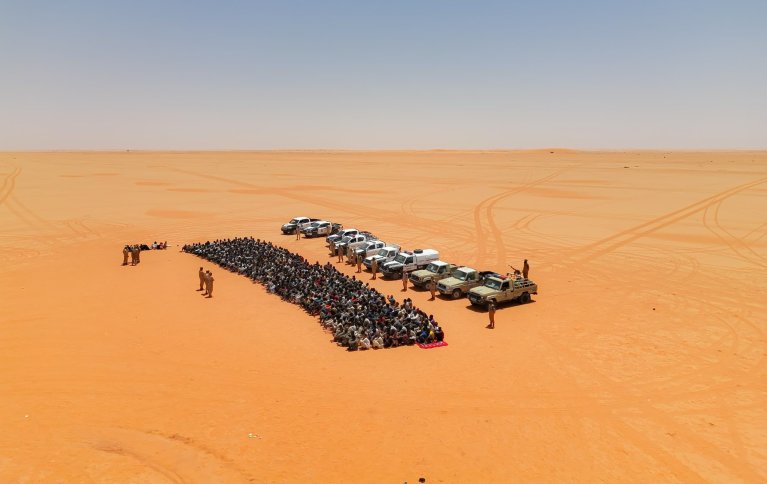
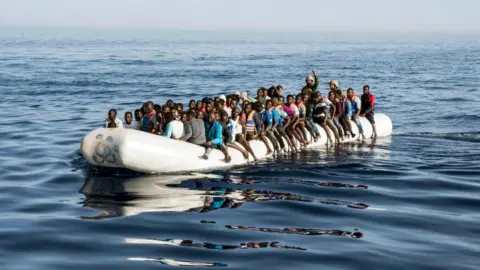
The European Union has allocated an additional €25 million to expand migration cooperation with eastern Libya, deepening its engagement with authorities under military commander Khalifa Haftar. The funding will support border management, search-and-rescue operations and efforts to combat migrant smuggling, according to Reuters.
The decision marks another step in the EU’s effort to reduce irregular migration across the Mediterranean. It also highlights a strategic reality: although Brussels formally recognises the Tripoli-based government, controlling migration routes increasingly requires cooperation with authorities in eastern Libya.
For Libya, the agreement raises questions about the relationship between migration management, security cooperation and the growing international role of eastern authorities.
The EU Deepens Engagement With Eastern Libya
The new funding follows rising migrant departures from areas under Haftar’s control. The EU announced plans in July to establish a Maritime Rescue Coordination Centre in Benghazi, adding an operational dimension to its expanding engagement with the east.
This approach reflects the limits of a migration policy built around cooperation with Tripoli alone. Libya’s divided political and security structures mean that effective border monitoring and maritime operations require coordination with authorities across different areas of the country.
The EU has supported Libyan migration management for years, including coastguard operations and programmes to assist migrants returning voluntarily to their countries of origin. According to the European Commission’s overview of EU-Libya relations, the bloc has funded migration-related programmes covering border management, protection and returns.
The expansion into eastern Libya therefore builds on an established policy. The difference lies in the growing importance of eastern authorities to its implementation.
Migration Cooperation Could Strengthen Eastern Libya’s Position
The agreement carries implications beyond migration control. Direct cooperation with eastern authorities gives them a more prominent role in a policy area that matters to European governments, particularly as they seek to reduce arrivals across the central Mediterranean.
This engagement does not amount to formal EU recognition of a separate eastern government. However, it shows how practical security requirements can push European governments to work with actors outside the internationally recognised administration in Tripoli.
For Haftar’s eastern power structure, cooperation with the EU could provide additional international engagement and strengthen its position as a partner on regional security. For Brussels, it offers a way to pursue migration objectives in areas where its existing relationships may not provide sufficient operational reach.
The arrangement also creates a potential tension. If European funding strengthens cooperation with eastern security institutions without advancing coordination between Libya’s rival authorities, migration management could develop along separate institutional lines. That would complicate efforts to build a unified national system for border control and maritime rescue.
Accountability Remains a Central Challenge
The effectiveness of the funding will depend on more than the number of interceptions or departures prevented. Search-and-rescue capacity, transparent oversight and the treatment of migrants must also shape how the EU measures progress.
Libya’s record on migrant protection has long raised serious concerns. Migrants face risks of detention, exploitation and abuse, making safeguards and independent monitoring essential parts of any cooperation programme. The EU itself describes protection and voluntary humanitarian returns as important elements of its migration policy.
The latest agreement could expand the EU’s operational reach, but funding alone cannot resolve Libya’s fragmented security system or the conditions that expose migrants to exploitation. Nor can stronger border controls address the economic, political and security pressures that drive people to leave their countries.
The central question is whether the EU can expand practical cooperation with eastern Libya while maintaining meaningful safeguards and avoiding further institutional fragmentation. Its success will depend not only on reducing crossings to Europe, but also on how the partnership affects Libya’s security institutions and the people caught within its migration system.