The war in Sudan is changing the strategic importance of Libya’s southern border. At the same time, Egypt and Turkey are expanding their engagement across Libya’s political divide, producing a regional picture that looks very different from the one that emerged during Libya’s last major conflict.
For years, Libya’s international relationships were relatively easy to map. Turkey became the main external military and political supporter of the Tripoli-based government, while Egypt built a close relationship with the eastern camp led by Khalifa Haftar. That division shaped much of the wider regional competition around Libya.
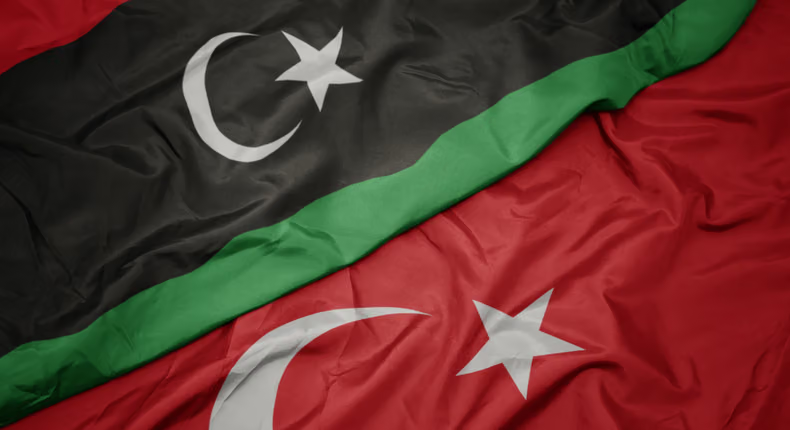
That picture is becoming harder to sustain. Turkey is now engaging directly with eastern Libya alongside its continued relations with Tripoli. In June, Turkish intelligence chief Ibrahim Kalın met Saddam Haftar in Benghazi, with discussions covering Libya’s political and military unification as well as expanding bilateral cooperation. In July, Turkish Foreign Minister Hakan Fidan met Saddam in Ankara. Fidan then travelled to both Tripoli and Benghazi in August, describing the visits as part of Ankara’s “One Libya” approach.
Egypt, meanwhile, continues to maintain close ties with the eastern leadership. President Abdel Fattah el-Sisi met Khalifa Haftar in Cairo in August, while Egypt’s intelligence chief has also engaged with senior Libyan figures from both camps.
The significance of these contacts is not simply that foreign governments are talking to both sides of Libya. It is that eastern Libya is being drawn into conversations that extend well beyond the country’s internal politics.
Sudan Brings Southern Libya into Focus
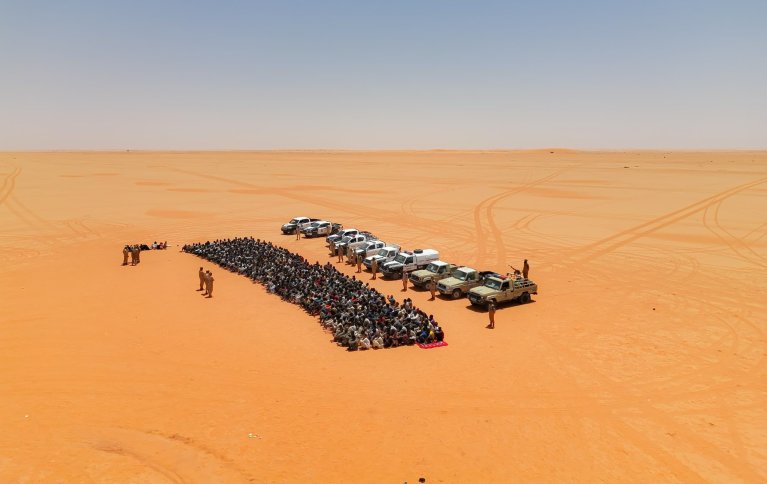
The war between the Sudanese Armed Forces and the Rapid Support Forces has transformed the security environment across the region. Western Sudan sits directly alongside Libya and Chad, while Egypt borders Sudan to the north. This makes Libya’s vast southern territory, long neglected in international discussions, part of a much larger security equation involving borders, weapons flows, fighters, migration, trafficking and trade.
There have been repeated allegations that military supplies linked to the RSF have moved through Libyan territory. Sudanese officials have accused the UAE of using logistical routes through eastern and southern Libya to support the RSF, allegations Abu Dhabi has denied. Reporting has identified routes involving locations such as Benghazi, Tobruk and Kufra, although responsibility for activities along these corridors remains contested.
The wider international investigation into arms flows to Sudan has also identified extensive foreign networks supplying weapons, military equipment and personnel to the warring parties. The issue is no longer confined to Sudan’s internal battlefield. It has become a regional security problem stretching across the Sahel, North Africa and the Red Sea.
For Egypt, the stakes are particularly direct. Cairo has strategic interests in both Libya and Sudan, and instability along either border can compound its own security pressures. This makes eastern and southern Libya more important to governments that previously viewed the country mainly through the lens of its political fragmentation.
A Shifting Diplomatic Pattern
This is where Saddam Haftar’s growing diplomatic exposure becomes relevant.
The important point is not any single meeting. It is the frequency and range of contacts. In the space of three months, Saddam was engaged by the head of Turkey’s intelligence service, Turkey’s foreign minister, and senior Egyptian officials. The broader Haftar camp continues to receive high-level attention from Cairo and other foreign capitals – including meetings with senior officials in Washington.
While these events stop short of confirming Haftar as a regional power broker, and do nothing to help resolve Libya’s institutional division, they do signal that foreign governments are treating the eastern leadership as a necessary channel for discussing regional security through a Libyan lens.
Turkey’s trajectory is particularly notable. Ankara intervened militarily on behalf of the Tripoli-based government during the 2019–20 war against Haftar’s forces. Today, Turkish officials meet the eastern leadership while continuing to work with Tripoli. That represents a significant recalibration of regional diplomacy, and it suggests the old assumption that foreign powers must choose between Tripoli and the east is losing its analytical value.
Turkey can develop contacts in Benghazi while maintaining its relationship with Tripoli. Egypt can sustain its partnership with eastern Libya while coordinating on Sudan and border security. And eastern Libyan figures can engage with governments that once viewed them solely through the prism of the country’s civil conflict.
For Saddam, that creates a different political environment from the one his generation inherited. His foreign contacts are accumulating at a moment when Libya’s eastern and southern geography has become directly relevant to questions that extend far beyond the country’s stalled political transition.
Libya’s Place in the Regional Security System
The broader question is no longer simply what Turkey or Egypt wants from eastern Libya. It is whether Libya itself is beginning to occupy a different position in the regional security architecture.
The country sits between the Mediterranean, Egypt, Sudan, Chad and the wider Sahel. Its southern territory connects several of the region’s most volatile security environments, while its northern coastline gives it direct importance to Europe, Turkey and the Mediterranean basin.
For years, Libya’s fragmentation prevented that geography from translating into a coherent strategic role. Foreign governments worked through different Libyan actors, often reinforcing the country’s divisions rather than treating it as a single security space.
The emerging pattern is more complex. Foreign governments are engaging across Libya’s east-west divide while simultaneously paying greater attention to the security dynamics around its southern borders. Turkey’s “One Libya” policy, Egypt’s continued investment in the eastern relationship, and the regional consequences of the Sudan war are all part of this shift.
Saddam Haftar’s role should be understood within that development. His significance at this stage lies not in any formal position beyond Libya but in his growing access to foreign officials and the breadth of regional issues now being discussed with the eastern leadership.
Whether this diplomatic activity produces meaningful political convergence inside Libya remains uncertain. The country still has competing institutions, competing security structures and unresolved questions over political authority.
But the regional environment around Libya is changing in ways that may matter more than Libya’s internal negotiations in the near term.
Sudan is pushing security concerns closer to Libya’s southern frontier. Egypt has a direct interest in stability on both its western and southern borders.
Turkey is broadening its engagement beyond its traditional partners in Tripoli. And eastern Libya is being treated not simply as one side of a domestic political contest, but as a point of contact in a wider regional conversation.
The strategic question for Libya may therefore be shifting, from who controls which institutions inside the country to how its geography and relationships position it within the security environment taking shape around it.