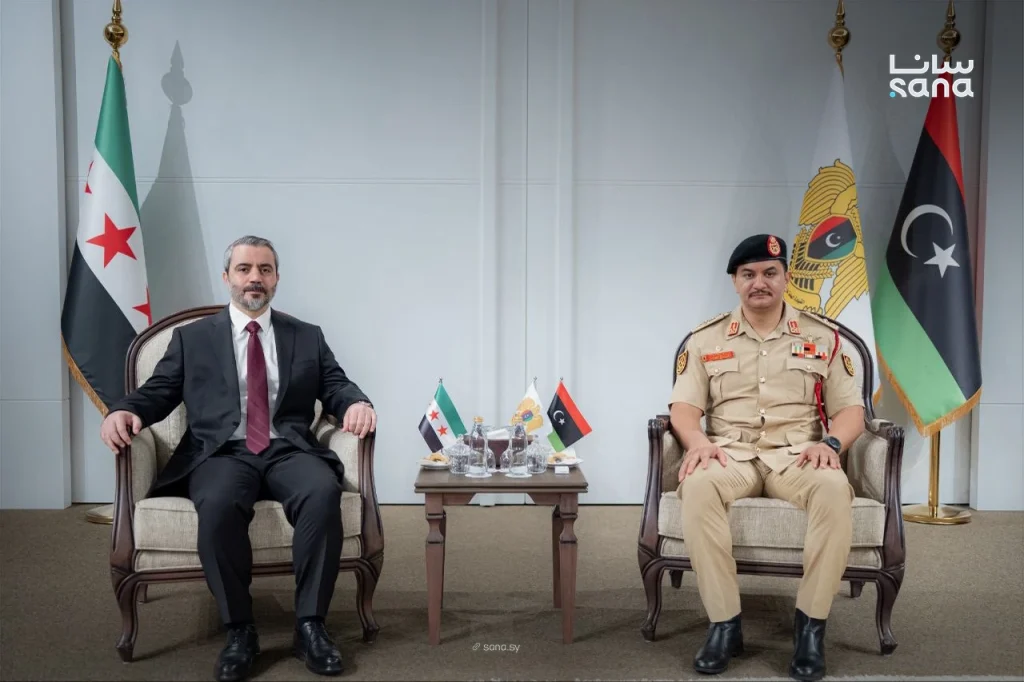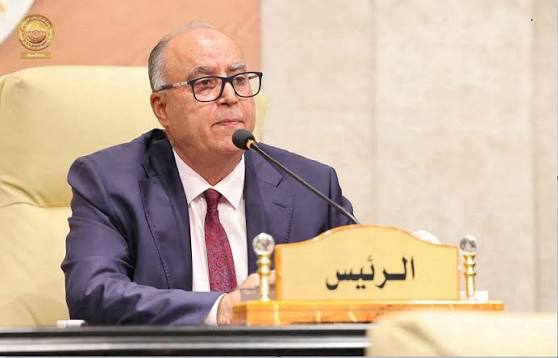
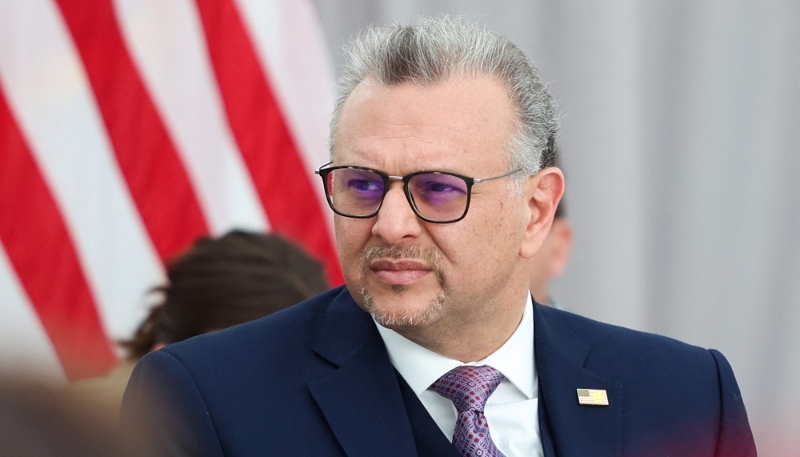
Reports indicate that U.S. Africa adviser Massad Boulos is exploring a plan to formalize a joint government between eastern commander Khalifa Haftar and Prime Minister Abdulhamid Dbeibeh, effectively recognizing both sides within a unified framework without holding national elections.
While details remain limited, the concept marks a significant departure from the UN led process that has, at least formally, prioritized elections as the pathway toward legitimacy. Instead, the proposal appears to reflect a more pragmatic approach centered on stabilizing Libya through power sharing among existing authorities.
The implications of such a shift extend beyond political arrangements. A settlement of this kind would reshape Libya’s security landscape, redefine the role of external actors, and potentially alter the trajectory of the country’s long stalled transition.
From Electoral Process to Power Sharing
Since 2011, Libya’s political roadmap has repeatedly emphasized elections as the mechanism for restoring legitimacy. Yet repeated delays, legal disputes, and security concerns have prevented a national vote from taking place. The most recent electoral timelines for 2026 remain uncertain and dependent on unresolved political agreements.
Against this backdrop, the idea of a joint Haftar–Dbeibeh government represents a shift away from electoral legitimacy toward negotiated authority. Rather than resolving political fragmentation through a vote, the proposal would institutionalize the current balance of power between eastern and western factions.
This approach reflects a growing recognition among international actors that Libya’s political deadlock may not be resolved in the near term through elections alone. However, it also raises questions about the long term consequences of bypassing a democratic process.
The Logic Behind a Dual Power Arrangement
The logic behind a joint government is rooted in Libya’s persistent division. The Government of National Unity continues to operate in Tripoli, while Haftar’s forces dominate much of eastern Libya, creating a de facto split in authority that has endured for years.
Attempts to unify these competing structures through electoral or constitutional processes have repeatedly failed. In this context, a negotiated arrangement between the two main power centers could be seen as a way to formalize an existing reality rather than impose a new one.
From a diplomatic perspective, such a deal could reduce the risk of renewed conflict by aligning the interests of the country’s most influential actors. It could also provide a clearer framework for governance, particularly in areas such as energy management, migration control, and economic coordination.
However, this logic comes with tradeoffs. A power sharing agreement between entrenched elites risks excluding other political actors and reinforcing a system in which authority is derived from coercive power rather than public mandate.
Security Implications: Stabilization or Entrenchment?
The security implications of a joint government are complex. On one level, an agreement between Haftar and Dbeibeh could reduce the likelihood of large scale military confrontation between eastern and western forces. By aligning the leadership of the two main blocs, the deal could lower tensions along existing fault lines and create space for coordinated security policies.
At the same time, such an arrangement would not resolve the underlying fragmentation of Libya’s security sector. Armed groups across the country remain only partially integrated into state structures, and their loyalties are often tied to local interests or political patrons rather than national institutions.
A unified government that incorporates both Haftar and Dbeibeh could therefore stabilize the top level of Libya’s political hierarchy while leaving the broader security landscape largely unchanged. In practice, this could lead to a more centralized but still hybrid system in which armed actors remain embedded within governance.
There is also a risk that formalizing the current balance of power could entrench militia influence rather than reduce it. If political authority is distributed through negotiation among dominant actors, armed groups aligned with those actors may gain further legitimacy without undergoing meaningful reform.
The Role of the United States
The reported involvement of Massad Boulos highlights the evolving role of the United States in Libya’s political process. Washington has increasingly pursued a pragmatic strategy aimed at stabilizing the country while safeguarding key interests, including energy security, migration management, and limiting the influence of rival powers.
Recent diplomatic activity suggests that the United States has been actively facilitating dialogue between Libyan factions. Meetings involving representatives of both Haftar and Dbeibeh have taken place with U.S. coordination, reflecting a willingness to engage with all sides of the conflict.
Regional and International Context
The idea of a power sharing arrangement also reflects Libya’s position within a broader regional system. Competing foreign interests have long shaped the country’s internal dynamics, with different actors backing rival factions at various stages of the conflict.
In recent years, there has been a gradual shift toward de escalation among external powers, with greater emphasis on coordination and diplomatic engagement. A joint government between Haftar and Dbeibeh could fit within this trend by reducing the need for proxy competition.
Risks to Political Legitimacy
Despite its potential advantages, a government formed without elections would face significant questions of legitimacy. Libya’s political institutions already suffer from limited public trust, and bypassing a national vote could deepen perceptions that governance is determined through elite bargaining rather than democratic processes.
This could have longer term consequences for stability. While a power sharing arrangement might reduce immediate conflict, it may also fail to address underlying grievances related to representation, corruption, and exclusion.
Analytical Outlook
The reported proposal for a Haftar–Dbeibeh joint government signals a potential turning point in how Libya’s transition is being approached by international actors. It reflects a shift from an election centered model toward a more pragmatic strategy based on power sharing and managed stability.
In the short term, such an arrangement could reduce tensions at the leadership level and create a more predictable political framework. However, it is unlikely to resolve the deeper structural issues that have defined Libya’s crisis since 2011. The fragmentation of security institutions, the persistence of armed groups, and the absence of unified governance mechanisms would remain largely intact.
More fundamentally, the proposal raises a central question about Libya’s political trajectory. If stability is pursued through negotiated arrangements among dominant actors rather than through electoral legitimacy, the country may move toward a more consolidated but less representative system of governance.