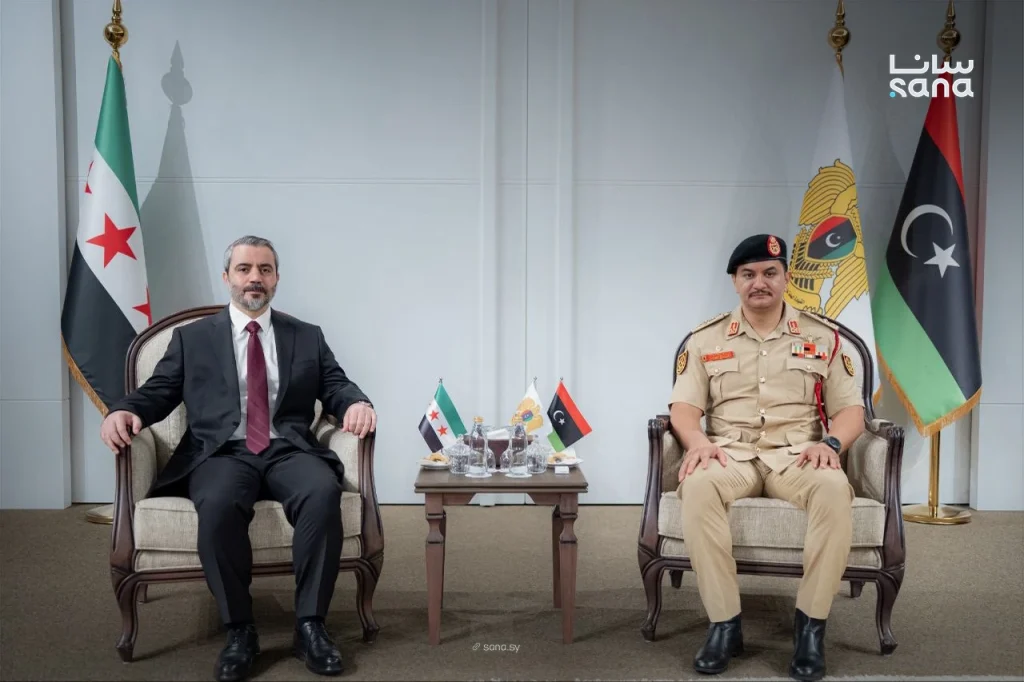
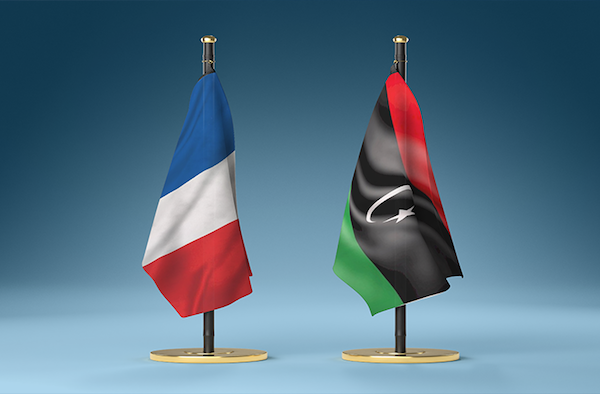
A quiet but significant shift is taking place in Libya’s political landscape. In late January 2026, senior representatives linked to both Prime Minister Abdulhamid Dbeibeh and eastern commander Khalifa Haftar met in Paris under joint French and U.S. leadership, in what officials described as “productive discussions” aimed at advancing unity and long term political stability.
The meeting, held at the Élysée Palace, brought together figures close to both camps as part of a broader diplomatic effort to break Libya’s prolonged political deadlock and explore pathways toward unifying state institutions.
Although officially framed as support for Libyan reconciliation, the Paris talks point to a deeper trend. Rather than relying on elections to resolve Libya’s fragmentation, external actors increasingly appear to be facilitating elite level bargaining between the country’s dominant power centers. This approach raises a central question: are France and the United States attempting to engineer a new political formula for Libya based on negotiated power sharing rather than electoral legitimacy?
A New Diplomatic Phase
The Paris meeting did not emerge out of nowhere. It forms part of a wider pattern of intensified diplomatic engagement around Libya in early 2026. U.S. officials have confirmed their involvement in facilitating dialogue between rival factions, while French diplomats have taken a leading role in convening talks and pushing for institutional unification.
These efforts coincide with renewed U.S. engagement on the security front. In March 2026, Prime Minister Dbeibeh held discussions with senior U.S. military officials on expanding defense cooperation and training programs, highlighting Washington’s continued interest in shaping Libya’s security environment.
At the same time, economic engagement has also intensified. Libya recently signed a major long term oil development agreement with U.S. and French energy companies, underscoring the strategic importance of stability for external actors with economic interests in the country.
Taken all together, these major developments suggest that Western involvement in Libya is entering a more coordinated phase, combining diplomacy, security cooperation, and economic engagement.
From Elections to Elite Bargaining
For more than a decade, Libya’s political roadmap has centered on elections as the primary mechanism for restoring legitimacy and stability. Yet repeated delays, disputes over legal frameworks, and persistent insecurity have prevented a national vote from taking place.
Against this backdrop, the Paris talks reflect a shift in emphasis. Rather than prioritizing elections, external actors appear increasingly focused on bringing together key power brokers and negotiating arrangements that can stabilize the system without necessarily resolving underlying legitimacy issues.
Reports surrounding the meeting indicate that discussions focused on unifying core institutions such as the Central Bank and the National Oil Corporation, areas that are critical to Libya’s political economy and distribution of resources.
This approach aligns with a pragmatic logic. Libya’s political system already operates through a balance between competing authorities in the east and west. By facilitating agreements between these actors, external powers may hope to formalize cooperation and reduce the risk of conflict.
However, this strategy also signals a departure from earlier frameworks that emphasized inclusive political processes and electoral outcomes.
The Logic of the “Elite Deal”
The Paris initiative reflects a broader model of conflict management that prioritizes stability through elite level agreements. Under this approach, political order emerges not from popular mandate, but from negotiated arrangements among dominant actors who control territory, resources, and armed forces.
In Libya’s case, this means engaging directly with figures linked to Dbeibeh, whose authority rests on control of state finances and institutions in Tripoli, and Haftar, whose power derives from military strength and influence over oil producing regions in the east.
This dynamic has long shaped Libya’s internal balance. When tensions rise, each side applies pressure through different levers. Eastern actors can disrupt oil production or exports, while western authorities can restrict financial flows or access to state resources.
Security Implications: Managed Stability
A shift toward elite bargaining carries important implications for Libya’s security environment. On one hand, agreements between the country’s main power centers could reduce the likelihood of large scale confrontation. If key actors align their interests, the incentive for escalation decreases.
This could translate into greater stability along front lines and more predictable coordination on issues such as border security, migration control, and energy infrastructure protection.
On the other hand, such arrangements do not address the underlying fragmentation of Libya’s security sector. Armed groups across the country remain only partially integrated into state structures, and their loyalties often reflect local dynamics rather than national command.
A system built on elite agreements may therefore stabilize the top layer of Libya’s political order while leaving the broader security landscape largely unchanged. In practice, this could reinforce a hybrid model in which militias and armed networks remain embedded within governance structures.
The Role of France and the United States
France and the United States play a central role in this evolving approach. Their involvement in organizing the Paris talks highlights a willingness to move beyond the UN led framework and pursue more flexible, outcome driven diplomacy.
For Washington, Libya represents a strategic intersection of interests, including energy security, migration management, and limiting the influence of rival powers. Recent meetings between U.S. officials and Libyan actors, as well as increased defense cooperation, suggest a more active engagement strategy in 2026.
France, meanwhile, has longstanding political and economic interests in Libya and has consistently positioned itself as a key diplomatic broker. Hosting talks in Paris reinforces its role as a central player in shaping Libya’s political trajectory.
Risks to Legitimacy and Inclusion
Despite its pragmatic appeal, the emerging approach carries significant risks. A political settlement built around elite bargaining may lack broader legitimacy, particularly among Libyan constituencies that remain excluded from decision making processes.
Libya’s political system already suffers from limited public trust. Repeated delays in elections and the persistence of transitional arrangements have contributed to widespread frustration. A shift toward governance without elections could deepen these concerns.
There is also a risk that elite deals entrench existing power structures rather than transform them. By recognizing and formalizing the authority of dominant actors, such arrangements may reinforce a system in which political influence is tied to control over armed force and economic resources.
Analytical Outlook
The Paris talks signal a potential turning point in Libya’s political process. External actors are no longer focusing solely on elections as the pathway to legitimacy. Instead, they are exploring a model based on negotiated power sharing among the country’s most influential figures.
In the short term, this approach may reduce tensions and create a more stable political framework. By aligning the interests of key actors, it could help prevent escalation and facilitate coordination on critical issues.
However, this model also reflects the limits of Libya’s transition. More than a decade after 2011, the country remains structured around a balance of power rather than unified institutions. Efforts to manage this balance through elite agreements may stabilize the system, but they are unlikely to resolve its underlying contradictions.
The central question is whether Libya is moving toward a sustainable political order or simply institutionalizing its fragmentation. The answer will depend not only on the success of diplomatic initiatives like the Paris talks, but also on whether they can evolve beyond short term bargains into a framework that addresses both security and legitimacy.