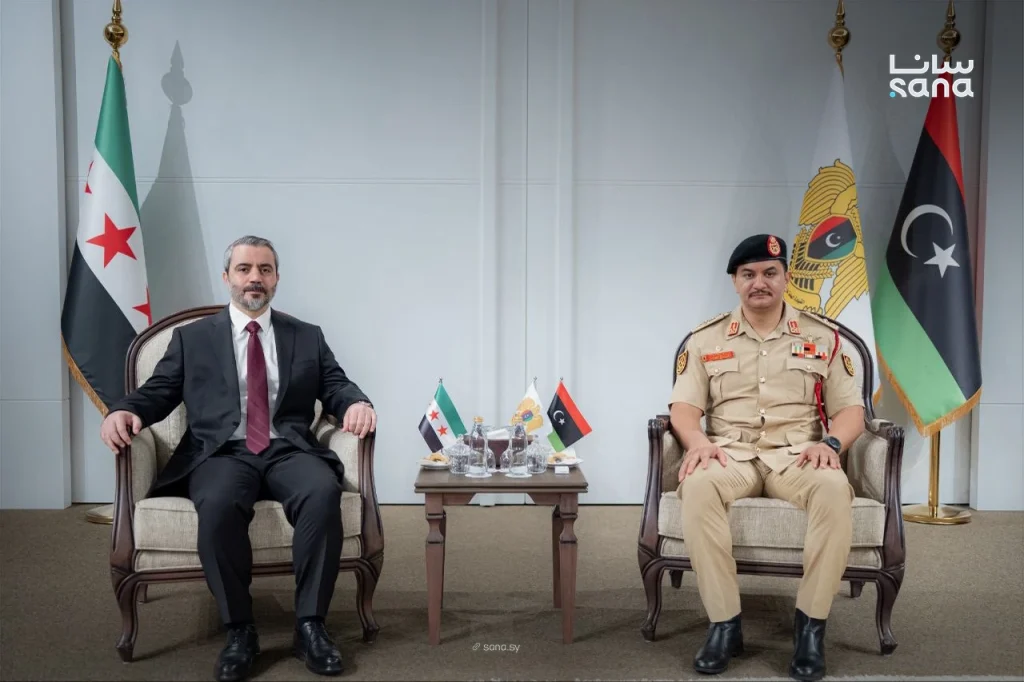
A recent meeting in Tripoli between Libyan and Sudanese military officials has highlighted the growing importance of cross-border security coordination between the two countries. On April 5, 2026, senior figures from Libya’s General Staff and Sudanese military intelligence agreed to strengthen intelligence sharing, expand training cooperation, and improve joint responses to shared security challenges.
The discussions come at a time when Sudan’s internal conflict continues to reshape regional security dynamics. While the meeting reflects a bilateral effort to enhance cooperation, it also points to a broader reality. Libya’s southern frontier increasingly sits within a wider security system shaped by conflict, mobility, and competing armed actors across the Sahel and Sudan.
A Border Under Strategic Pressure
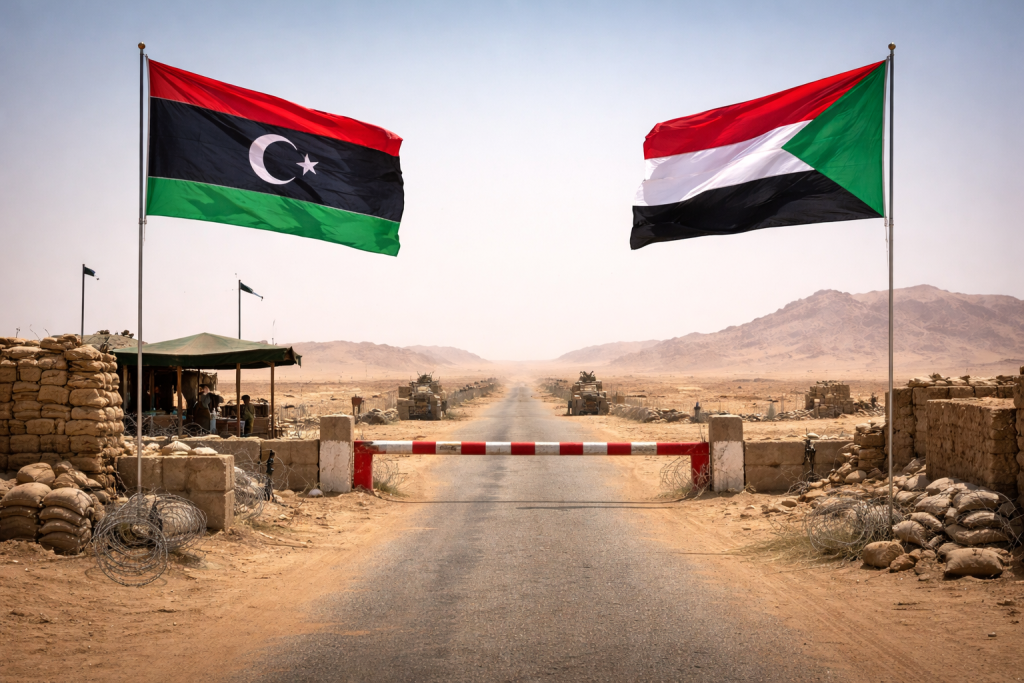
The Libya–Sudan border stretches across a remote desert region with limited state presence and minimal infrastructure. This geography has long made the area difficult to monitor consistently. In recent years, however, the strategic importance of this corridor has increased significantly.
Sudan’s ongoing conflict between the Sudanese Armed Forces and the Rapid Support Forces has pushed instability outward. Fighting has intensified across Darfur and adjacent regions, bringing armed activity closer to Libya’s southern periphery.
This shift has transformed the Libya–Sudan border from a peripheral zone into a potential transit and logistics corridor. The presence of armed groups, supply routes, and cross-border movement has increased pressure on already limited monitoring capacity.
Sudan’s Conflict and Libya’s Southern Exposure
Since the outbreak of war in Sudan in 2023, the conflict has evolved into a multi-layered regional issue. Armed groups have expanded their operational reach, and supply networks have adapted to shifting battlefield conditions.
Reports have linked southern Libya to these dynamics. Analysts have identified remote areas in southeastern Libya as part of broader logistical routes connected to Sudan’s conflict, including the movement of supplies and personnel.
Sudanese authorities have also raised concerns about cross-border activity. They have accused eastern Libyan actors of facilitating support for the RSF, including hosting elements and enabling logistics through desert bases.
While these claims remain politically sensitive, they reflect a wider concern. Libya’s southern territory risks becoming entangled in external conflicts through informal networks and limited oversight.
Coordination as a Preventive Strategy
Against this backdrop, the recent meeting in Tripoli signals an effort to move toward preventive coordination. Libyan and Sudanese officials emphasized intelligence sharing, joint training, and operational cooperation aimed at addressing border challenges.
This approach reflects a recognition that unilateral control is not sufficient. The scale and complexity of cross-border movement require coordination between neighboring states.
Intelligence sharing plays a central role in this process. Better information exchange can improve early warning capabilities, track movement across the desert corridor, and reduce the risk of unmonitored activity.
Training and capacity building also matter. Both countries face operational constraints in remote border areas. Strengthening capabilities at the institutional level can improve response times and coordination in crisis situations.
The Role of Non-State Actors
One of the central challenges in the Libya–Sudan corridor lies in the presence of non-state actors. Armed groups, paramilitary forces, and informal networks operate across borders with a degree of flexibility that state institutions struggle to match.
In Sudan, the RSF has demonstrated the ability to operate across wide مناطق, relying on decentralized structures and adaptive logistics. In Libya, armed actors continue to influence security dynamics, particularly in peripheral regions.
This creates an environment where state coordination must account for actors that do not follow formal rules or boundaries. Cross-border cooperation therefore requires not only institutional alignment, but also an understanding of how informal systems operate.
Regional Spillover and Escalation Risks
The Libya–Sudan border does not exist in isolation. It connects to a broader regional system that includes Chad, the Sahel, and North Africa. Recent developments show how quickly instability can spread across these interconnected spaces.
In March 2026, cross-border tensions linked to Sudan’s conflict prompted Chad to close its border and increase military readiness following deadly incidents involving armed groups.
These developments highlight a key dynamic. Conflict in one country can generate security pressure across multiple borders. For Libya, this means that developments in Sudan carry direct implications for its southern security environment.
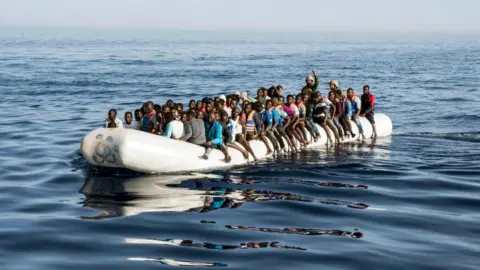
Migration flows, smuggling routes, and armed movement all operate within this broader system. Managing the border therefore requires both domestic measures and regional coordination.
Libya’s Southern Challenge
Libya’s southern regions have long faced governance challenges linked to geography, limited infrastructure, and uneven state presence. The current regional environment adds another layer of complexity.
The challenge is not only to secure the border. It is to manage a system that includes migration, trafficking, and cross-border mobility alongside security risks.
Recent cooperation with Sudan suggests a growing awareness of this challenge. By focusing on coordination, Libyan authorities are signaling an effort to engage with the problem at a structural level.
However, the effectiveness of this approach will depend on sustained implementation. Coordination agreements must translate into operational practices on the ground.
Analytical Outlook
The Libya–Sudan security discussions in Tripoli reflect a broader shift in how border security is understood in the region. The focus is moving from static control to dynamic coordination.
For Libya, this shift is necessary. The southern border no longer represents a distant frontier. It has become part of a wider security corridor shaped by conflict, mobility, and regional interdependence.
The key challenge lies in managing this corridor without allowing it to become a channel for instability. Intelligence sharing, training, and coordination provide a framework, but they require consistent execution.
If current efforts continue, Libya may strengthen its ability to monitor and manage cross-border dynamics. If coordination remains limited, the southern frontier will continue to reflect external pressures more than internal control.
The trajectory of Libya’s southern security environment will therefore depend not only on domestic capacity, but also on the evolution of regional cooperation. In a context where conflict, mobility, and informal networks intersect, coordination is no longer optional. It is a central component of stability.