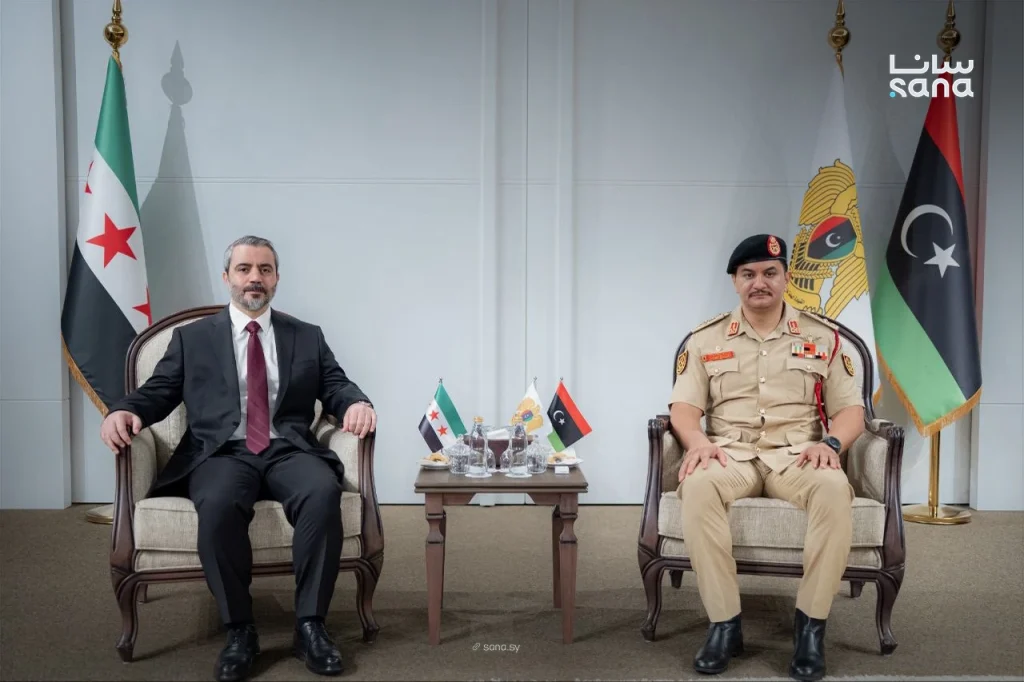
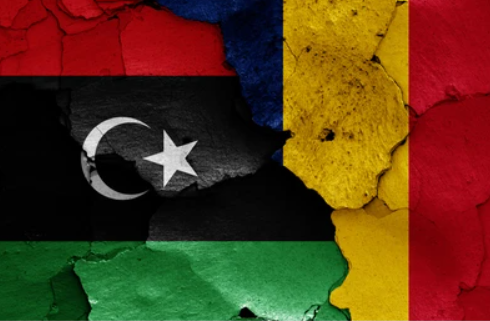
Libya and Chad have stepped up efforts to strengthen bilateral ties, focusing on border security and economic cooperation. Recent high-level meetings between officials from both countries underline a shared intent to move beyond reactive security coordination and toward structured collaboration.
Discussions centered on securing the long and porous frontier while expanding trade links that could benefit both economies. Officials highlighted a “convergence of views” on regional challenges and emphasized the need for sustained coordination mechanisms.
This diplomatic momentum reflects a broader shift. Libya and Chad no longer treat their relationship as purely security-driven. Both sides now frame cooperation as a pathway to stability and economic recovery.
Securing a volatile frontier
The Libya–Chad border stretches over 1,000 kilometers across remote desert terrain. The geography creates persistent challenges for state control and enforcement.
Armed groups, traffickers, and smugglers have long exploited this space. Chad continues to face threats from insurgent activity in its northern regions, including areas near Libya.
Recent agreements between Libyan and Chadian forces aim to address these vulnerabilities. Joint mechanisms now focus on coordinated patrols, intelligence sharing, and rapid response operations.
These steps mark a shift toward operational integration. Instead of isolated actions, both sides now pursue structured cooperation designed to reduce cross-border threats. Security concerns remain immediate. Clashes and arms seizures along the frontier show that instability persists. Yet the expansion of joint initiatives signals a recognition that unilateral approaches no longer suffice.
Trade ambitions and economic drivers
Security alone does not define the current phase of Libya–Chad relations. Economic considerations now play a central role. Both countries face structural challenges that make cross-border trade increasingly important.
Chad’s economy struggles with low development indicators and rising inflation, which strain purchasing power and limit domestic growth.
Libya, despite its energy wealth, continues to grapple with fragmentation and uneven economic recovery.
Reopening and securing trade routes offers mutual benefits. For Chad, Libya provides access to Mediterranean markets and supply chains. For Libya, Chad represents a gateway into Central Africa and the Sahel.
Previous discussions on reopening border crossings highlighted the potential for increased commerce and regional connectivity.
The current push builds on that foundation. Officials now link trade expansion directly to security cooperation, arguing that stability along the border will enable sustainable economic exchange.
From conflict to cautious cooperation
Libya and Chad share a history shaped by conflict and rivalry. Tensions peaked during disputes over the Aouzou Strip in the late 20th century, which led to direct military confrontation.
While that period has passed, its legacy continues to influence perceptions on both sides. Mutual suspicion and fragmented authority structures have slowed efforts to build lasting cooperation.
In recent years, however, both countries have recalibrated their approach. Libya’s internal divisions and Chad’s security pressures have created incentives for pragmatic engagement.
The formation of joint border forces in 2026 reflects this shift. Both governments now view coordinated security efforts as essential to stabilizing frontier and limiting external interference.
Regional dynamics and Sahel instability
The Libya–Chad relationship cannot be separated from the wider Sahel context. The region faces overlapping crises, including insurgency, trafficking networks, and political instability.
External actors also shape the environment. Competing interests from regional and international powers influence security arrangements and alliances across the Sahel.
For Libya, engagement with Chad supports its broader ambition to act as a regional security actor. Strengthening its southern frontier allows Tripoli to project influence beyond its immediate borders.
For Chad, cooperation with Libya provides a means to address northern security threats while diversifying its diplomatic partnerships.
At the same time, the intersection of conflicts in Sudan, Niger, and the wider Sahel increases pressure on both states. Cross-border movements of fighters and goods create a fluid and unpredictable security landscape.
Managing migration and cross-border flows
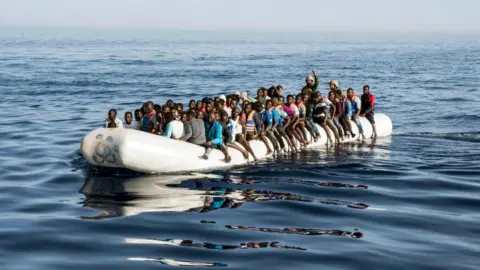
Migration remains a critical factor in Libya–Chad relations. The shared border serves as a key transit route for migrants moving between Central Africa and the Mediterranean.
Efforts to curb illegal migration feature prominently in bilateral discussions. Officials have emphasized coordination on immigration control alongside broader security measures.
However, migration management intersects with economic realities. Informal trade and movement provide livelihoods for communities along the border. Strict enforcement without alternative economic options risks disrupting local economies.
Analytical outlook
Libya and Chad have entered a phase of pragmatic alignment driven by necessity rather than strategic convergence. Both countries face immediate security threats and long-term economic pressures that push them toward cooperation.
The current framework rests on two pillars: joint border security and expanded trade. These objectives reinforce each other. Improved security enables commerce, while economic activity reduces incentives for illicit networks.