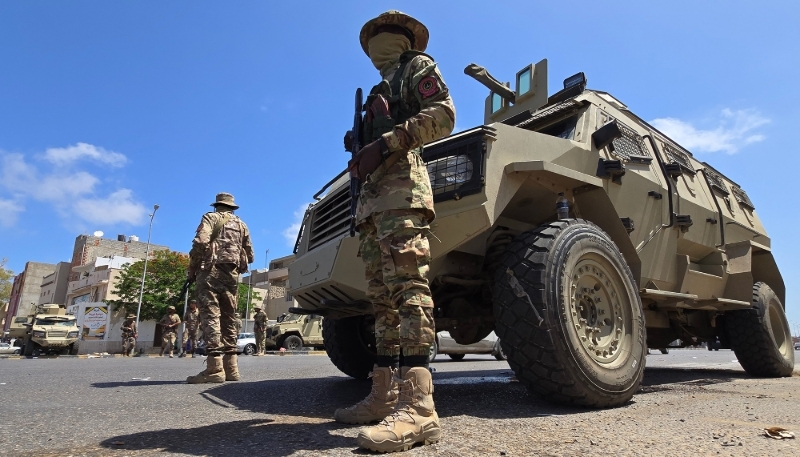
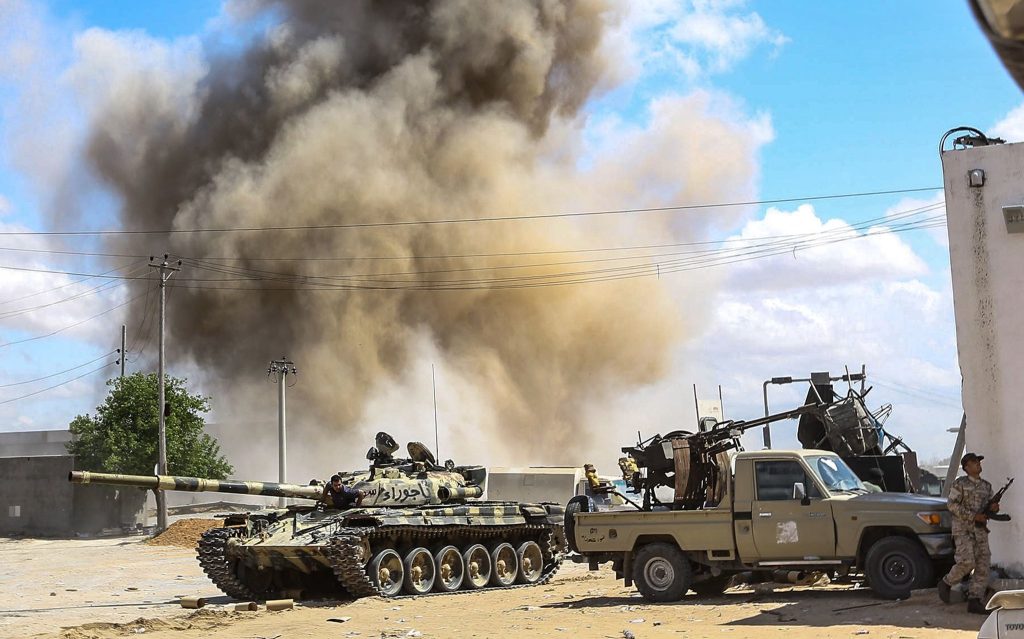
Reports emerging in March 2026 have raised concerns about possible attempts by extremist remnants to reorganize in parts of western Libya. According to recent reporting, security observers have identified signs that elements linked to previously active groups may be seeking to reestablish networks in the region.
These reports do not point to a large scale resurgence. They do, however, highlight a recurring feature of Libya’s security landscape: extremist activity tends to reappear in fragmented environments where control remains uneven and institutions lack full reach.
The question is not whether Libya faces an immediate extremist threat. It is whether current signals reflect isolated movement or the early stages of reorganization.
From Defeat to Low-Level Reorganization
Extremist groups in Libya have suffered major setbacks over the past decade. Military operations in eastern Libya and in Sirte dismantled much of their territorial presence. Since then, activity has remained limited and largely decentralized.
The latest reports suggest that remnants of these groups may now be attempting to regroup in western areas. This pattern is not unusual. Rather than returning as structured organizations, extremist networks often reemerge through small cells, informal contacts, and opportunistic recruitment.
This form of activity rarely produces immediate large scale attacks. Instead, it develops gradually, taking advantage of local gaps in security oversight.
From Defeat to Low-Level Reorganization
Extremist groups in Libya have suffered major setbacks over the past decade. Military operations in eastern Libya and in Sirte dismantled much of their territorial presence. Since then, activity has remained limited and largely decentralized.
The latest reports suggest that remnants of these groups may now be attempting to regroup in western areas. This pattern is not unusual. Rather than returning as structured organizations, extremist networks often reemerge through small cells, informal contacts, and opportunistic recruitment.
This form of activity rarely produces immediate large scale attacks. Instead, it develops gradually, taking advantage of local gaps in security oversight.
The Role of Fragmented Security Structures
Libya’s broader security architecture remains fragmented. Armed groups continue to operate alongside formal institutions, often with overlapping roles and uneven coordination. This structure affects how emerging threats are detected and addressed.
In such an environment, counterterrorism does not depend solely on national strategy. It relies on local actors, intelligence sharing, and the ability of different forces to coordinate in practice.
Recent reports also point to developments within detention systems. In some cases, individuals previously held on extremism related charges have reportedly been released or moved, raising concerns about monitoring and follow up.
These dynamics do not necessarily indicate immediate risk. They do, however, illustrate how gaps in institutional control can create openings for networks to reconnect.
A Regional Dimension
Any assessment of extremist activity in Libya must also consider the wider regional environment. The Sahel continues to experience high levels of militant activity, with armed groups expanding their reach and adapting to shifting security conditions.
This regional context matters because Libya does not operate in isolation. Cross border routes, informal trade networks, and migration corridors link the country to neighboring regions. These connections can facilitate the movement of people, resources, and information.
Even limited activity inside Libya can therefore connect to broader regional patterns. The concern is not necessarily that Libya becomes a central hub again, but that it remains part of a wider network of mobility and interaction.
Containment, Not Absence
One of the key features of Libya’s current security environment is that many risks remain contained rather than eliminated. Armed groups, criminal networks, and extremist elements all operate at varying levels of visibility and intensity.
In the case of extremist activity, this means that absence of large scale incidents does not equal absence of risk. It reflects a balance in which local actors, security forces, and informal arrangements limit expansion.
That balance can hold for extended periods. It can also shift quickly if underlying conditions change.
Implications for Domestic Stability
The current signals from western Libya should therefore be understood within a broader framework of risk management. They do not point to a return to previous phases of conflict, but they do highlight the importance of sustained monitoring.
For Libyan authorities, the priority lies in maintaining coordination across security actors and ensuring that emerging activity does not consolidate into more structured networks. This requires attention to intelligence sharing, detention oversight, and local level engagement.
At the same time, developments of this kind reinforce a broader point about Libya’s transition. Security challenges often evolve at the margins, in spaces where governance remains uneven. Addressing them depends less on large scale operations and more on consistent institutional presence.
Analytical Outlook
Recent reports of extremist activity in western Libya should be viewed as early warning signals rather than indicators of immediate escalation. They reflect the persistence of low level risks within a fragmented security environment, not the reemergence of organized territorial control.
The current situation highlights both progress and limitation. Libya no longer faces the same scale of extremist presence seen in earlier years. At the same time, the conditions that allow small networks to reappear have not fully disappeared.
The key issue is therefore not resurgence, but resilience. Can Libya’s security system detect and contain these signals before they develop further?
If current coordination holds, these risks are likely to remain limited. If gaps in oversight widen, they could evolve into more structured challenges over time.