Libya’s migration policies have once again come under international scrutiny following discussions at the United Nations Human Rights Council in March 2026. During the adoption of Libya’s Universal Periodic Review outcomes, several international organizations raised concerns about detention practices, the absence of a formal asylum system, and the continued criminalization of irregular migration.
While much of the discussion has focused on legal and humanitarian dimensions, the issue also reflects a deeper structural reality. Migration management in Libya sits at the intersection of security governance, institutional capacity, and state authority. The current debate therefore reveals not only policy gaps, but also the broader challenge of controlling complex systems that operate across formal and informal structures.
Migration as a Security System
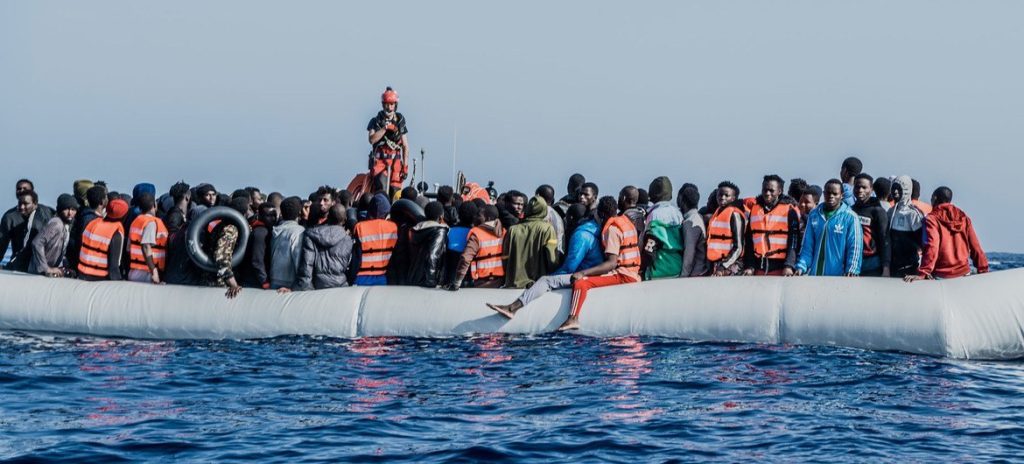
Libya remains one of the main transit points for migrants seeking to reach Europe. This position places the country at the center of a wider regional system that links sub-Saharan Africa, North Africa, and the Mediterranean.
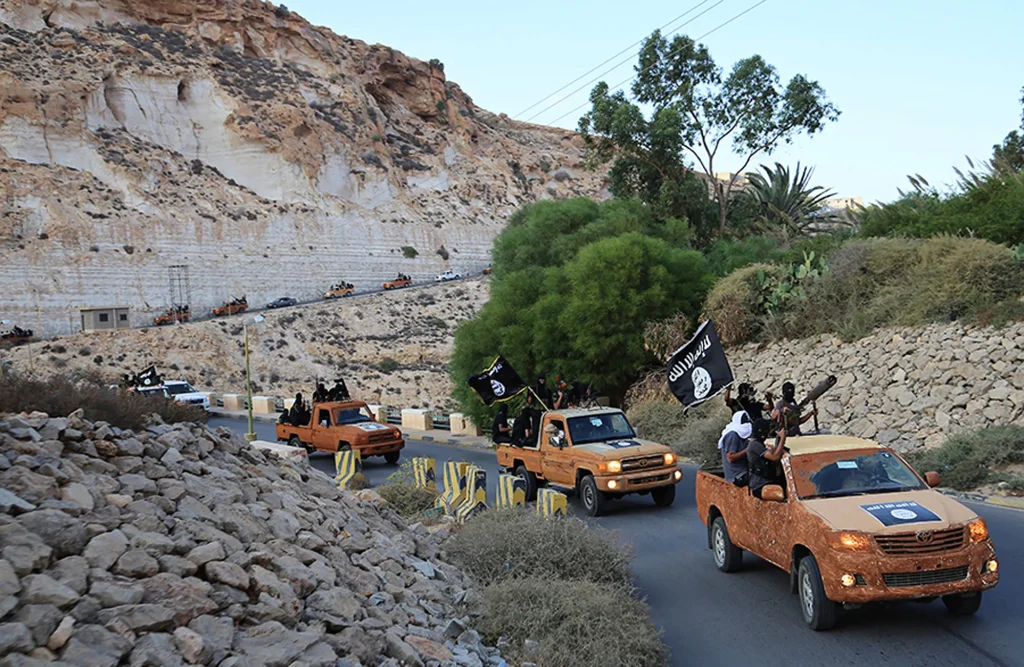
Migration flows in Libya do not operate as isolated movements. They rely on networks that include transportation routes, intermediaries, local actors, and cross-border coordination. These networks intersect with other systems, including smuggling, informal economies, and in some cases armed group activity.
As a result, migration management in Libya functions less as a purely administrative issue and more as a complex security environment. Policies related to detention, border control, and enforcement reflect how the state interacts with this environment.
Detention and Control
The continued use of detention as a central tool of migration management has drawn significant international attention. Organizations such as Human Rights Watch and the International Commission of Jurists have raised concerns about detention conditions, the lack of legal safeguards, and the absence of a structured asylum process.
From a security perspective, detention centers serve as instruments of control within a fragmented system. They allow authorities to manage flows, contain movement, and assert a degree of oversight over migration routes.
At the same time, reliance on detention highlights underlying institutional constraints. Without a formal asylum system, clear legal pathways, or consistent administrative frameworks, enforcement mechanisms become the primary means of managing migration.
This creates a system that prioritizes containment over regulation.
The Absence of a Formal Asylum Framework
One of the central issues raised during the UN discussions is the lack of a formal asylum system in Libya. International organizations have called for the establishment of procedures aligned with international standards, including legal protections for refugees and asylum seekers.
The absence of such a framework has direct implications for security governance. Without clearly defined categories, processes, and legal protections, migration management remains reactive and operational rather than structured and policy-driven.
This limits the state’s ability to distinguish between different groups within migration flows, including economic migrants, asylum seekers, and individuals requiring protection. It also reduces the predictability of the system, making it more difficult to manage long-term dynamics.
Criminalization and Its Effects
The continued criminalization of irregular migration has also been highlighted as a key concern. From an enforcement perspective, criminalization provides a legal basis for detention and control. It allows authorities to act against unauthorized movement and maintain a degree of order within a challenging environment.
However, this approach also shapes how migration networks operate. When movement becomes criminalized, individuals tend to rely more heavily on informal systems. This can increase dependence on smuggling networks and reduce visibility for authorities.
The result is a system where enforcement and informality reinforce each other. Efforts to control movement can unintentionally push activity further into less regulated spaces.
Institutional Fragmentation and Coordination Challenges
Libya’s broader institutional landscape plays a central role in shaping migration policy. Authority over migration management does not rest with a single unified structure. Instead, it involves multiple actors, including ministries, security forces, and local authorities.
This fragmentation affects coordination. It creates variations in how policies are applied across different regions and institutions. It also complicates efforts to implement consistent reforms or introduce new frameworks.
Despite these challenges, Libyan authorities continue to engage with international partners on migration management. Cooperation with European actors, international organizations, and regional stakeholders reflects an ongoing effort to address both operational and strategic aspects of migration.
Regional and International Dimensions
Migration in Libya cannot be separated from its regional context. Routes that pass through Libya connect to broader networks extending into the Sahel, Sudan, and beyond. These routes also intersect with European concerns related to border control and maritime security.
As a result, Libya’s migration policies carry implications beyond its borders. International attention reflects both humanitarian concerns and security interests, particularly in relation to irregular migration flows toward Europe.
The discussions at the United Nations therefore highlight a wider dynamic. Migration governance in Libya sits within a system shaped by both domestic constraints and external expectations.
Analytical Outlook
The recent discussions at the United Nations Human Rights Council highlight an important reality. Migration management in Libya is not only a policy issue. It is a reflection of how the state engages with complex and overlapping systems of movement, control, and enforcement.
Calls for legal reform, improved detention conditions, and the creation of an asylum system address important gaps. At the same time, these recommendations intersect with broader questions about institutional capacity, coordination, and state authority.
For Libya, the challenge lies in moving from a system based primarily on containment toward one that combines regulation, oversight, and structured policy frameworks. This transition requires more than legal changes. It requires sustained institutional development and coordination across multiple actors.
Migration will remain a central feature of Libya’s security environment. The key question is not whether these flows can be eliminated, but how they can be managed in a way that strengthens both state control and system predictability.