Libya’s Government of National Unity has asked a Tripoli court to annul its controversial oil agreement with Arkenu Oil Company, following UN allegations that more than $3 billion in oil revenues were transferred to overseas accounts.The case has intensified scrutiny of the political and commercial networks surrounding Libya’s oil industry, including alleged connections between figures close to Abdulhamid Dbeibah and Saddam Haftar.
Libya’s Government of National Unity (GNU) has launched legal proceedings to overturn its controversial production-sharing agreement with Arkenu Oil Company, escalating a dispute that has raised serious questions about the management of the country’s oil wealth and the influence of rival political power centres over its most important economic institution.
Court filings show that the Tripoli-based government is seeking to suspend and ultimately annul the 2023 agreement between Arkenu and the National Oil Corporation (NOC). The GNU argues that the contract involved legal and procedural irregularities and that Arkenu lacked the necessary technical and legal qualifications to conduct oil development and production activities.
The move follows mounting criticism of the arrangement, particularly after a March 2026 report by the UN Panel of Experts on Libya detailed extensive financial irregularities involving the company.
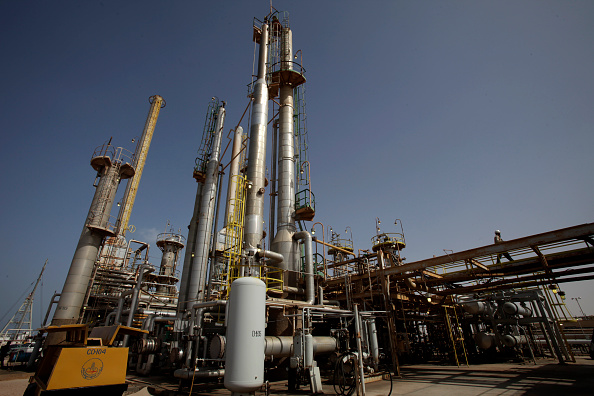
Established in 2023, Arkenu became the first privately owned Libyan company known to export crude oil, receiving a share of production from the Sarir and Mesla oilfields in exchange for investment in their development.
The $3 billion controversy
The UN Panel of Experts placed Arkenu at the centre of an investigation into the diversion of Libyan oil revenues and the erosion of oversight within the NOC.
According to the report, Arkenu diverted more than $3 billion in oil revenues to bank accounts outside Libya. Investigators also found that the contractual relationship between Arkenu and the NOC had not been established in accordance with relevant Libyan legislation, while taxes owed to the state had allegedly gone unpaid.
The company was initially required to invest approximately $1 billion to increase production capacity at Sarir and Mesla, both operated through the NOC subsidiary Arabian Gulf Oil Company. However, the Panel found that only a small fraction of the promised investment had materialised and that production at the two fields declined rather than increased.
The report also identified significant changes to the original agreement. A December 2024 amendment reportedly allowed Arkenu to receive 40 percent of overall production rather than 40 percent of production increases. Between January 2024 and December 2025, the company exported at least 42.1 million barrels of crude oil, according to the investigators.
Alleged connections between rival power centres
Perhaps the most politically sensitive aspect of the investigation concerns the alleged relationships behind Arkenu’s establishment and operations.
The UN Panel described Arkenu as indirectly controlled by Saddam Haftar, son of eastern Libyan military commander Khalifa Haftar, through intermediaries, particularly businessman Rafat al-Abbar. Investigators alleged that al-Abbar played a central role in securing the agreement and establishing a parallel structure of influence within the NOC that undermined institutional oversight.
The Panel reportedly characterised Arkenu as emerging from a mutually beneficial arrangement involving Saddam Haftar and Ibrahim Dbeibah, nephew and adviser to Prime Minister Abdulhamid Dbeibah.
The allegations are particularly significant given the longstanding political divisions between eastern and western Libya. The possibility that figures connected to both camps benefited from a commercial arrangement involving the country’s principal source of revenue has intensified questions about the relationship between political influence, military power and control over the oil sector.
Both sides have disputed the allegations. Arkenu rejected the UN Panel’s characterisation of its revenues and denied that Saddam Haftar had any direct or indirect ownership interest or management role in the company. An official from Saddam Haftar’s office also denied any connection to Arkenu, while a GNU official rejected claims that Ibrahim Dbeibah was involved.
Political pressure on Dbeibah
The legal challenge comes after the GNU had already taken steps to distance itself from the agreement. The government’s Council of Ministers withdrew its approval of the arrangement in January 2025, according to documents reviewed by Reuters, although the contract remained active.
In April 2026, Dbeibah instructed authorities to take steps towards terminating the agreement, citing widespread public opposition.
Pressure has also come from Misrata, the prime minister’s hometown and an important centre of political and military influence in western Libya. An influential military body in the city publicly demanded the immediate termination of the Arkenu agreement, declaring that “Libyan oil is a red line”. Misrata has long been a stronghold of opposition to Haftar and his forces.
For Dbeibah, the controversy presents a difficult political problem. His government must demonstrate that it can protect public revenues and exercise oversight over the NOC while confronting allegations involving individuals connected to both his own political circle and his principal eastern rivals.
Implications for Libya’s oil sector
The court action also comes amid renewed international efforts to advance a political settlement in Libya. Washington, with presidential adviser Massad Boulos playing a prominent role, has been pushing for a new unified government.
Anas El Gomati, head of the Sadeq Institute, suggested to Reuters that the legal challenge should be viewed alongside Washington’s initiative, describing it as a possible response from Tripoli to the US-backed negotiations.
Whether the proceedings will ultimately dismantle the Arkenu agreement remains uncertain. The company has questioned the government’s legal basis for annulling a commercial contract previously endorsed by the GNU’s own Council of Ministers. It also said it had not received the court filing.
The dispute nevertheless exposes a deeper problem confronting Libya’s oil industry: the difficulty of maintaining independent institutional oversight when political and military actors exercise influence across the country’s divided administrative structures.
The Arkenu case is therefore about more than the future of a single oil company. It raises fundamental questions about who controls Libya’s oil revenues, how those revenues are monitored, and whether the country’s institutions can prevent political and military networks from turning public resources into sources of private influence.