Libya’s latest protests in Tripoli reflect a deeper problem than frustration over electricity shortages or deteriorating public services. They reveal a growing crisis of confidence in the country’s political system and the institutions that have failed to deliver stability more than a decade after the fall of Muammar Gaddafi.
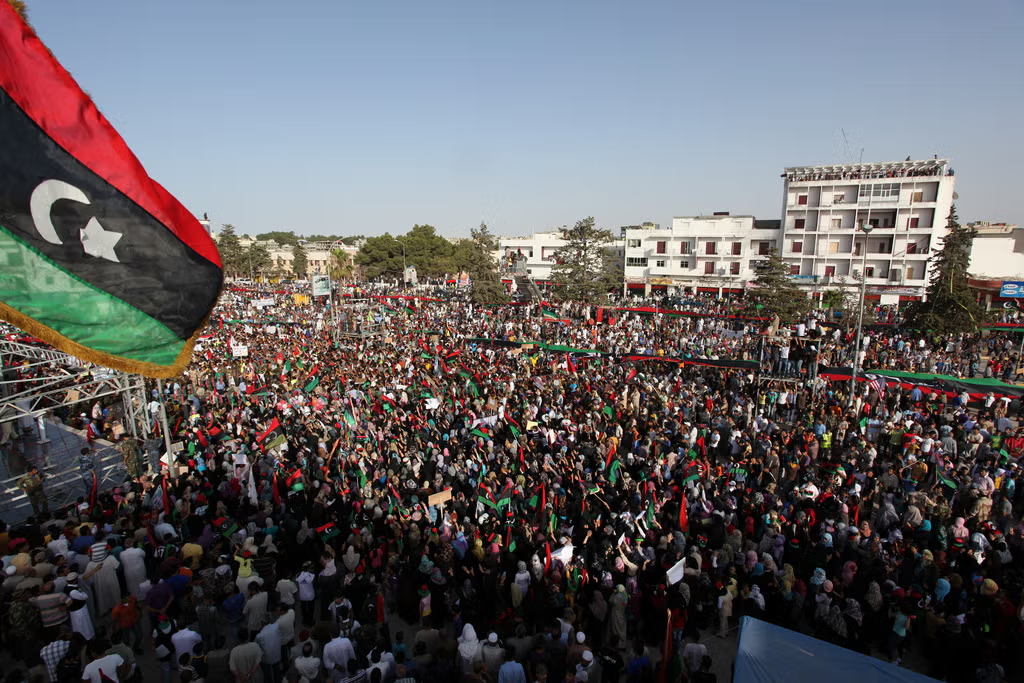
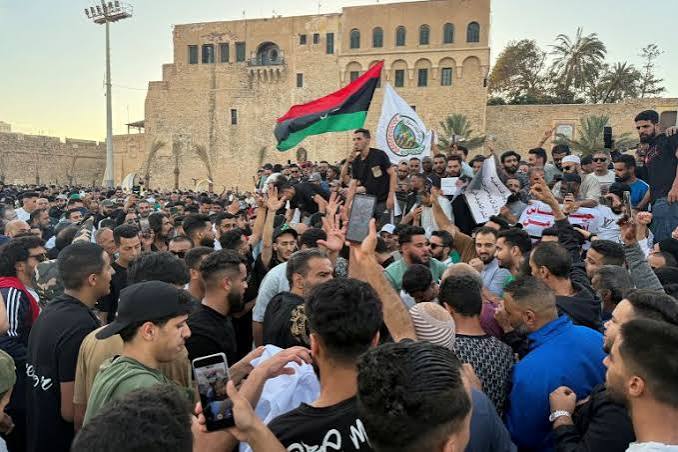
Demonstrators in the capital have called for all current political leaders and institutions to step aside, expressing anger over worsening living conditions, repeated power cuts, fuel shortages, economic pressures, and weak public services. The protests spread across several parts of Tripoli, including Tajoura and Souq Al-Juma, with demonstrators blocking roads and shutting down some government facilities.
However, the unrest is not only about electricity or daily hardships. It reflects a wider question facing Libya: how long can a fragmented political system maintain public support when citizens see limited progress on security, governance, and economic reform?
From Service Frustration to Political Rejection
Public protests in Libya often begin with immediate concerns. Electricity shortages, rising prices, fuel availability, and liquidity problems directly affect daily life. But these issues increasingly connect to a broader frustration with the political class.
In recent demonstrations, protesters moved beyond demands for better services and targeted the entire political structure. Calls for the departure of current leaders indicate that many citizens no longer view individual policy failures as the main issue. Instead, they increasingly blame the wider system that has allowed political divisions and institutional weakness to continue.
This represents a significant shift.
For years, Libya’s political crisis centred around competing governments, rival institutions, and disputes between eastern and western power centres. Today, public frustration increasingly targets both sides of the divide.
Many Libyans see a political class that has remained in place despite repeated delays to elections and the failure to establish unified state institutions. The growing demand for all leaders to leave reflects fatigue with a system viewed by many citizens as unable to produce meaningful change.
The Security Risks Behind Libya’s Political Unrest
The security implications of continued unrest are significant. Libya’s political divisions have always carried a security dimension because state authority remains fragmented. Multiple armed groups continue to influence security conditions, particularly in western Libya, while eastern Libya maintains its own political and military structures.
When public anger rises, the risk increases that protests could become a wider confrontation between citizens, political authorities, and security actors.
So far, much of the recent unrest has focused on civil disobedience and public pressure rather than armed confrontation. However, Libya’s history shows how quickly political disputes can escalate when institutions lack legitimacy and security forces operate through competing chains of command.
The danger is not only violence on the streets. Prolonged instability can weaken already fragile institutions, disrupt economic activity, and create opportunities for armed actors to expand their influence.
The international community has repeatedly focused on elections and political agreements as solutions to Libya’s crisis. Yet the protests highlight another challenge: even a political process needs public confidence to succeed.
Libya’s Legitimacy Crisis Is Growing
The deeper issue behind Libya’s protests is a legitimacy gap. Many citizens have grown increasingly disconnected from political institutions that they believe have failed to represent their interests. Years of postponed elections, limited accountability, and weak public services have created a sense that political competition has replaced effective governance.
The current crisis also shows the limits of Libya’s oil wealth as a stabilising factor.
Despite being one of Africa’s largest oil producers, Libya continues to struggle with electricity shortages, fuel disruptions, and infrastructure problems. This gap between national resources and everyday reality fuels public anger and strengthens perceptions of mismanagement.
The government’s challenge is therefore not only restoring electricity or improving services. It must rebuild trust between citizens and the state.
That requires more than short-term responses. Libya needs stronger institutions, transparent decision-making, economic diversification, and a credible pathway toward political renewal.
A Warning Sign Ahead of Libya’s Next Political Phase
The latest protests should serve as a warning that public patience is weakening. Libya’s political actors have often managed crises through temporary solutions rather than structural reforms. But growing demonstrations suggest that many citizens are demanding a different approach.
The question facing Libya’s leaders is whether they can respond before frustration becomes a deeper challenge to state authority.
The protests are not simply about power cuts or public services. They represent a broader demand for accountability, functioning institutions, and a political system capable of delivering results.
For Libya’s future stability, addressing this legitimacy crisis may become just as important as resolving the country’s long-running political divisions.