Libya has approved a unified state budget for the first time in more than ten years. Rival political institutions signed off on a single national spending plan. The decision brings eastern and western authorities into one fiscal framework. It also signals a rare moment of coordination in a country shaped by political fragmentation since 2014.
The agreement comes after years of parallel budgets. Competing governments in Tripoli and eastern Libya each controlled public spending. Each side managed revenue flows from oil exports. Each side also built separate administrative systems. The new budget brings those structures under one national plan.
Libya last operated under a unified budget in 2013, before its political split deepened into armed conflict and institutional division. Since then, fiscal policy reflected rivalry rather than coordination. The new agreement marks the most significant attempt yet to reverse that trend.
Rival institutions reach shared fiscal agreement
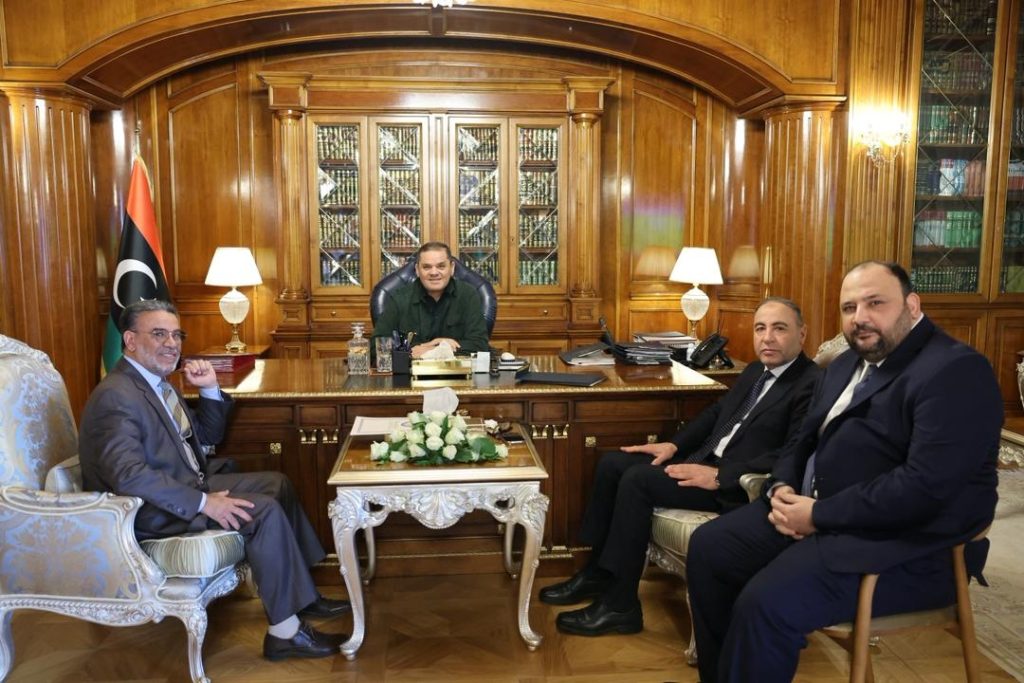
Libya’s House of Representatives in the east and the High Council of State in the west both approved the budget. Representatives from both sides met under the coordination of the Central Bank of Libya in Tripoli. The bank played a central role in organizing negotiations and final approval.
The Central Bank positioned itself as a neutral financial authority. It pushed both sides toward agreement on revenue allocation and spending priorities. It also managed the technical structure of the budget framework. That role gave the bank strong influence over the final outcome.
The agreement reflects months of negotiation between political factions. Each side entered talks with different priorities. Each side also defended its own spending structures. The final deal required compromise on allocation levels and budget categories.
A large national spending plan shaped by oil revenue
The new budget totals about 190 billion Libyan dinars, which equals roughly 30 billion US dollars. The size of the plan reflects Libya’s heavy reliance on state spending and oil income.
Salaries take the largest share of the budget at about 73 billion dinars. Subsidies follow at about 37 billion dinars. Development projects receive about 40 billion dinars. Family support programs account for around 18 billion dinars. The National Oil Corporation receives about 12 billion dinars. Operational spending takes about 10 billion dinars.
These allocations show a state structure built around public employment and social transfers. Government salaries dominate fiscal planning. Subsidies also play a major role in household stability. Development spending remains important but competes with recurring obligations.
Oil revenue drives the entire system. Libya depends on hydrocarbons for most of its export earnings. The National Oil Corporation manages production and exports. Its performance directly shapes government income. The budget ties spending capacity to that revenue base.
Central Bank expands role in national coordination
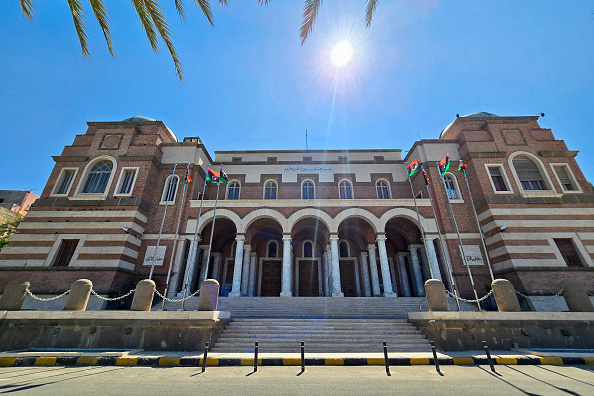
The Central Bank of Libya sits at the center of the new fiscal arrangement. It hosted negotiations between rival political blocs. It also supervised the final signing process in Tripoli.
The bank now manages financial coordination between institutions that still operate under separate political authorities. It controls liquidity distribution and oversees currency stability. It also connects ministries and agencies across divided governance structures.
This role gives the Central Bank significant influence over national policy. It acts as both financial manager and political mediator. It also serves as the main institution capable of enforcing unified fiscal rules.
Officials at the bank describe the agreement as progress toward stronger financial discipline. They also highlight the need for consistent implementation across all institutions.
Two administrations, one budget framework
Libya still operates under two main political centers. The Government of National Unity operates from Tripoli and holds international recognition. Eastern authorities linked to the House of Representatives control parallel institutions in other regions.
Both systems developed separate administrative structures after the 2014 split. Each side managed spending independently. Each side also relied on oil revenue flows that often became points of dispute.
The new budget does not merge these governments. It instead places both under one financial framework. That framework sets national spending limits and defines allocation categories. It forces both sides to operate within shared fiscal boundaries.
This structure changes how power functions across the country. Budget control shapes hiring decisions, infrastructure projects, and subsidy programs. A unified budget reduces duplication and limits competition over public funds.
Political impact of fiscal unification
The agreement carries political significance beyond its financial structure. It shows that rival institutions can still coordinate on national priorities. It also reflects shared interest in maintaining economic stability.
Libya’s political system remains fragmented. Talks over elections and constitutional reform continue without final resolution. The budget agreement offers a separate path for cooperation. It focuses on economic management rather than political settlement.
International partners view fiscal unity as an important step. It improves transparency in state spending. It also creates more predictable conditions for investment and reconstruction planning.
The agreement also supports broader efforts to stabilize Libya’s economy. Currency pressure, inflation risks, and uneven public spending have created ongoing challenges. A unified budget can help reduce some of that volatility.
Structural risks and implementation pressure
The agreement faces several risks during implementation. Libya has a history of partial execution of national deals. Political tensions often disrupt financial coordination.
The budget also depends on steady oil production. Any disruption in output or export routes will affect revenue flows. That would quickly strain spending commitments.
Large allocations to salaries and subsidies limit flexibility. The state carries high fixed costs. That structure leaves less room for investment shifts during economic shocks. Development spending depends on stable administration and effective coordination between institutions.
Security conditions also play a role. Local instability can interrupt infrastructure projects and delay financial transfers. Administrative fragmentation may slow down execution even under a unified framework.
Analytical outlook
The unified budget creates a new test for Libya’s state institutions. It builds a shared financial structure across a divided political landscape. It also ties both sides to a single set of spending commitments.
The success of this framework depends on execution rather than agreement. If institutions follow the same rules, the budget can improve coordination and reduce duplication. It can also strengthen central financial control and support long term economic planning.
If cooperation breaks down, the system may return to parallel spending structures. That outcome would weaken fiscal discipline and deepen institutional fragmentation.
The budget does not resolve Libya’s political divisions. It does, however, change how those divisions interact with state finances. It forces rival authorities to operate within a shared economic system. That shift creates both opportunity and pressure.
Libya now enters a period where financial coordination may shape political dynamics. The durability of the unified budget will depend on oil stability, institutional trust, and consistent implementation across competing centers of power.