Southern Libya has once again emerged as a focal point of regional security tensions. In early 2026, reports of clashes and political friction along the Libya–Niger border have highlighted the fragile balance of power in the Fezzan region and raised broader questions about control of trans-Saharan corridors linking North Africa to the Sahel. What might appear as a localized dispute over border security is in fact part of a wider geopolitical struggle involving armed groups, trafficking networks, and competing state interests across the region.
Recent developments have underscored how the southern borderlands are becoming one of the most strategically contested spaces in Libya’s security landscape.
Rising Tensions Along the Libya–Niger Frontier
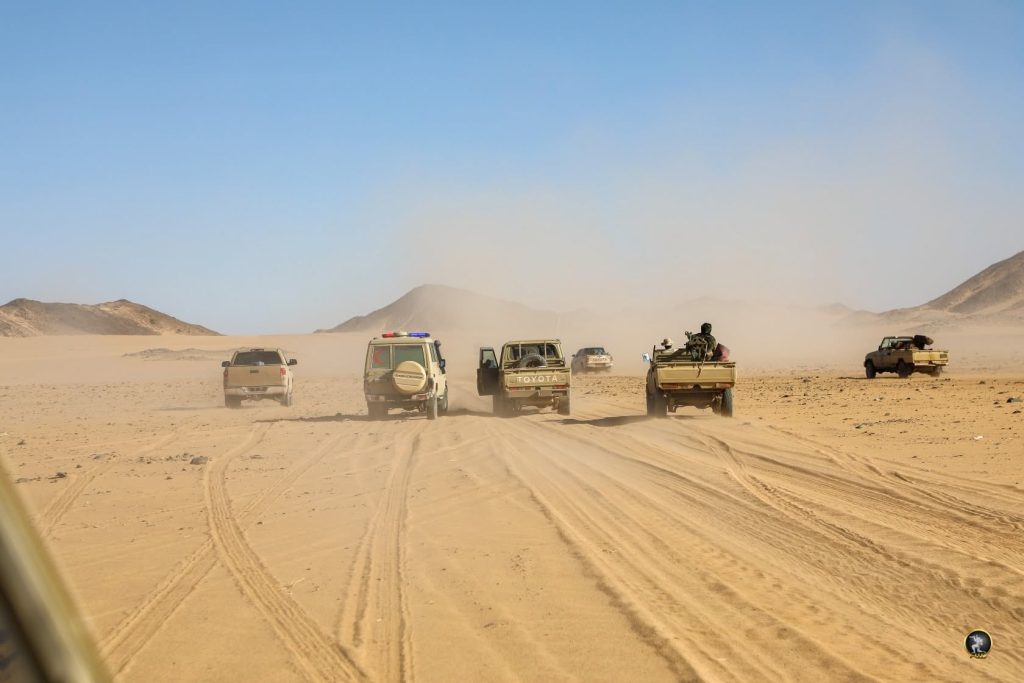
In February 2026, clashes and security incidents were reported along Libya’s southwestern border, particularly near crossings connecting the Fezzan region to northern Niger. Several reports suggested that armed confrontations involved forces aligned with eastern Libyan commander Khalifa Haftar and local actors operating along the frontier.
These incidents follow a broader pattern of instability in the area. Earlier in the year, fighters associated with Haftar’s forces were reportedly killed during attacks on positions near the Niger border, highlighting the volatility of the region and the challenges of maintaining control over remote desert routes.
Tensions have also taken on a diplomatic dimension. Disagreements between Haftar-aligned forces and authorities in Niger reflect competing security priorities in the borderlands, particularly regarding control over crossings and the presence of armed groups moving between the two countries.
The Strategic Importance of the Fezzan
The Fezzan region has long been one of Libya’s most difficult areas to govern. Vast desert terrain, sparse population centers, and weak state institutions have historically limited the ability of central authorities to enforce control. Since the collapse of Libya’s centralized state after 2011, these structural challenges have only deepened.
Today the region serves as a critical intersection between North Africa and the Sahel. Trade routes, migration corridors, and smuggling networks all pass through southern Libya, linking coastal cities such as Tripoli and Benghazi with communities across Niger, Chad, and Sudan. These routes also support illicit economies involving fuel, weapons, and human trafficking.
The strategic importance of these corridors has increased as instability in the Sahel has intensified. Cross-border trafficking networks now move not only goods but also fighters and resources across Libya, Chad, and Sudan, forming what analysts describe as interconnected conflict economies across the Sahara.
Control of these routes therefore carries both economic and military significance.
Haftar’s Expanding Southern Strategy
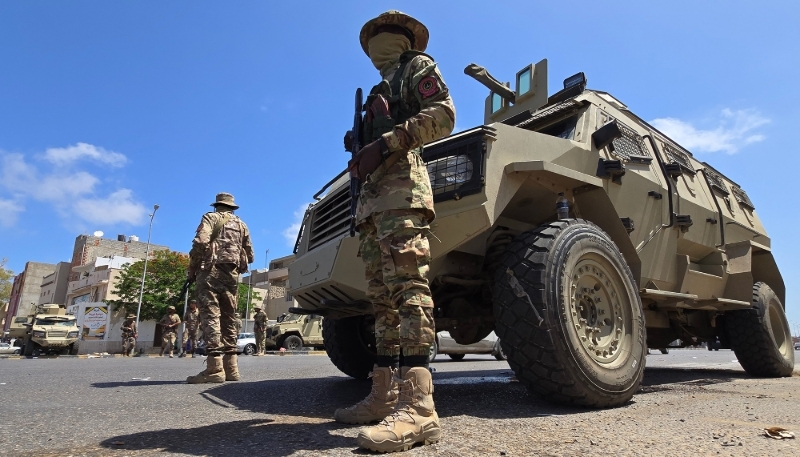
For Khalifa Haftar and his Libyan National Army (LNA), the south represents more than a remote frontier. Over the past several years, Haftar has sought to expand his influence across the Fezzan by building alliances with local tribes and deploying new military units to key towns such as Sebha and Murzuq.
Following recent border incidents, Haftar reportedly reshuffled forces in southern Libya and formed new military units tasked with stabilizing the region and protecting strategic crossings.
These moves reflect a broader effort to consolidate control over trans-Saharan routes that generate revenue through smuggling and migration networks. The south also offers an important logistical base for Haftar’s wider political ambitions. Control of the Fezzan allows eastern Libyan actors to project influence across Libya’s territory and shape developments in neighboring states.
However, maintaining authority in the region remains difficult. Local tribal dynamics, competing militias, and cross-border actors continue to challenge centralized military control.
Niger’s Security Concerns
For Niger, developments along the Libya border carry significant security implications. The country has faced increasing pressure from militant groups and insurgent networks operating across the Sahel. Attacks attributed to extremist organizations have expanded in recent years, including a large assault on a military facility near Niamey in early 2026.
In this context, Niger’s authorities are particularly sensitive to armed activity near their northern frontier. Reports that Libyan factions may have operated inside Nigerien territory or near sensitive border areas have sparked concerns about sovereignty and regional stability.
At the same time, Niger’s military leadership is navigating its own political transition following the 2023 coup that reshaped the country’s regional alliances. The resulting uncertainty has complicated security cooperation between Niger and its neighbors, including Libya.
Cross-Border Networks and the Sahel Connection
Beyond immediate political tensions, the Libya–Niger border sits at the heart of a broader network of trans-Saharan movement. Migrant routes, smuggling corridors, and militant transit pathways all intersect in the region.
For decades, traders and nomadic communities have moved across these routes with relative freedom. However, the collapse of centralized state authority in parts of Libya and the Sahel has allowed criminal networks and armed groups to exploit these pathways more systematically.
Fuel smuggling, in particular, has become a major economic driver in the region. Large volumes of subsidized Libyan fuel are transported southward and sold across Sahelian markets, generating profits that can reach billions of dollars annually while indirectly financing armed actors.
This economy reinforces the strategic importance of controlling border crossings and desert routes. Any shift in the balance of power in southern Libya can therefore have ripple effects across the wider Sahel.
Tribal Dynamics and Local Power Structures
Another critical factor shaping the situation in southern Libya is the role of local communities and tribal networks. Groups such as the Tebu and Tuareg maintain strong cross-border ties across Libya, Niger, and Chad. These relationships often predate modern state boundaries and continue to influence political dynamics today.
Local militias affiliated with these communities frequently serve as intermediaries between national actors and regional populations. Their alliances can shift depending on economic interests, security concerns, or political developments.
Recent statements from tribal leaders in the Fezzan have reflected the delicate balance between maintaining local stability and navigating competing national political agendas.
In practice, any attempt to stabilize the south must take into account these local power structures.
A Frontier Shaping Regional Security
The emerging tensions between Haftar’s forces and Niger illustrate a broader trend: Libya’s southern borderlands are becoming increasingly central to regional geopolitics.
As instability across the Sahel continues, pressure on Libya’s southern corridors is likely to grow. Armed groups, trafficking networks, and migration routes all converge in the Fezzan, turning the region into a strategic frontier linking multiple security crises.
For Libya itself, the challenge is clear. Without stronger coordination between national institutions and local actors, maintaining long-term control over these borderlands will remain difficult.
For the wider region, the stakes are equally significant. Developments in southern Libya now influence not only Libya’s internal stability but also the security environment across the Sahel and North Africa.
The Libya–Niger frontier therefore represents more than a remote desert boundary. It has become one of the key arenas where regional security dynamics are unfolding.