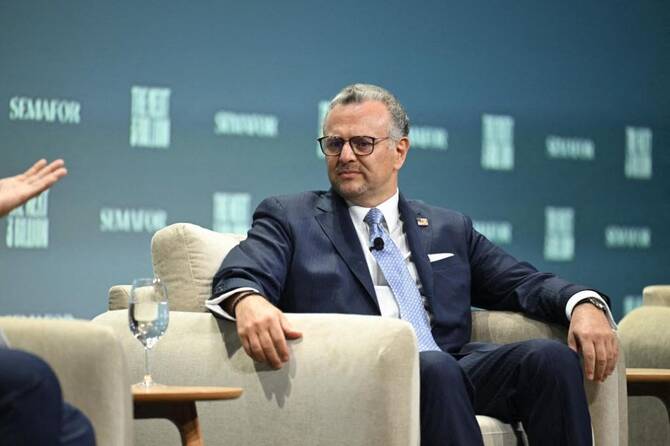
The United States has stepped up efforts to broker a power-sharing agreement between Libya’s rival eastern and western administrations, according to adviser to US President Donald Trump Massad Boulos. The initiative aims to reunify fractured institutions and open the door for expanded US energy investment in the country.
Boulos told the Financial Times that he works on a framework designed to bring Libya’s divided political and economic structures under a single governing authority. He said the plan focuses on “having one unified government and unifying all the institutions,” while also encouraging US oil companies to re-enter the Libyan market.
The proposal adds new momentum to long-standing international efforts to stabilize Libya, where competing administrations continue to divide executive authority, security control, and financial institutions.
Washington’s Push for a Single Authority in Libya
The US initiative centers on a political and institutional merger between Libya’s eastern-based authorities and the western government in Tripoli. Boulos described the effort as a structured negotiation process that prioritizes state unification over parallel governance systems.
He linked political stabilization directly to economic recovery. US policymakers, according to his remarks, see institutional unity as a prerequisite for large-scale foreign investment, especially in the energy sector. Washington wants a clearer regulatory and security environment before US companies expand operations in Libya’s oil fields.
The plan also signals a renewed US willingness to engage more directly in Libya’s internal political architecture. Rather than focusing solely on diplomatic support, the initiative ties governance reform to investment access, particularly in hydrocarbons.
Boulos framed the approach as both political and economic. He argued that Libya cannot attract sustained foreign capital without a single authority that manages contracts, security arrangements, and national revenue distribution.
Fragmented Institutions and Rival Power Centers
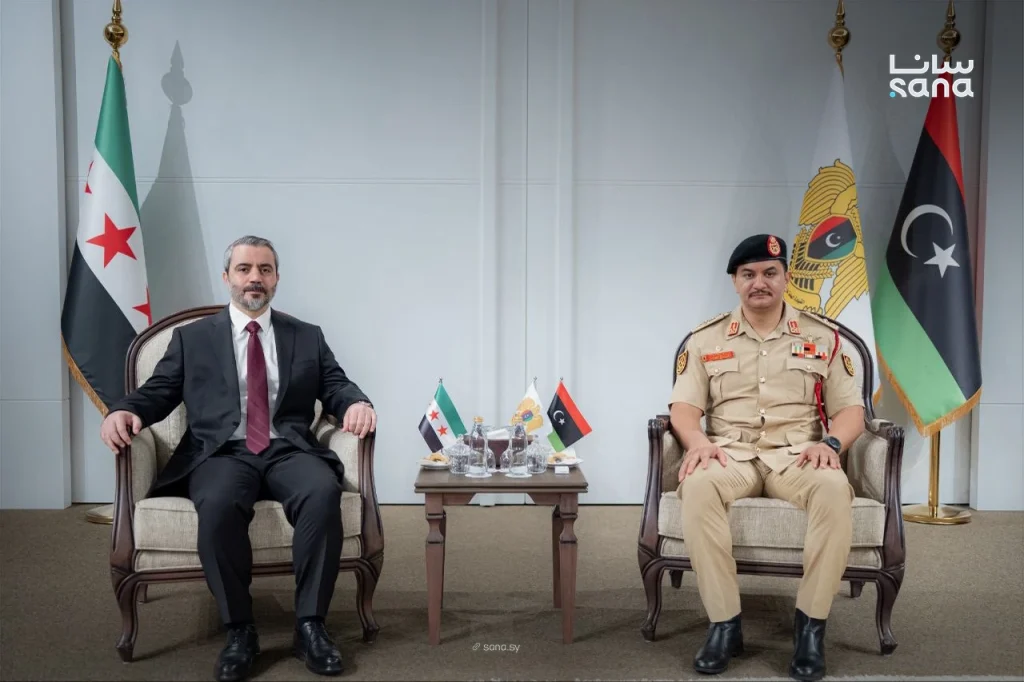
Libya continues to operate under a split political system that emerged after years of conflict. The Government of National Unity in Tripoli controls western regions, while eastern authorities based in Benghazi maintain separate military and political structures.
This division has created parallel institutions, including competing budget processes, security commands, and regulatory bodies. The lack of a unified central bank framework and consistent oil governance has complicated international engagement and investment decisions.
Boulos’s remarks highlight how Washington now links institutional fragmentation directly to economic underperformance. He pointed out that investors face uncertainty over contracts, enforcement mechanisms, and political legitimacy when dealing with Libya’s dual authorities.
The US proposal attempts to bridge that gap by pushing for a single executive framework that can absorb existing institutions under one national structure. That approach would require agreement on revenue sharing, security integration, and administrative consolidation.
Political factions in both eastern and western Libya remain cautious about full unification. Each side maintains strategic leverage through control of armed groups, financial institutions, and key oil infrastructure. Any transition toward a single authority would require complex negotiations and sustained external pressure.
Oil Investment Strategy and US Geopolitical Calculations
The US initiative also reflects a clear economic objective: expanding American participation in Libya’s energy sector. Libya holds some of Africa’s largest proven oil reserves and continues to attract interest from global energy companies despite political instability.
Boulos emphasized that institutional unity would help unlock US investment in upstream oil projects. He linked governance reform directly to the ability of US oil firms to operate with legal and operational clarity.
This approach positions energy investment as both a stabilizing tool and a strategic interest. Washington appears to view Libya’s oil sector as a potential anchor for long-term political stabilization, provided that institutions consolidate under a single authority.
US engagement also reflects broader geopolitical competition in North Africa. European and regional energy players already maintain active roles in Libya’s oil production and export infrastructure. A more coordinated US entry would reshape that balance and increase competition for contracts and exploration rights.
For Libya, the stakes remain high. A unified government structure could improve revenue management and restore investor confidence. However, it would also require concessions from rival political blocs that currently depend on fragmented governance systems to maintain influence.
Outlook: High Ambition, Complex Reality
The US proposal introduces a renewed diplomatic push to resolve Libya’s institutional divide, but implementation remains uncertain. The gap between eastern and western authorities continues to shape every major political and economic decision in the country.
Boulos’s statement signals that Washington now ties stabilization efforts directly to investment strategy, particularly in the oil sector. That alignment could increase international pressure for compromise, especially if major US energy companies begin to explore re-entry conditions more seriously.
However, Libya’s political fragmentation, security dynamics, and competing legitimacy claims will complicate any rapid transition toward a unified government.
For now, the US initiative adds a new layer to an already complex negotiation landscape, where energy, sovereignty, and international influence continue to intersect.