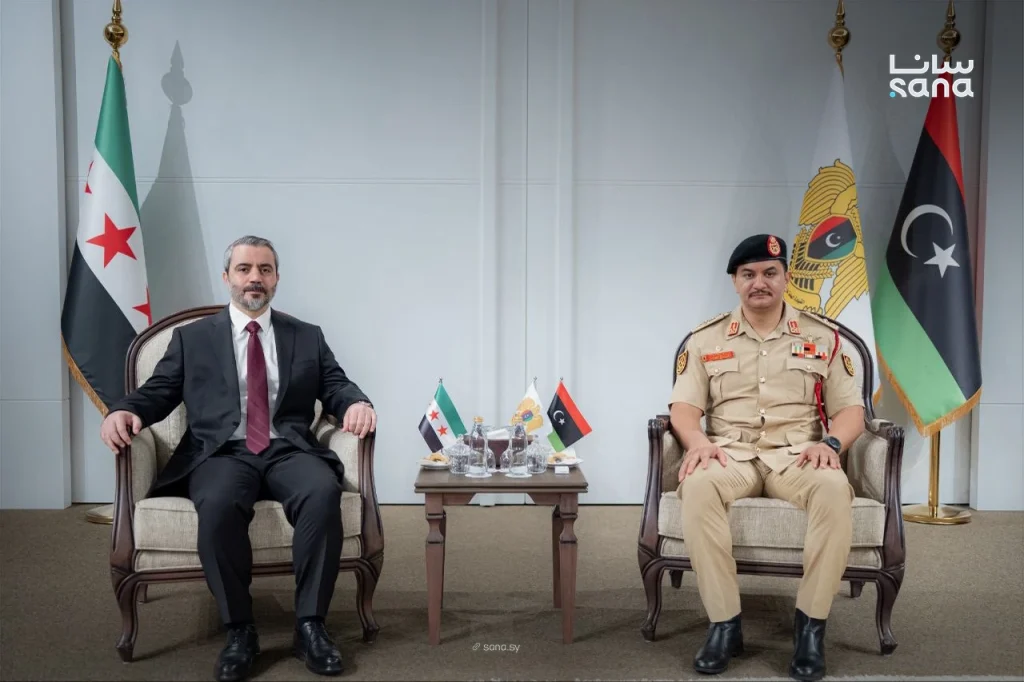
Libya and Italy have moved to deepen their defense relationship as both sides explore expanded military training programs and broader security cooperation. Recent talks between Libyan Deputy Defense Minister Abdul Salam Al-Zoubi and Italian Ambassador Gianluca Alberini underline a steady push to strengthen institutional military capacity and improve coordination on regional security challenges.
The meeting took place at Libya’s Ministry of Defense headquarters and focused heavily on training initiatives, technical support, and long-term capacity building for Libyan armed forces. Both sides stressed the importance of sustained engagement as instability across the Mediterranean continues to shape security priorities for Tripoli and Rome.
This latest round of discussions reflects a broader trend of growing defense cooperation between Libya and Italy, especially in the fields of military education, joint exercises, and operational coordination. It also builds on years of structured engagement through military committees and training frameworks designed to professionalize Libyan forces.
Growing Focus on Military Training and Capacity Building
Training cooperation remains the backbone of Libya–Italy defense relations. Over the past several years, both countries have maintained regular exchanges involving military delegations, technical visits, and structured training programs aimed at improving Libyan operational readiness.
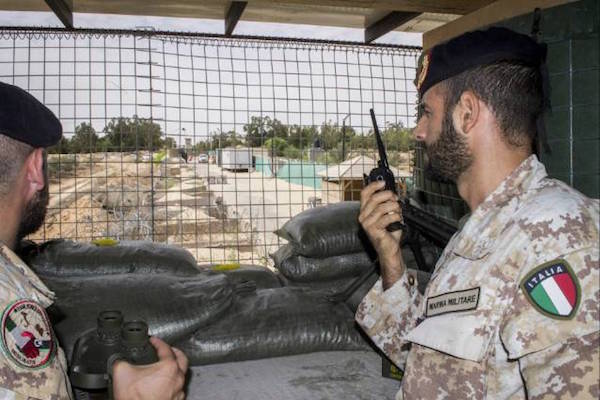
Libyan defense officials have repeatedly visited Italian military facilities, including airbases and training academies, to observe practical instruction programs and strengthen technical cooperation. These visits highlight a consistent Italian role in supporting Libyan military education, particularly in aviation, naval, and logistics training.
Italy has also continued to support specialized programs that focus on upgrading command structures and improving discipline within Libyan armed forces. These efforts aim to address long-standing gaps in institutional development that have affected Libya’s security sector since 2011.
At the same time, Libyan and Italian officials have emphasized that cooperation does not focus on arms transfers, but rather on training, expertise exchange, and institutional support. This approach aligns with broader European frameworks that prioritize stabilization through capacity building rather than direct military intervention.
Strategic Interests Driving Libya–Italy Defense Cooperation
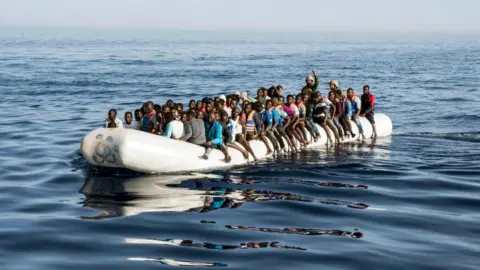
Libya and Italy share deep strategic interests that extend beyond military training. Security in the central Mediterranean remains a priority for both countries, particularly as migration flows, maritime instability, and regional conflicts continue to pressure border management systems.
Italy views Libya as a critical partner in securing southern Mediterranean routes and reducing irregular migration flows toward Europe. Libya, in turn, relies on Italian technical expertise and institutional support to rebuild parts of its fragmented security sector.
Defense cooperation also intersects with broader political and economic ties. Energy relations, infrastructure projects, and migration coordination all influence the pace and direction of military engagement between the two countries.
These overlapping interests have created a framework where defense talks often expand into wider discussions on stability, border control, and regional security coordination. This integrated approach reflects a shared understanding that Libya’s internal security directly affects Mediterranean stability.
Expanding Bilateral Engagement and Regional Security Challenges
Recent developments show that Libya and Italy continue to expand their defense dialogue across multiple channels, including formal committees, diplomatic meetings, and technical exchanges. These mechanisms aim to institutionalize cooperation and ensure continuity in training programs and security coordination.
Military cooperation committees have played a key role in structuring joint planning and reviewing training priorities. These bodies regularly assess ongoing programs and set new targets for improving Libyan military capabilities across different branches.
Despite progress, challenges remain. Libya’s fragmented political landscape and competing security institutions continue to complicate efforts to build a unified national defense structure. This fragmentation limits the speed at which training outcomes translate into broader institutional reform.
Regional instability also places pressure on both countries to maintain consistent engagement. Security threats in the Sahel, maritime risks in the Mediterranean, and cross-border trafficking networks all reinforce the need for sustained Libya–Italy coordination.
Even with these challenges, both sides continue to frame their partnership as essential for long-term stability. The emphasis on training and capacity building suggests a gradual, pragmatic approach rather than rapid transformation.
Conclusion
Libya and Italy continue to strengthen defense cooperation through a steady focus on training, technical support, and institutional development. The latest talks reinforce a long-standing partnership that links military capacity building with broader regional security goals.
As both countries navigate shifting geopolitical pressures in the Mediterranean, defense cooperation is likely to remain a central pillar of their bilateral relationship. Training programs and structured military exchanges will continue to shape how Libya rebuilds its security institutions in the years ahead.