HCS Leadership Seeks to Reassert Political Influence
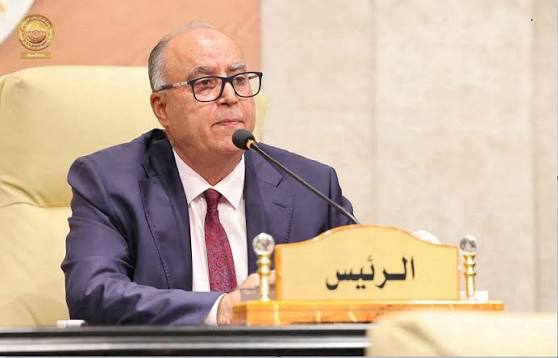
Libya’s High Council of State has entered a new political phase following the election of its leadership, with the council’s presidency holding its first meeting to organize priorities and define its role in the country’s next stage of transition.
The meeting, held in Tripoli, brought together newly elected HCS President Mohamed Takala, First Deputy President Naji Mukhtar, Second Deputy President Omar Boushah, and Council Rapporteur Belkacem Debrez. The leadership discussed internal coordination, preparations for upcoming council sessions, and mechanisms to improve the institution’s work during a critical period for Libya’s political process.
The leadership change comes as Libya enters another attempt to revive a stalled transition toward national elections. Years of political rivalry between eastern and western institutions have prevented the country from completing the transition that began after the 2011 uprising, leaving Libya with divided authorities and competing centers of power.
The HCS now faces the challenge of proving that it can play a constructive role in resolving these divisions rather than becoming another institution trapped by political competition.
Elections Remain the Central Test for Libya’s Political Institutions
The timing of the HCS leadership meeting carries wider significance as domestic and international actors continue pushing for a roadmap toward elections.
The council remains one of Libya’s key political bodies, alongside the House of Representatives and executive authorities, and it has traditionally played a role in discussions over constitutional arrangements and electoral legislation.
However, disagreements between Libya’s political institutions have repeatedly delayed progress. Previous attempts to organize elections collapsed because of disputes over election laws, candidate eligibility, constitutional rules, and the powers of state institutions.
The renewed HCS leadership must therefore navigate a difficult political environment where competing actors continue to protect their own interests. Building consensus will require more than internal restructuring; it will require the council to engage with rival institutions and help create conditions for an acceptable electoral process.
For many Libyans, the priority is no longer simply announcing political agreements but ensuring that institutions can implement them.
Political Stability Remains Linked to Libya’s Security Environment
While elections remain the main political objective, Libya’s security environment continues to shape what is realistically achievable.
The country’s divided security landscape remains one of the biggest obstacles to a stable political transition. Rival armed groups, regional divisions, and competing security structures continue to influence political decisions and create uncertainty around any future election process.
A credible national vote requires more than agreement among politicians. It also requires security guarantees, acceptance of election results, and cooperation between institutions that have spent years operating separately.
This challenge places additional pressure on the HCS leadership. The council’s influence depends not only on its ability to negotiate political agreements but also on whether it can contribute to broader efforts aimed at strengthening state institutions.
International actors, particularly the United Nations Support Mission in Libya (UNSMIL), have continued calling for Libyan institutions to move beyond prolonged negotiations and focus on practical steps toward elections and national reconciliation.
Takala’s Second Term Faces Pressure for Results
Mohamed Takala’s return to the HCS presidency gives the council continuity at a time when Libya’s political landscape remains uncertain. However, continuity alone will not be enough to restore confidence in the political process.
The new leadership will likely face pressure from Libyan citizens, political rivals, and international partners to demonstrate progress quickly.
The council’s ability to support a realistic electoral framework, improve cooperation with other institutions, and reduce political tensions will determine whether it can strengthen Libya’s transition.
The first meeting of the new presidency represents an organizational beginning, but the real test will come through the decisions that follow. Libya’s institutions have produced many agreements over the past decade, yet few have translated into lasting political change.
The coming months will reveal whether the HCS can help move Libya closer to institutional unity and elections, or whether political divisions will continue to define the country’s future.