Libya marked the 86th anniversary of the founding of its army on August 9 with renewed calls to unify the country’s military institution and keep it outside political and regional rivalries.
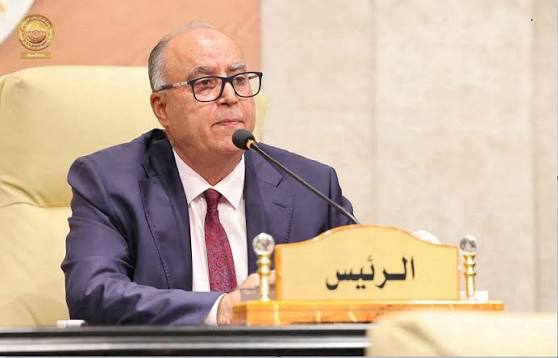
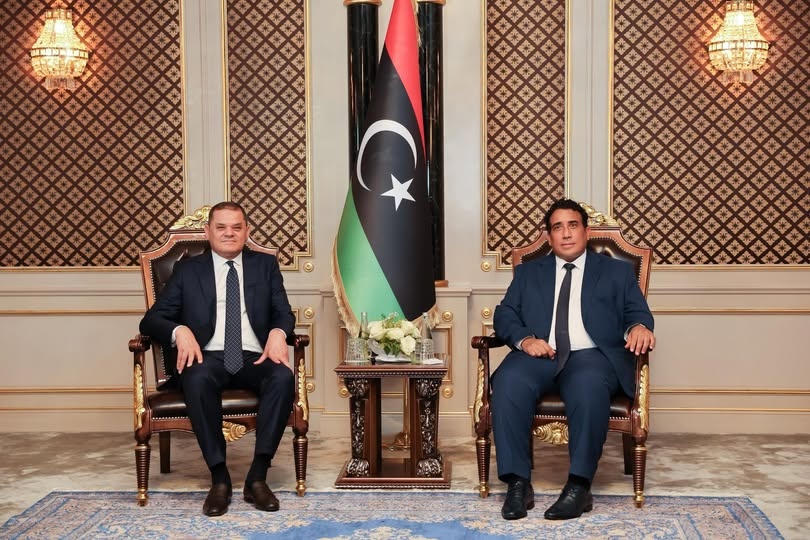
Presidential Council head Mohamed al-Menfi and Prime Minister Abdul Hamid Dbeibah both used the anniversary to stress the importance of a unified national military. Menfi said soldiers must treat the weapons placed in their hands as a responsibility to protect citizens, while Dbeibah described military unification as essential to Libya’s security, stability and sovereignty.
The statements carry particular weight because Libya still lacks a single military structure with effective authority across the country.
The anniversary therefore highlights a question that has remained unresolved since the 2011 conflict: can Libya build one military institution that serves the state rather than individual political centres, armed networks or regional interests?
The answer will shape far more than Libya’s defence policy. A unified military would change the balance between the state and armed groups, strengthen border security and give future governments a greater ability to enforce national decisions.
But military unification remains one of the country’s most difficult political and security challenges.
An Army Divided by Libya’s Political Crisis
The Libyan army that emerged after independence developed as a national institution. The 2011 uprising and subsequent conflict shattered that structure and created a fragmented security landscape.
Since then, competing military and security formations have developed in different parts of the country. The eastern military structure operates under Khalifa Haftar, while the Tripoli-based authorities rely on a mixture of regular units, security agencies and armed formations with varying degrees of institutional integration.
That division mirrors Libya’s wider political split.
The country has maintained competing centres of political authority for years, and military power has followed the same pattern. Instead of one chain of command, Libya has multiple structures with different leaderships, territorial bases and political relationships.
This creates a fundamental problem for the state.
A government can issue orders, but its ability to enforce those orders depends on which armed formations accept them. In a functioning state, the military answers to national institutions. In Libya, political disputes can still intersect directly with questions of military authority.
That dynamic also complicates efforts to tackle armed groups outside formal state structures.
The GNU has repeatedly presented the development of a stronger national military as part of a broader effort to restore state authority. But building a national army requires more than placing existing armed formations under ministries or changing their official designations.
It requires a genuinely unified command structure, common standards, professional institutions and a clear political agreement over who controls the use of force.
Without that foundation, institutional integration can remain largely administrative.
The Political Problem Behind Military Unification
Menfi’s message on the army anniversary focused heavily on discipline and political neutrality. He stressed that a soldier’s strength comes from discipline and staying away from political and regional conflicts.
That principle addresses one of Libya’s central security problems.
A national military cannot function effectively if political factions view military units as instruments for protecting their own interests. At the same time, commanders will struggle to remain politically neutral when the country itself lacks a settled political framework.
This creates a cycle.
Political division encourages military fragmentation, while military fragmentation makes political division harder to resolve.
The 5+5 Joint Military Commission has provided one of the few sustained channels for military dialogue between eastern and western representatives. Its work has helped maintain communication and supported efforts to preserve the ceasefire environment.
But coordination does not equal unification.
Military officers can cooperate on specific issues while their wider institutions remain separate. A unified military requires agreement on command, deployments, recruitment, weapons, budgets, training and the legal authority to use force.
It also requires political leaders to accept that the military cannot serve as an extension of political competition.
That last point may prove the hardest.
Any government that seeks to unify the armed forces must convince rival commanders that integration will not simply transfer military power to its political opponents. Eastern and western actors have strong incentives to retain their existing security structures because those structures provide leverage in any future political settlement.
This makes military reform inseparable from Libya’s broader political transition.
A Unified Military Would Change Libya’s Security Equation
A genuinely unified military could give Libya capabilities that fragmented forces struggle to provide.
Border security represents one of the clearest examples. Libya has vast southern borders with Niger, Chad and Sudan, alongside major trafficking routes and a growing range of transnational security threats. A divided military makes it harder to establish consistent national policy across those areas.
The same applies to critical infrastructure.
Libya’s oil fields, pipelines, export terminals, power facilities and major transport routes require protection across multiple regions. Fragmented security arrangements can leave infrastructure vulnerable to local disputes, political pressure and armed competition.
The recent escalation around Zawiyah demonstrates the problem. Critical oil and fuel infrastructure sits inside a complex local security environment, while the armed networks surrounding it connect to actors elsewhere in western Libya.
A national military could eventually provide a state-controlled security framework for such strategic sites. But that requires political neutrality and a clear chain of command.
It would also strengthen Libya’s ability to respond to threats without relying on ad hoc coalitions of armed groups.
That distinction matters. A government may assemble enough forces to defeat a particular opponent, but that does not necessarily strengthen the state. If the operation depends on competing armed formations, it can reinforce the very fragmentation that the government claims it wants to end.
Military unification must therefore focus on institutions rather than simply numbers.
Libya does not need a larger collection of armed formations carrying national insignia. It needs one military institution with one legal mandate, one professional command structure and one national chain of authority.
The army anniversary provides a useful moment to restate that objective.
But speeches alone will not deliver it.
The real test will come when political leaders have to accept limits on their own use of military power, when commanders have to surrender independent chains of command and when rival regions have to trust that military integration will not become a vehicle for political domination.
Until those conditions exist, Libya’s military will remain a reflection of the country’s political fragmentation.
The 86th anniversary therefore carries an uncomfortable message. Libya can commemorate the idea of a national army, but building one remains unfinished.
For the country’s security, that gap between the institution Libya wants and the military structures it actually controls remains one of its most important unresolved problems.