Every diplomatic initiative in Libya begins with the same promise: this time will be different.
A foreign envoy arrives with renewed urgency, rival factions are brought to the negotiating table, agreements are signed, and international headlines cautiously speak of progress. For a brief moment, optimism returns. Then the delegation leaves, implementation falters, and Libya slips back into familiar patterns.
The latest American engagements have undoubtedly achieved more than many previous efforts. Libya now has its first unified public spending framework in more than thirteen years. Military units from eastern and western Libya have participated in a joint exercise in Sirte under American sponsorship. International energy companies have renewed their engagement with Libya, encouraged by record oil production and renewed investment opportunities. None of these developments should be dismissed; they are genuine diplomatic achievements.
Yet they all leave unanswered the same question that has defined Libya since 2011: who governs the country, on what authority, and to whom is it accountable?
Until that question is answered inside Libya rather than negotiated abroad, international diplomacy can reduce tensions, facilitate cooperation, and postpone crises. It cannot resolve the institutional vacuum that has allowed every political settlement to become temporary.
Oil Wealth Has Become a Substitute for Reform
Libya appears, at first glance, to be enjoying one of its strongest economic periods in years, mainly because oil production has climbed to levels not seen in more than a decade and oil prices have remained elevated as a consequence of the conflict in the Gulf.
International oil companies are expanding their presence. Libya’s oil production reached nearly 1.49 million barrels per day in June, its highest level since 2013. Yet stronger oil production has not translated into stronger economic institutions.
For most oil-exporting countries, stronger oil revenues would strengthen public finances and improve economic confidence. Libya has experienced the opposite.
The Central Bank has devalued the dinar twice within a year. The IMF now describes Libya’s fiscal path as unsustainable. Inflation continues to erode purchasing power, imported goods have become more expensive, and public-sector wages buy noticeably less than they did only a few years ago.
The contradiction dissolves on closer inspection. Oil is not repairing Libya’s political economy; it is allowing it to continue unchanged.
Rather than flowing through robust public institutions, hydrocarbon revenues are distributed through two competing systems of governance. Each maintains its own bureaucracy, security structures, patronage networks, and spending priorities while drawing upon the same national resource. Higher production therefore does not automatically generate institutional reform. Instead, it can reduce the pressure for reform by providing both administrations with additional resources to preserve the existing equilibrium.
The behavior of the foreign exchange market increasingly reflects that reality.
Ordinarily, stronger oil prices would reinforce confidence in the currency of an oil-producing state. Libya’s parallel market has moved in the opposite direction.
The depreciation of the dinar suggests that market participants are becoming more concerned about Libya’s fiscal trajectory than its export earnings. Earlier this spring, the announcement of a unified spending framework generated cautious optimism that public finances might finally become subject to greater discipline. That confidence has steadily weakened. The prevailing expectation now is that additional oil income will once again finance expanding expenditure rather than institutional reform.
Libya has become trapped in a familiar rentier dynamic: abundant natural wealth delays precisely the reforms that abundance should make possible.
A Budget Agreement Without Fiscal Institutions
The unified public spending framework adopted on April 11 deserves recognition.
For the first time in more than thirteen years, rival Libyan institutions agreed on a unified budget framework. The Central Bank described the agreement as a major step toward ending financial division, rationalizing public spending, and strengthening fiscal discipline.
The framework is an important political agreement, but it does not by itself resolve Libya’s deeper institutional problems. Questions remain over implementation, oversight, transparency, and the mechanisms needed to enforce fiscal discipline.
The framework was designed around an assumed oil price that was significantly below the prices seen during the later stages of the year. Higher-than-expected oil revenues therefore create another test for Libya’s fiscal institutions: whether additional income will be saved and invested productively or absorbed into expanding current expenditure.
The IMF has explicitly warned that spending higher oil revenues could increase Libya’s vulnerabilities and has recommended using windfall gains to rebuild financial buffers and accelerate reforms.
At present, there is no sufficiently strong independent mechanism guaranteeing transparent public reporting of how unexpected additional receipts are allocated. Whether surplus revenues are accumulated in reserves, directed toward productive investment, used to finance current expenditure, or absorbed into competing patronage systems remains largely beyond meaningful public scrutiny.
Without institutions capable of enforcing transparency and accountability, even well-designed fiscal agreements remain dependent upon political goodwill rather than durable institutional authority.
Military Cooperation Does Not Resolve Political Fragmentation
The joint military exercise held in Sirte was intended to communicate a powerful image.
For the first time, American military personnel trained alongside Libyan forces representing different parts of the country. The symbolism was unmistakable. Images, however, should not be mistaken for incentives.
Exercise Flintlock 26 brought together Libyan forces and international partners in Sirte under U.S. Africa Command. The exercise was designed to strengthen military readiness, counterterrorism capabilities, and cooperation.
Many armed groups have evolved into political and economic actors in their own right. Integration would require commanders to relinquish not merely military autonomy but also some of the economic foundations of their political power.
While attention focused on Sirte, southern Libya continued to experience instability. Serious security challenges have persisted across parts of Fezzan, highlighting the gap between symbolic military cooperation and the deeper process of building unified security institutions.
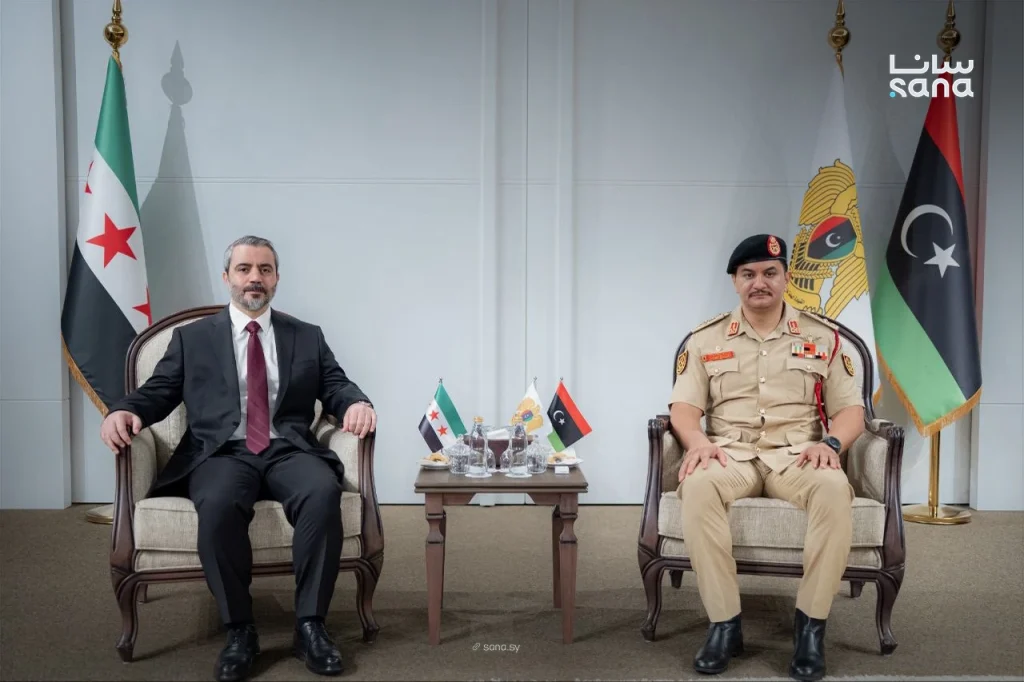
Turkey has maintained a military role in western Libya, while Russian-linked forces remain present in the east and south. Every external actor with influence on the ground now has a stake in the arrangement as it stands, and that is the dilemma at the heart of any reunification effort.
The reported Boulos initiative illustrates this dilemma. Any reunification arrangement that disproportionately strengthens either the Tripoli or Benghazi camp risks disrupting the strategic calculations that regional powers have developed over more than a decade of political fragmentation. Egypt and Turkey, despite supporting opposing centers of power, have each cultivated influence through Libya’s divided institutional landscape. A settlement that decisively shifts the balance in favor of one side would inevitably reduce the leverage of the other and compel both capitals to reassess long-established political, security, and economic relationships.
Ironically, Libya’s frozen conflict has created a degree of strategic predictability for regional actors that a genuine reunification process—whose outcome neither side could fully shape or control—would almost certainly unsettle.
The Election That Everyone Supports—Until It Might Actually Happen
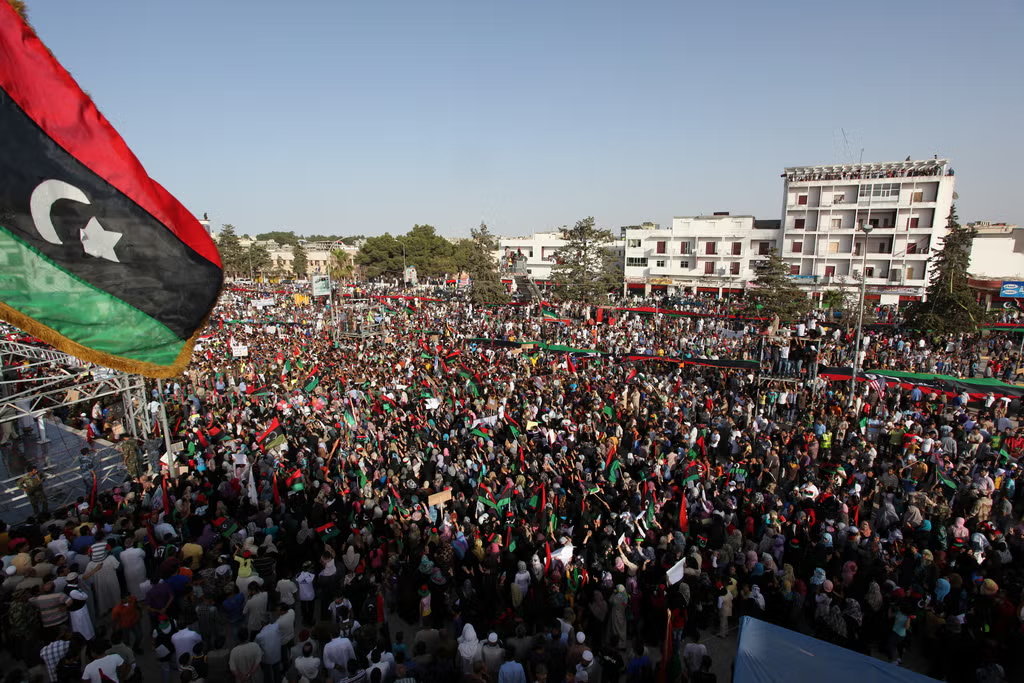
For nearly five years, elections have remained Libya’s most frequently repeated promise and its most consistently deferred political objective.
The obstacle is political rather than technical. Neither of Libya’s competing centers of power has demonstrated a willingness to submit its future to an electoral process whose outcome cannot be confidently anticipated. The prolonged political deadlock has transformed elections into a high-stakes contest in which one side’s gain is often perceived as the other’s loss.
International diplomacy has increasingly shifted toward managing coexistence between rival centers of power rather than resolving the underlying legitimacy crisis.
Stability may reduce immediate risks, but it cannot replace legitimacy. Yet this is precisely where the interests of many actors, both Libyan and foreign, begin to diverge from the demands of genuine political change.
The Limits of Outside Mediation
Foreign governments can encourage dialogue, reduce violence, and facilitate cooperation. They cannot import institutions, negotiate accountability into existence, or manufacture legitimacy.
Much of the recent progress celebrated by international observers—including the unified spending framework, military cooperation in Sirte, and renewed confidence within Libya’s energy sector—has been achieved through negotiated arrangements between existing centers of power. Such arrangements may produce greater stability, but they do not necessarily produce stronger institutions.
Conclusion
The recent achievements deserve recognition, but they should not be mistaken for resolution. That was never the goal of any single initiative.
For more than a decade, the international community has helped Libya avoid collapse. Avoiding collapse, however, is not the same as building a state.
No foreign envoy can negotiate legitimacy into existence, and no external power can construct institutions that Libyans themselves do not ultimately own, defend, and sustain. The problem is that many of the actors involved, both inside and outside Libya, have interests that do not necessarily align with meaningful institutional change.
The latest American initiative may prove to be an important beginning. Whether it becomes anything more depends not on Washington, Ankara, Cairo, Moscow, or the United Nations. It depends on whether Libya can finally move beyond governing through temporary arrangements and begin governing through institutions that command authority because they are accountable to the people they serve.
That has always been the real challenge and, in the end, it is one that only Libyans can resolve.