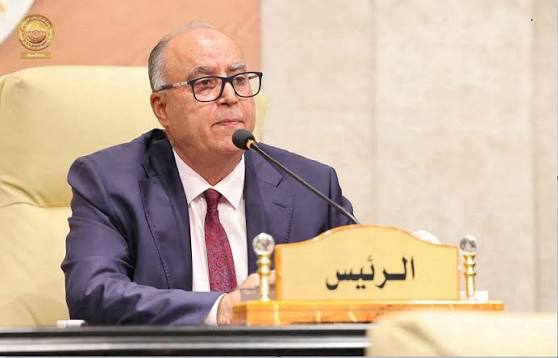
Al-Salhin Abdulnabi Al-Obeidi is now the new speaker of Libya’s House of Representatives, replacing Aguila Saleh after more than 12 years in the post. His election marks a change at the top of Libya’s eastern-based parliament, but Al-Obeidi is not a newcomer to the institution or to the political networks around it.
The civil engineer and Tobruk representative has spent more than a decade inside the House of Representatives. He has worked on parliamentary committees, including foreign affairs, and previously chaired the Libyan-Turkish Parliamentary Friendship Committee. His background gives him experience in both domestic parliamentary politics and international engagement.
His appointment also comes at an important moment. The House is facing pressure to reform its internal structure while the United Nations pushes Libya’s rival political institutions toward elections and greater institutional unity.
From Tobruk Representative to Parliament Speaker
Al-Obeidi was elected to the House of Representatives in 2014 as a representative for Tobruk, in Libya’s far east. He belongs to the Obeidat tribe, the same tribe as Aguila Saleh.
He has spent most of his political career inside the House rather than building a public profile outside it. During his time as an MP, he worked on several parliamentary committees, including the Public Utilities Committee and the Foreign Affairs Committee. His work has covered legislative, oversight and development issues.
His role in the Libyan-Turkish Parliamentary Friendship Committee is particularly relevant to his new position. The House established the committee in 2024, and Al-Obeidi chaired it as it worked to strengthen parliamentary contacts between Libya and Türkiye through political, economic and cultural cooperation.
That experience could give the new speaker useful relationships beyond Libya’s eastern political sphere. Türkiye has become an important external actor in Libya, particularly through its close relationship with western Libya and its broader engagement with both sides of the country’s political divide.
Al-Obeidi has also built relationships with different members of the House. Libyan media reports have described him as having relatively balanced positions on several issues and good relations with different parliamentary groups. That could become important as he takes control of an institution that has experienced significant internal disagreements.
Why His Election Matters
Al-Obeidi’s election followed a dispute over the House’s leadership structure. On October 5, 98 lawmakers voted to amend the parliament’s internal rules and introduce a rotating presidency with a maximum 12-month term. At least 111 lawmakers then participated in the following day’s session that elected Al-Obeidi and a new leadership team, according to the United Nations Support Mission in Libya (UNSMIL).
The process remains politically sensitive. Saleh rejected the earlier session and questioned its legal validity, while other lawmakers argued that parliamentary reform had become necessary after years without a fixed term for the speaker. The leadership change therefore reflects an internal struggle over how the House should function as much as a change of individual leadership.
For Al-Obeidi, the immediate challenge will be to establish his authority across a parliament that has just gone through a contentious leadership change.
The timing also matters beyond the House itself. UNSMIL says it will engage with the new parliamentary leadership as it works to advance its political roadmap, including institutional reform and elections under the Smaller Convening Agreement signed in August.
That gives Al-Obeidi a more consequential role than his previous committee positions. The House remains one of the main institutions involved in deciding Libya’s electoral framework and the future structure of the country’s political system.
A New Face at the Top, but Familiar Political Ground
Al-Obeidi’s background suggests continuity in some respects. He comes from eastern Libya, represents Tobruk and belongs to the same tribe as the man he replaced. His rise therefore does not represent a sudden break with the social and political environment that has shaped the House since 2014.
What could change is how the parliament manages its internal politics and its relationship with the wider political process.
The new speaker has already worked across parliamentary and foreign-policy channels, including with Türkiye. He now has to use that experience to manage a more difficult task: keeping the House functioning while navigating negotiations with Libya’s western institutions and international mediators.
His one-year term also creates a different political environment from the one Saleh operated in. UNSMIL has welcomed the creation of a rotating 12-month presidency, which could make parliamentary leadership more accountable to lawmakers and reduce the concentration of authority in one office.
Whether that produces a meaningful change will depend on what Al-Obeidi does with the position. His first test will not simply be maintaining control of the House. It will be whether the new leadership can turn an internal parliamentary reshuffle into a more functional role in Libya’s broader political transition.