The decision follows a high-level meeting in Ankara and comes amid a broader rapprochement between Turkey and eastern Libya, including the approval of a long-disputed maritime agreement.
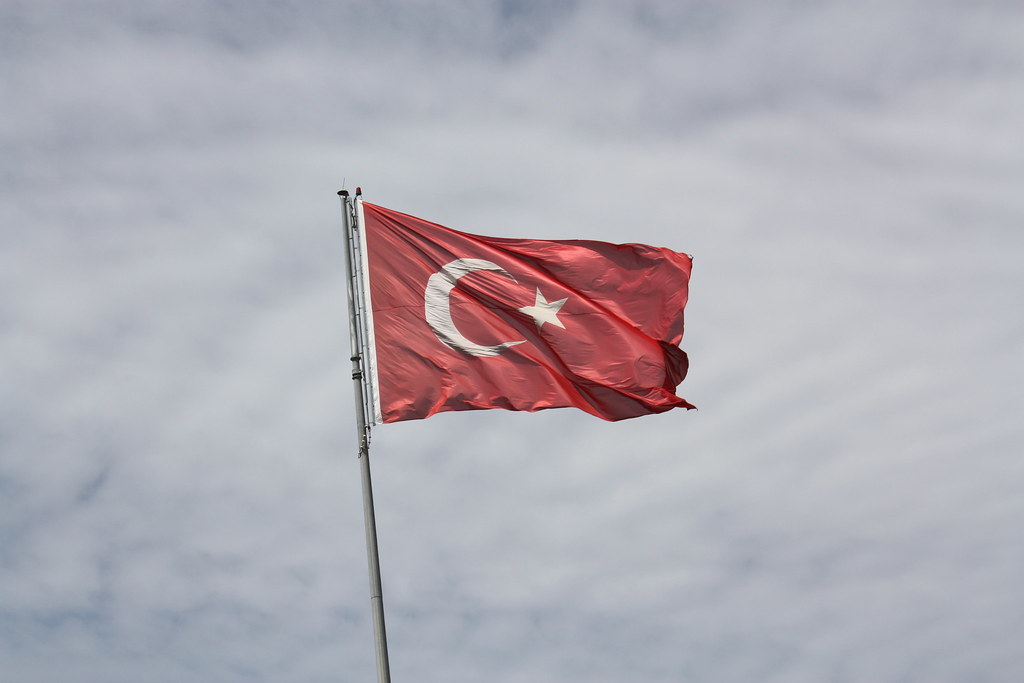
The eastern-based Libyan government has exempted Turkish citizens from entry visa requirements and residence fees, marking another step towards closer relations between Ankara and the authorities aligned with Khalifa Haftar.
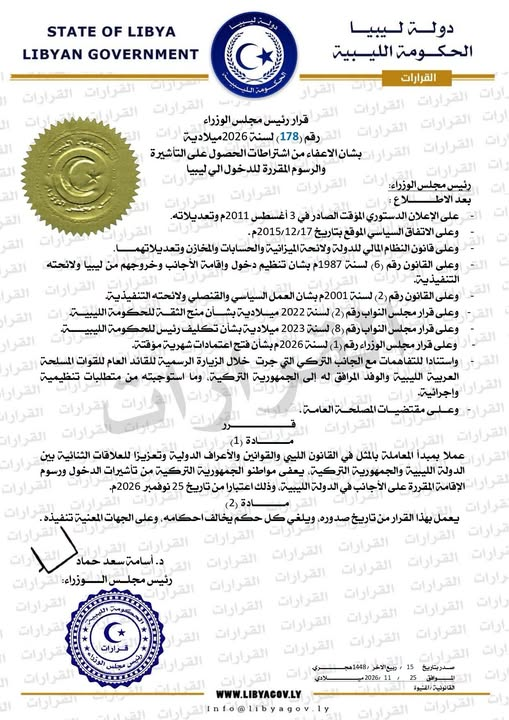
Osama Hammad, head of the government appointed by Libya’s House of Representatives, signed Decision No. 178 of 2026 yesterday, granting Turkish nationals an exemption from entry visas and the fees charged to foreign residents. The measure took effect on the date of issuance, according to the decision published through the government-run Libyan News Agency (LANA).
The decision follows a visit to Ankara by Haftar, commander of the eastern-based Libyan National Army (LNA), where he met Turkish President Recep Tayyip Erdogan and senior Turkish officials.
According to the decision’s preamble, the exemption implements understandings reached with the Turkish side during Haftar’s visit and is intended to strengthen bilateral relations. However, the document does not specify a maximum permitted duration of stay for Turkish visitors.
Reciprocal visa arrangements remain unconfirmed
Following the meeting, Saddam Haftar, deputy commander of the LNA, said Erdogan had agreed to reciprocal visa exemptions between Libya and Turkey, according to statements carried by LANA.
However, Turkey has not announced a corresponding change to its entry requirements for Libyan citizens thus far. Consequently, the reciprocal arrangement described by Saddam Haftar remains unconfirmed by the Turkish government.
Turkey’s Foreign Ministry confirmed that senior officials, including Foreign Minister Hakan Fidan, Defence Minister Yasar Guler and intelligence chief Ibrahim Kalin, participated in meetings with Haftar and his delegation in Ankara yesterday. Its published account did not mention a visa agreement.
It also remains unclear whether the eastern government’s exemption will be recognised at airports and border crossings under the control of the Tripoli-based Government of National Unity (GNU), led by Abdulhamid Dbeibah. The GNU has not publicly clarified its position on the measure.
A broader shift in Turkey’s relations with eastern Libya
The visa decision comes amid a wider improvement in relations between Ankara and eastern Libya, following years of hostility during which Turkey provided military support to the Tripoli-based authorities against Haftar’s forces.
A significant development came in October, when the eastern-based House of Representatives unanimously approved the 2019 maritime delimitation agreement between Libya and Turkey. Lawmakers also repealed earlier decisions rejecting the agreement and severing political relations with Ankara.
The agreement, originally signed in November 2019 by Turkey and Libya’s former Government of National Accord, establishes maritime jurisdiction boundaries in the Mediterranean, including areas relating to the continental shelf and exclusive economic zones.
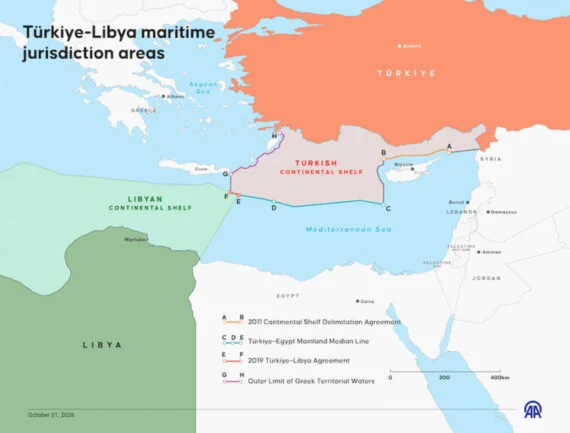
Yesterday, the House of Representatives published Law No. 8 of 2026 ratifying the agreement in the official gazette, completing the parliamentary approval process. The arrangement remains controversial, with Greece, Cyprus and the European Union having raised objections to its maritime implications.
Turkey has also maintained relations with the Tripoli-based GNU, despite its growing engagement with Haftar’s camp. Erdogan met Dbeibah earlier this month on the sidelines of the climate summit in Antalya, according to Turkish government sources.
The Turkish president is expected to visit Tripoli on 8–9 December for the Turkey-Africa Partnership Summit, potentially providing another opportunity to engage with Libya’s competing political authorities.
Whether the visa exemption becomes effective across the country, and whether Ankara introduces reciprocal measures for Libyan nationals, will be important indicators of how far the rapprochement translates into practical cooperation.