
Cybersecurity has become one of the fastest-growing security challenges across the Middle East and North Africa. Governments now face organized cyber fraud networks that operate across borders, target financial systems, exploit weak digital infrastructure, and steal millions from individuals and institutions every year.
Libya’s recent participation in INTERPOL’s “Operation Ramz” reflects a broader shift in the country’s security priorities. While Libya has traditionally focused on border control, militancy, smuggling, and internal instability, authorities now appear increasingly aware of the risks posed by cybercrime and digital fraud.
The operation also highlights Libya’s growing involvement in regional security coordination at a time when cyber threats continue to expand across the Arab world.
What Was Operation Ramz?
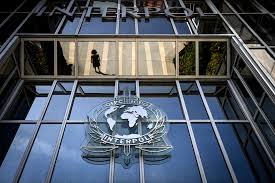
Operation Ramz was a coordinated INTERPOL-led cybercrime operation involving law enforcement agencies from 13 Arab countries. The initiative targeted cyber fraud networks linked to phishing schemes, online scams, malware distribution, and digital financial crimes.
According to INTERPOL and regional reports, the operation led to the arrest of more than 200 suspects and identified thousands of victims across the region. Authorities also seized devices, disrupted fraudulent online platforms, and dismantled criminal infrastructure used for cyber-enabled fraud.
The operation focused heavily on financial cybercrime. Criminal groups increasingly target banking systems, payment services, telecommunications networks, and online users through fake websites, fraudulent applications, and identity theft campaigns.
The scale of the operation demonstrated how cybercrime has evolved into a transnational security issue rather than a purely domestic criminal matter. For many Arab states, cyber fraud now overlaps with organized crime, financial laundering, and broader national security concerns.
Libya’s Role in the Operation
Libyan authorities participated alongside several regional partners under INTERPOL coordination. While official details about Libya’s exact operational contribution remain limited, the country’s involvement alone carries strategic significance.
Libya has historically struggled with fragmented institutions and uneven security coordination. Participation in multinational cyber operations therefore signals an effort to strengthen international law enforcement cooperation and improve technical security capabilities.
The operation also reflects a growing recognition inside Libya that digital threats can directly affect economic stability, public trust, and national infrastructure.
Cybercrime in Libya remains underreported, but digital fraud incidents have increased alongside the expansion of online banking services, mobile telecommunications, and electronic financial transactions. As Libya slowly modernizes parts of its financial and communications sectors, vulnerabilities have also expanded. Criminal networks often exploit weak cybersecurity systems in transitional states where digital governance remains underdeveloped.
Participation in Operation Ramz may therefore represent an early step toward deeper cyber coordination between Libya and regional security institutions.
Why Cyber Fraud Networks Matter Strategically
Cyber fraud networks no longer operate as isolated criminal groups. Many now function through sophisticated international structures that use encrypted communications, cryptocurrency transactions, fake digital identities, and cross-border financial channels.
These networks can generate major financial losses while also undermining public confidence in digital systems.
For Libya, the risks extend beyond ordinary financial crime.
The country’s banking sector already faces structural challenges, including limited digital infrastructure, weak cybersecurity standards, fragmented oversight, and inconsistent technological modernization. A major cyber fraud campaign targeting Libyan institutions could further damage trust in electronic banking and slow future financial reforms.
Telecommunications infrastructure also remains vulnerable. Weak cybersecurity protections create opportunities for phishing attacks, SIM fraud, ransomware campaigns, and data breaches.
Cyber threats can also intersect with broader security concerns. Organized criminal groups involved in smuggling, trafficking, or illicit finance increasingly use digital tools to move money, coordinate operations, and conceal transactions. This creates a growing overlap between cybercrime and national security.
Regional instability further increases the challenge. Weak coordination between neighboring states often allows cybercriminals to exploit jurisdictional gaps and operate across multiple countries simultaneously.
Operations like Ramz attempt to address that problem by improving intelligence sharing and coordinated enforcement.
Libya’s Cybersecurity Vulnerabilities
Despite recent efforts at modernization, Libya still faces major cybersecurity weaknesses.
The banking sector remains particularly exposed. Many financial institutions continue to operate with outdated digital protections and limited cyber defense capacity. As electronic payment systems expand, the risk of fraud, hacking attempts, and financial data theft will likely increase.
Government institutions also face serious digital governance challenges. Libya lacks a fully developed national cybersecurity framework capable of coordinating responses across ministries, financial institutions, telecom operators, and law enforcement agencies. Institutional fragmentation further complicates the issue.
Cybersecurity often requires centralized coordination, rapid information sharing, and technical expertise. Libya’s political divisions and administrative fragmentation make that process more difficult.
Telecommunications infrastructure presents another concern. Internet networks, mobile systems, and data management platforms may remain vulnerable to both criminal exploitation and external cyber threats.
At the same time, public awareness about cybersecurity risks remains limited. Many cyber fraud campaigns succeed because users lack familiarity with phishing attempts, fake financial platforms, and online scams.
Without stronger digital literacy and institutional reforms, Libya could face increasing exposure to cyber-enabled financial crime in the coming years.
Regional Implications and Future Cooperation
Operation Ramz reflects a wider regional trend toward greater cybersecurity coordination across the Arab world.
Countries throughout the region increasingly recognize that cyber threats do not respect borders. Fraud networks can target victims in multiple countries simultaneously while operating from entirely different jurisdictions. This makes regional coordination essential.
For Libya, continued participation in multinational cyber operations could provide several strategic advantages.
First, it may help Libyan institutions gain technical expertise and access to international cybersecurity networks. Second, stronger cooperation with INTERPOL and regional partners could improve intelligence sharing on organized crime, illicit finance, and digital fraud activity. Third, cybersecurity cooperation may gradually become part of Libya’s broader security diplomacy strategy.
In recent years, Libya has sought deeper regional engagement on migration, border security, counterterrorism, and energy infrastructure protection. Cybersecurity now appears increasingly connected to those same priorities.
The protection of financial systems, telecommunications infrastructure, ports, airports, and energy facilities will likely become more important as Libya attempts to attract foreign investment and expand economic recovery efforts.
Foreign investors increasingly evaluate cyber resilience alongside political and physical security risks.
As Libya modernizes its economy, cybersecurity capacity could therefore become an important component of long-term national stability.
A New Security Frontier
Libya’s participation in Operation Ramz may appear limited on the surface, but it reflects a broader shift in how security threats are evolving across the region.
Traditional security concerns such as borders, armed groups, and smuggling networks remain highly important. However, cybercrime now represents another expanding front that directly affects financial systems, state institutions, and economic confidence.
For Libya, strengthening cybersecurity will require more than occasional participation in international operations. The country will need institutional reform, stronger digital governance, improved technical infrastructure, public awareness campaigns, and closer regional coordination.
The success of operations like Ramz demonstrates that regional cooperation can produce concrete results against transnational cybercrime networks.
As digital threats continue to expand across North Africa and the Middle East, cybersecurity will likely become an increasingly important part of Libya’s national and regional security strategy.