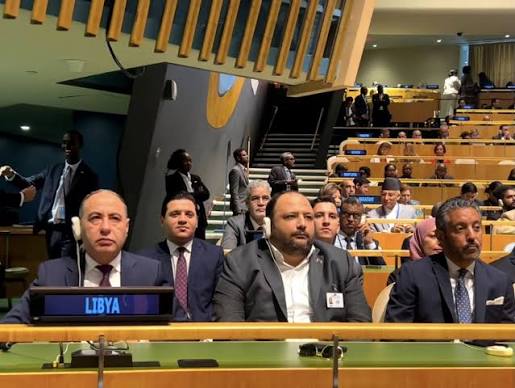
Libya has strengthened its international security engagement by participating in the United Nations Counter-Terrorism Week in New York, a high-level gathering that brings together governments, international organizations, and security experts to address evolving terrorist threats.
The event comes at a time when Libya continues to rebuild its security institutions while facing persistent challenges along its borders, particularly in the south. Terrorist organizations no longer operate within traditional national boundaries. Instead, they exploit weak governance, cross-border smuggling networks, and regional instability. As a result, international cooperation has become increasingly important for Libya’s long-term security strategy.
Libya’s participation signals an intention to remain engaged with global counter-terrorism efforts while expanding cooperation with international partners on intelligence sharing, border security, legal frameworks, and capacity building.
Terrorism Remains a Regional Challenge
Although Libya has significantly reduced the territorial presence of major terrorist organizations since the defeat of Islamic State strongholds in Sirte in 2016, the broader security environment remains complex.
Cells linked to extremist groups continue to operate across remote desert regions stretching into the Sahel. These groups often avoid direct confrontation and instead rely on mobility, local criminal economies, and porous borders to sustain their activities.
The security dynamics have also evolved. Terrorism increasingly overlaps with organized crime, arms trafficking, migrant smuggling, and illicit financial networks. These interconnected threats affect not only Libya but also neighboring countries including Niger, Chad, Sudan, Algeria, and Tunisia.
International organizations have repeatedly highlighted the growing importance of regional cooperation in addressing these risks. No single country can effectively disrupt transnational terrorist networks without sustained intelligence exchange and coordinated operational planning.
For Libya, participation in multilateral forums provides opportunities to strengthen these partnerships while aligning domestic policies with internationally recognized counter-terrorism standards.
The UN’s Expanding Counter-Terrorism Agenda
United Nations Counter-Terrorism Week serves as one of the organization’s principal platforms for discussing emerging security threats.
The discussions extend beyond traditional military responses. Participants examine legal reforms, financial sanctions, digital technologies, terrorist financing, cybersecurity, border management, human rights, and strategies to prevent violent extremism.
This broader approach reflects how terrorist organizations have adapted over the past decade.
Groups increasingly use encrypted communications, online propaganda, cryptocurrency transactions, and decentralized recruitment models. Governments therefore require equally sophisticated legal and technological capabilities to respond effectively.
For countries like Libya, institutional development remains as important as operational security measures.
Building effective judicial systems, improving financial oversight, enhancing customs procedures, and modernizing border management all contribute to reducing the operating space available to extremist organizations.
Libya’s Security Priorities Continue to Evolve
Libya’s security agenda has shifted considerably since the height of the country’s internal conflict.
While domestic political divisions remain unresolved, national security institutions increasingly recognize that external threats demand broader international engagement.
The country’s vast southern frontier illustrates this challenge.
Libya shares thousands of kilometers of desert borders with several countries experiencing political instability or armed conflict. Monitoring these remote areas requires surveillance capabilities, intelligence cooperation, and coordination with neighboring governments.
Counter-terrorism therefore cannot remain isolated from wider border security policies.
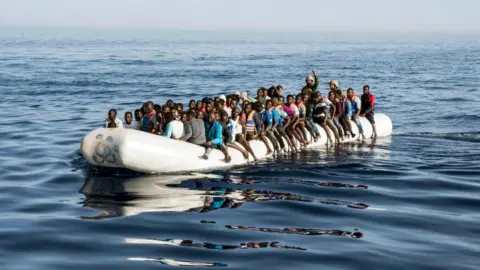
The same routes used by extremist groups often facilitate weapons trafficking, fuel smuggling, human trafficking, and irregular migration toward the Mediterranean.
Strengthening border governance consequently delivers benefits across multiple security sectors.
Participation in UN-led initiatives allows Libyan institutions to exchange best practices with partners confronting similar challenges in Africa, Europe, and the Middle East.
International Cooperation Gains Strategic Importance
Global counter-terrorism efforts increasingly emphasize partnerships over unilateral action.
Information sharing has become one of the most valuable tools available to governments seeking to identify emerging threats before they develop into operational attacks.
International organizations also provide technical assistance, training programs, judicial support, and capacity-building initiatives that strengthen national institutions over the long term.
For Libya, these partnerships complement ongoing efforts to improve security governance while reinforcing its role within regional and international security frameworks.
Greater engagement with multilateral institutions also supports broader diplomatic objectives by demonstrating Libya’s willingness to contribute to collective security initiatives.
As instability continues across parts of the Sahel, North Africa will likely remain an important focus for international counter-terrorism cooperation.
Libya’s geographic position places it at the intersection of these evolving regional security dynamics.
Analytical Outlook
Libya’s participation in UN Counter-Terrorism Week represents more than diplomatic engagement. It reflects a broader recognition that contemporary security threats require international coordination as much as domestic action.
The country’s security environment has become increasingly interconnected with developments across the Sahel and wider North Africa. Terrorist groups now operate through flexible networks that exploit governance gaps, criminal economies, and regional instability rather than holding territory.
This evolution places greater emphasis on intelligence cooperation, border management, financial oversight, and institutional resilience.
While Libya still faces significant internal political and security challenges, participation in international forums helps integrate its institutions into global counter-terrorism frameworks and provides access to expertise that supports long-term capacity building.
The effectiveness of these engagements will ultimately depend on how international cooperation translates into practical improvements on the ground. Stronger coordination between security agencies, more effective border controls, and continued institutional reform remain essential if Libya aims to reduce the space available for extremist groups and strengthen national security over the coming years.