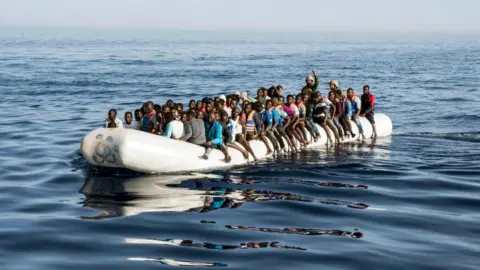
Libya remains one of the most important transit hubs for migration toward Europe. It also remains one of the most unstable environments for migrants, where insecurity does not end at sea, it continues inside detention systems, trafficking routes, and informal holding sites. Reports from humanitarian organizations and the UN consistently show that migrants in Libya face detention, exploitation, and violence within a system that operates with limited oversight and fragmented authority structures.
This article examines how migration dynamics intersect with Libya’s broader security environment, and why the current system continues to generate risks for migrants, local communities, and state institutions.
A fragmented migration landscape
Libya’s migration system does not function under a unified state framework. Instead, it operates through overlapping authorities, including state institutions, local armed groups, and trafficking networks. This fragmentation creates multiple points of control over migrant movement.
Migrants often move through informal routes where control shifts between actors. In many cases, detention is not a formal legal process but a practice linked to security enforcement, trafficking economies, or territorial control.
The result is a system where protection mechanisms remain weak and accountability is inconsistent.
Detention as a security and governance gap
Detention facilities in Libya are frequently described as overcrowded and under-resourced. In many cases, migrants are held without clear legal procedures or access to judicial review.
Humanitarian reporting has documented patterns of abuse in detention environments, including forced labor, extortion, and violence.
From a security perspective, these conditions matter for two reasons: First, detention centers become pressure points where governance is weak and informal power structures dominate. Second, the lack of standardized oversight creates environments where abuse can persist without effective enforcement mechanisms.
This weak governance structure reinforces instability rather than containing it.
Sexual violence and exploitation risks along migration routes
Sexual violence emerges as one of the most consistent risks faced by migrants in Libya, particularly within detention settings and trafficking corridors. Reports from international monitoring bodies document cases of rape, coercion, and exploitation linked to both criminal networks and detention environments.
These risks are not isolated incidents but part of a broader protection gap. Migrants with limited legal status are often unable to report abuse or access support services.
This creates a cycle where vulnerability increases exposure to further exploitation.
Migration as part of Libya’s wider security economy
Migration in Libya is closely tied to broader security and economic structures. Smuggling networks, armed groups, and local power brokers often operate within the same territorial spaces.
In many areas, migration control becomes a source of revenue and influence. This includes:
- Control over transit routes
- Management of detention facilities
- Extraction of payments for release or movement
- Integration into informal security economies
These dynamics blur the line between criminal activity and local governance, reinforcing insecurity at multiple levels.
External cooperation and operational pressures
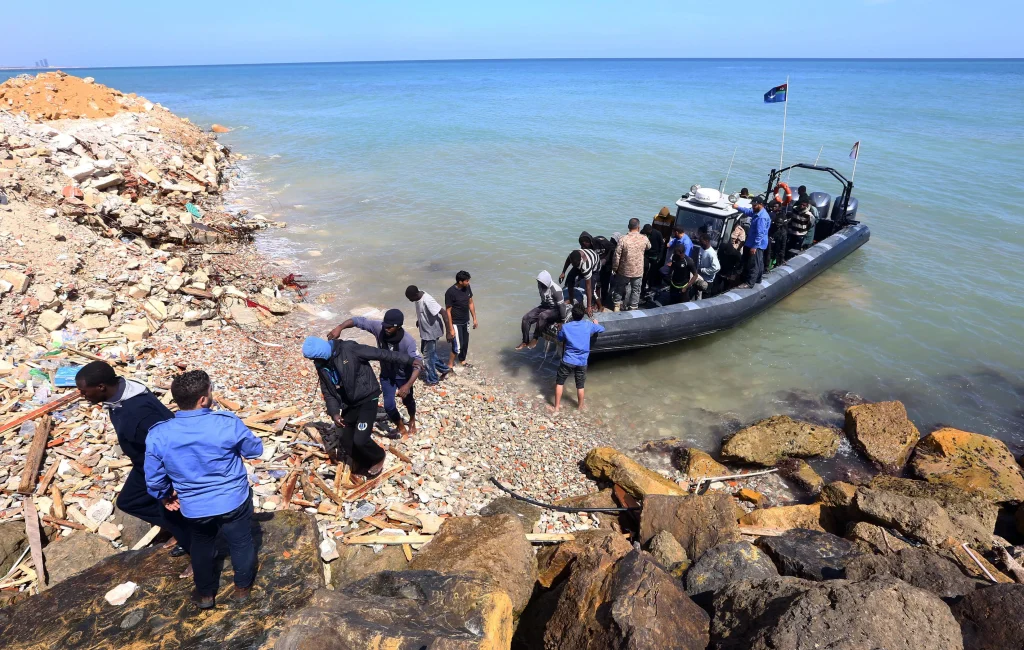
International cooperation on migration management has focused heavily on interception at sea and containment within Libya. This has increased the number of people returned to Libyan territory after attempted crossings.
However, returns to Libya place migrants back into environments where protection systems remain weak and fragmented. Humanitarian organizations have repeatedly raised concerns about the risks associated with forced returns.
This creates an operational tension: efforts to reduce irregular crossings can increase exposure to risk within Libya itself.
Security implications for Libya and the region
The migration system in Libya produces security consequences that extend beyond humanitarian concerns:
- It strengthens informal armed networks that profit from movement control
- It increases mistrust between communities and local authorities
- It places pressure on already fragmented governance structures
- It creates recurring humanitarian crises that spill into regional politics
In this sense, migration is not only a border issue but a structural component of Libya’s internal security landscape.
Libya’s migration system reflects a broader governance challenge: fragmented authority, overlapping security actors, and limited institutional control over detention and mobility.
As long as these structural conditions persist, migration will continue to intersect with insecurity, not as an external pressure alone, but as a system embedded within Libya’s internal security economy.
A more stable approach would require stronger oversight mechanisms, clearer institutional accountability, and coordinated regional frameworks that address both movement and protection.