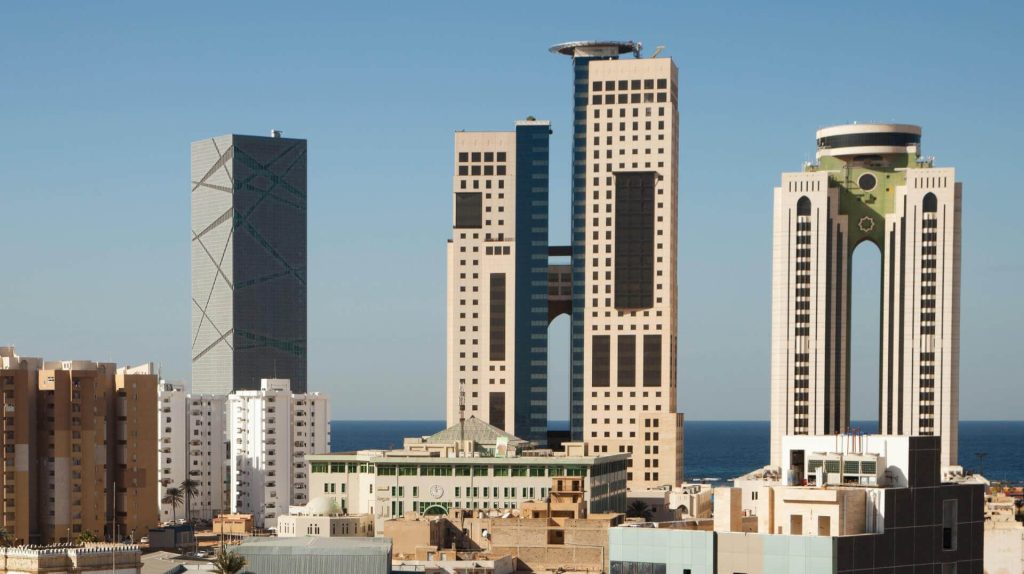
If you stand on a balcony in a high-rise in Tripoli at dusk, or walk along the Corniche in Benghazi, you can feel a pulse that didn’t exist twenty years ago. It is a vibrant, restless energy—the sound of a nation in motion. Libya’s urban centers are no longer just administrative hubs; they have become magnets for hope, survival, and ambition. Driven by a natural population boom and a steady migration from the rural interior, cities like Tripoli and Benghazi are swelling at the seams.
But beneath the glittering lights and the hum of evening traffic, there is a quiet, exhausting struggle. Our cities were largely designed for a different era, a time of smaller populations and a slower pace of life. Today, the weight of millions of daily lives is pressing down on a foundation that was never meant to hold this much. While international headlines and high-level briefs often focus on political maneuvers and security dynamics, the average Libyan is navigating a different kind of “security”: the security of a functioning life. It is the peace of mind that comes from knowing the water will flow when the tap is turned, the lights will stay on for a child’s homework, and the roads will lead home without a three-hour delay. This is the human story of Libya’s urban growth, a story of structural pressure met by human resilience.
Urban Expansion: The Unplanned Horizon
In the reporting of the Libya Security Brief, we often look at “territorial control.” In the context of urban growth, this takes on a very literal meaning. For many Libyans, “home” has moved further and further into what used to be empty desert or lush farmland on the city’s periphery. This expansion hasn’t been a neat, architectural process; it has been a scramble for space.
When a young family can’t find an affordable apartment in the heart of Tripoli, they build on the outskirts. They aren’t waiting for a municipal master plan that might take a decade to materialize; they are building their future in real-time. The result is a “reactive” landscape. Instead of laying pipes and cables and then building a neighborhood, we build the neighborhood first and then spend years pleading for the infrastructure to follow.
This unplanned growth places an immense, invisible burden on the shared systems we all rely on. In many districts, the infrastructure is performing a daily miracle just to stay functional. We see electricity substations that were built to power fifty homes now trying to power five hundred. We see narrow, two-lane roads that were intended for light local traffic now serving as major arteries for thousands of commuters. For the person living in these expanding zones, the city feels less like a planned environment and more like a work-in-progress that never quite finishes.
The Human Toll of Public Service Pressure
It is easy to use professional terms like “operational limitations” or “supply-demand gaps,” but if we humanize these phrases, we see the real faces of our neighbors. Public services are the invisible threads that hold a society together. When they fray, the quality of life drops for everyone, regardless of their political leanings.
Take, for instance, the Electricity Grid. In the peak of the Libyan summer, when the heat is a physical weight, power is not a luxury—it is a lifeline. When the grid buckles under the pressure of urban demand, it isn’t just a technical failure; it’s a mother trying to soothe a heat-exhausted baby. It’s a shopkeeper watching his refrigerated stock spoil. It’s a student sitting by the blue light of a smartphone, trying to finish a degree that represents their only way out of poverty.
The same applies to Water and Waste Management. Water is the most sacred resource in our region. As cities grow, the pressure on the Man-Made River and local wells becomes a source of daily anxiety. In newer districts, the lack of a formal sewage system means families have to rely on private tankers and septic pits—a solution that is both expensive and a long-term risk to the groundwater we all drink. When we talk about “infrastructure strain,” we are really talking about the dignity of the Libyan household. A city that cannot manage its waste or provide clean water is a city that is asking its citizens to live in a state of permanent emergency.
Institutional Coordination: The Bureaucratic Maze
From a professional governance perspective, the biggest hurdle to fixing these problems is the distribution of power. In Libya, there is a profound “coordination gap” between the national government and the local municipalities.
If you are a resident in a suburb of Benghazi and a major water pipe bursts, who do you call? The answer is often a confusing maze. The local municipality is your neighbor; they see the water flooding the street, and they hear your complaints. But all too often, the municipality doesn’t have the budget or the legal authority to fix the problem. They have to wait for a central ministry in Tripoli or a regional authority to approve the funds and send the engineers.
This creates a sense of “governance fatigue.” To a human living in a growing city, it feels like the system is designed to avoid responsibility rather than solve problems. Municipal leaders are often left as the “face” of failure, despite having very few tools to succeed. To fix our cities, we must bridge this gap. We need a system where the people who live in the city have a direct say in how its resources are spent. Humanizing governance means making it local, transparent, and—most importantly—responsive.
The Economic Pulse and the Cost of Growth
Urban growth isn’t just about buildings; it’s about the economy of the street. Our cities are the engines of Libya’s non-oil economy. Every new district represents thousands of small businesses—cafés, car repair shops, grocery stores, and tech startups.
However, the pressure on public services acts as a “hidden tax” on these businesses. If a bakery has to buy a private generator and pay for trucked-in water, the price of bread goes up. If a delivery driver spends three hours a day stuck in traffic because the road network hasn’t expanded, the cost of goods increases.
When we talk about “Urban Stability” in the Libya Security Brief context, we must recognize that economic frustration is a primary driver of unrest. A city that is too expensive or too difficult to live in creates a generation of disillusioned youth. If the city doesn’t work for them, they lose faith in the institutions meant to lead them. Conversely, a city that invests in its infrastructure is investing in its people’s creativity. When the lights stay on and the roads are clear, the Libyan entrepreneur can stop worrying about survival and start focusing on innovation.
Implications for Long-Term Stability: The Resilience of the City
We often mistake “stability” for the absence of war. But true, human stability is the presence of a reliable life. A city that provides for its people is a city that is resistant to conflict.
When a community has clean parks, reliable transport, and functional schools, they have something to lose. They become the primary defenders of their neighborhoods. On the other hand, a city that feels like a “pressure cooker”—where every day is a fight for basic resources—becomes a breeding ground for tension.
Improving our urban planning isn’t just a technical job for engineers; it is a vital part of our national security strategy. We need to move from “reactive” governance—where we only fix things when they break—to “anticipatory” governance. We need to look at the birth rates, the migration patterns, and the climate data, and build the Libya of 2040 today.
Conclusion
The trajectory of Libya’s urban growth is a testament to the resilience of our people. Despite everything the last two decades have thrown at us, we keep building. We keep moving toward the light of the city. We keep hoping for a better life for our children.
But resilience shouldn’t be an excuse for poor planning. We cannot ask our citizens to be “heroic” forever just to get through a normal day. As Tripoli and Benghazi, continue to stretch toward the horizon, our focus must return to the human center. We need to empower our local leaders, simplify our bureaucracies, and invest in the “invisible” infrastructure of water, power, and roads.
A city should be a place that supports the dreams of its inhabitants, not a place that exhausts them. The future of Libya is being written every day in the streets of our major cities. Let us ensure that the story we write is one of dignity, coordination, and a home that truly works for everyone. By treating urban planning as a human priority rather than just a budget line, we can turn our growing pains into the foundation of a lasting peace.