The Sahel has become one of the most volatile security theatres in the world. Stretching across the semi-arid belt south of the Sahara, the region now faces a persistent and expanding wave of violent extremism that continues to destabilize states, displace populations, and reshape regional security dynamics. According to the Center for Preventive Action’s Global Conflict Tracker, extremist violence in the Sahel is not only intensifying but also evolving into a transnational threat that increasingly connects West Africa’s coastal states with the wider international system.
What began as localized insurgencies in northern Mali over a decade ago has transformed into a multi-front conflict involving jihadist coalitions, fragmented state militaries, foreign interventions, and armed criminal networks. The result is a security environment where state authority is weakening across vast rural territories, and extremist organizations are exploiting governance gaps at unprecedented scale.
Expanding extremist networks and shifting alliances
At the center of the current crisis are two dominant jihadist formations: Jama’at Nusrat al-Islam wal-Muslimin (JNIM), linked to al-Qaeda, and the Islamic State in the Greater Sahara (ISGS), aligned with ISIS. These groups have reshaped the geography of violence across Mali, Burkina Faso, and Niger, extending their reach into border zones and increasingly into coastal West Africa.
JNIM has consolidated influence across central and northern Mali, frequently conducting coordinated attacks on military positions and supply corridors. ISGS, while more territorially constrained due to clashes with rival factions, remains active in the tri-border Liptako-Gourma region. These groups are no longer isolated insurgencies but adaptive networks capable of shifting alliances, exploiting local grievances, and embedding themselves in cross-border criminal economies.
More recently, fragmentation and competition between jihadist factions have not reduced violence but rather intensified it. Localized rivalries often overlap with ethnic tensions and state counterinsurgency operations, creating a fluid and unpredictable battlefield.
A regional crisis fueled by governance collapse
The roots of violent extremism in the Sahel lie less in ideology alone and more in long-standing structural weaknesses. Weak governance, political instability, and limited state presence in rural areas have created ideal conditions for armed groups to expand.
Many Sahelian governments struggle with legitimacy deficits, corruption, and limited administrative capacity outside capital cities. In vast rural regions, state services such as education, healthcare, and security are either minimal or absent. Extremist groups have exploited this vacuum by positioning themselves as alternative authorities, offering rudimentary justice systems, dispute resolution mechanisms, and protection in exchange for loyalty or taxation.
Military coups in Mali, Burkina Faso, and Niger over recent years have further complicated the situation. While juntas justified their takeovers as necessary to restore security, extremist violence has continued to spread, suggesting that regime change alone has not addressed the underlying drivers of conflict.
Humanitarian consequences and mass displacement
The humanitarian consequences of the Sahel crisis are severe. Millions of people have been displaced across the region, with entire communities forced to flee due to attacks, counterinsurgency operations, and intercommunal violence. The Liptako-Gourma region alone has become one of the fastest-growing displacement zones in the world.
Food insecurity has also intensified, driven by both conflict disruption and climate stress. Rising temperatures—warming at roughly 1.5 times the global average—have degraded agricultural land and reduced water availability. This has increased competition between farming and pastoral communities, further fueling local conflicts that extremist groups often exploit for recruitment.
Humanitarian agencies have repeatedly warned that access constraints, particularly in areas under militant control or heavy military operations, are worsening civilian vulnerability. Aid convoys are frequently targeted or restricted, and humanitarian personnel face increasing security risks.
The international response: fragmented and evolving
International efforts to contain violent extremism in the Sahel have undergone significant transformation over the past decade. France’s military withdrawal from Mali and the restructuring of UN peacekeeping missions have left a security vacuum that regional forces and new external partners are attempting to fill.
The withdrawal of international forces has coincided with a rise in attacks in several hotspots, particularly in central Mali and northern Burkina Faso. In response, Sahelian states have increasingly turned to new security partnerships, including Russian-linked military contractors and ad hoc regional coalitions.
However, these arrangements have produced mixed results. While some governments report tactical gains in specific areas, extremist groups have simultaneously expanded their operational reach, adapting to new battlefield conditions and dispersing into more remote regions.
At the regional level, initiatives such as the G5 Sahel Joint Force and the Multinational Joint Task Force have struggled with funding constraints, coordination challenges, and political fragmentation among member states.
Recent escalation and strategic implications
The most recent phase of violence underscores the deteriorating trajectory of the conflict. In 2026, coordinated attacks in Mali reportedly involved both jihadist groups and separatist movements, targeting military installations and high-level political figures. One of the most notable incidents involved the killing of Mali’s defense minister during a wave of coordinated strikes, highlighting the growing audacity and capability of armed groups operating in the region.
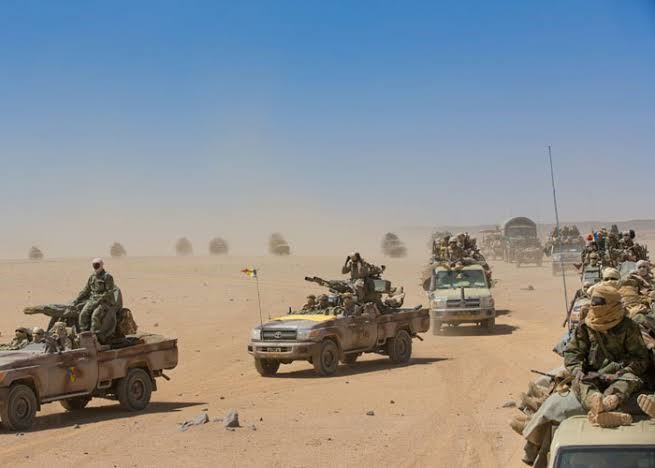
These developments suggest a shift from rural insurgency to semi-conventional confrontation in some areas, particularly where armed groups have gained territorial footholds or disrupted state supply lines. Analysts increasingly warn that parts of northern Mali are approaching conditions resembling fragmented governance, where non-state actors exercise de facto control.
At the same time, violence is spilling across borders into Niger, Burkina Faso, and coastal West African states such as Benin and Togo, raising fears of a broader regional contagion.
A conflict with global repercussions
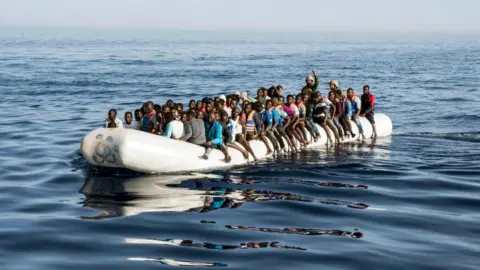
The Sahel crisis is no longer a contained regional insurgency. It is now a major node in global security dynamics. The region has become a transit hub for arms, migrants, and illicit trade routes connecting North and West Africa with Europe and the Atlantic.
European policymakers increasingly view instability in the Sahel through the lens of migration pressure and counterterrorism risk. Meanwhile, global powers compete for influence in a region rich in strategic minerals, including uranium, gold, and lithium.
The convergence of extremist violence, state fragility, climate stress, and foreign intervention has created a complex conflict system that is resistant to conventional military solutions.
Conclusion: a conflict entering a new phase
Violent extremism in the Sahel is entering a more entrenched and fragmented phase. Rather than declining under military pressure, extremist networks are adapting, decentralizing, and expanding across borders. Meanwhile, state responses remain inconsistent, often constrained by political instability and limited institutional capacity.
Without sustained investment in governance, economic development, and regional coordination, the cycle of violence is likely to persist—and potentially expand beyond the Sahel into coastal West Africa.
The Sahel is no longer just a regional security concern. It is a long-term geopolitical fault line with implications for Africa, Europe, and the international security architecture as a whole.