Every year, Africa Day marks the founding of the Organization of African Unity in 1963 and the long political project that later evolved into the African Union. The anniversary usually brings speeches, flags, and symbolic declarations. This year, however, the moment carries deeper significance for Libya.
For decades, Libya stood at the center of African political integration. Tripoli financed continental institutions, hosted major diplomatic summits, and pushed aggressively for African unity long before many regional powers embraced the idea. Today, as Libya struggles with fragmentation, rival governments, foreign intervention, and institutional paralysis, the country’s African legacy has faded from international discussion.
That absence distorts the region’s political history.
Libya did not merely participate in the creation of modern African institutions. It helped shape their direction. The country’s role in the transformation from the Organization of African Unity to the African Union remains one of the most consequential diplomatic chapters in modern African politics.
Understanding that history matters today because Libya once viewed Africa not as a secondary theater, but as a strategic horizon.
The Sirte Declaration Changed the Continent
The modern African Union traces much of its institutional origin to Libya.
In September 1999, African leaders gathered in Sirte, Libya, for an extraordinary summit that produced the Sirte Declaration. The document called for the creation of a stronger continental framework capable of accelerating political integration, economic cooperation, conflict resolution, and collective development.
The declaration laid the groundwork for the African Union, which formally launched in 2002.
At the time, many African governments viewed the Organization of African Unity as weak, bureaucratic, and incapable of responding effectively to civil wars, coups, economic crises, or external pressure. The post-Cold War period exposed structural weaknesses across the continent. Rwanda’s genocide, civil conflicts in West Africa, and mounting debt crises intensified calls for institutional reform.
Libya seized that moment. Tripoli used its financial influence, diplomatic reach, and ideological positioning to push for a more ambitious continental project. Libya promoted stronger African institutions, deeper economic integration, and expanded political coordination between African states.
Critics often reduced Libya’s African strategy to the personal ambitions of Muammar Gaddafi. That interpretation oversimplified the issue. Libya’s African orientation also reflected geography, economics, and strategic necessity.
Libya sits between the Mediterranean, the Sahel, North Africa, and sub-Saharan Africa. Its security environment has always depended on stability across the Sahara. Migration flows, arms trafficking, militant movements, and trade networks move through the same corridors today. Tripoli understood that reality decades ago.
Libya’s African Pivot Was Strategic
During the 1990s, Libya faced heavy Western sanctions and diplomatic isolation following the Lockerbie crisis. As relations with Europe and the United States deteriorated, Tripoli accelerated its engagement across Africa.
Libya invested heavily in African infrastructure, telecommunications, banking, aviation, and energy projects. Libyan state funds financed hotels, development initiatives, and regional ventures across multiple African states. Libya also supported mediation efforts and peace negotiations in several conflicts.
That strategy expanded Libya’s political influence far beyond North Africa.
At the same time, Tripoli cultivated an image as a continental power rather than a narrowly Arab state. Libya hosted African summits, backed regional institutions, and promoted visa-free movement and economic integration long before those ideas gained broader international support.
Not every African government embraced Libya’s vision. Many leaders distrusted Gaddafi’s political style and feared Libyan interference. Others questioned the feasibility of rapid continental integration.
Still, Libya succeeded in pushing African unity from rhetoric into institutional planning. The African Union emerged directly from that political momentum.
2011 Changed Libya’s Position in Africa
The collapse of the Libyan state in 2011 fundamentally altered Libya’s African role.
Before the NATO-backed uprising, Libya acted as a regional financier and political actor with influence across the Sahel and sub-Saharan Africa. After 2011, Libya turned inward. Internal conflict consumed the state. Rival governments competed for legitimacy. Armed groups filled institutional vacuums. Foreign powers expanded their influence inside the country.
The consequences extended far beyond Libya itself.
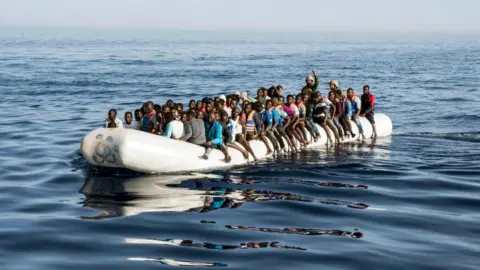
Weapons from Libya spread across the Sahel after the collapse of state security structures. Militancy expanded in Mali, Niger, and surrounding regions. Smuggling routes intensified. Human trafficking networks grew more sophisticated. Border control weakened across large sections of North Africa and the Sahel.
Libya no longer shaped African security dynamics from a position of strength. Instead, Libya became one of the drivers of regional instability.
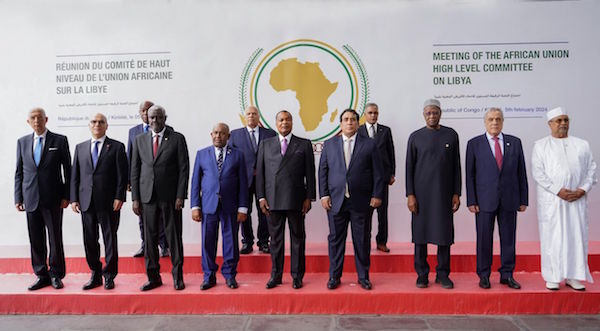
That transformation weakened the African Union’s influence in Libya as well. The United Nations gradually became the dominant external framework for mediation and political negotiations. European states prioritized migration and energy concerns. Turkey, Russia, the UAE, Egypt, and other powers expanded their direct involvement inside Libya’s conflict landscape.
African diplomacy lost ground.
Why Libya’s African Identity Still Matters
Despite years of instability, Libya’s African dimension still carries strategic importance.
First, Libya remains geographically tied to the Sahel. No long-term Libyan stabilization strategy can succeed without addressing southern border security, cross-border trafficking, migration flows, and regional militant activity.
Second, Africa’s economic landscape continues to shift rapidly. Infrastructure corridors, mineral supply chains, energy partnerships, and trade integration increasingly shape continental politics. Libya’s energy wealth and geographic position could still give the country a meaningful role inside emerging African economic networks.
Third, the African Union continues searching for stronger influence in conflict mediation across the continent. Libya remains one of the clearest examples of how external powers displaced African-led diplomacy during a major regional crisis.
That issue still resonates politically across Africa. Many African policymakers view the Libyan conflict as a warning about foreign intervention, state collapse, and the long-term consequences of externally managed political transitions.
Libya therefore occupies a unique symbolic position inside African political discourse. The country represents both the ambition of continental integration and the dangers of institutional collapse.
Africa Day Carries a Different Meaning for Libya
For many countries, Africa Day functions largely as a symbolic diplomatic anniversary. For Libya, the day carries a more complex meaning.
It reflects a period when Libya pursued continental influence through diplomacy, investment, and institution-building rather than fragmentation and militia politics. It also highlights how dramatically Libya’s regional position has changed over the past fifteen years.
Today’s Libya often appears in international headlines because of migration crises, militia clashes, oil disruptions, or foreign interference. Yet Libya once occupied a central role in one of Africa’s largest political projects.
That history should not disappear from the conversation.
The African Union itself stands as part of Libya’s diplomatic legacy. The Sirte Declaration remains one of the foundational documents behind the AU’s creation. Few countries can claim such direct influence over the institutional architecture of modern Africa.
Libya’s future role on the continent remains uncertain. Political fragmentation continues. Foreign actors still compete aggressively for influence. National institutions remain divided. Security conditions remain fragile in several regions. But geography does not change.
Libya will remain tied to Africa’s political and security future whether its leaders actively shape that future or not. The question now concerns whether Libya can eventually reclaim a constructive continental role — or whether the country will continue to serve mainly as an arena for competing external powers.
Africa Day offers a reminder that Libya once helped build continental institutions rather than merely struggle against institutional collapse at home.