The destruction of a Russian Navy corvette at Benghazi’s naval facilities has brought Libya into sharper focus as a potential arena for the wider confrontation between Russia and Ukraine. While Kyiv has now claimed responsibility for the operation, the implications extend well beyond the loss of a single warship, raising questions about foreign military activity, the security of Libyan ports and the consequences of the country’s continuing political and institutional division.
An attack on a Russian naval vessel in Benghazi has exposed a new dimension to Libya’s increasingly complicated security environment, with the consequences potentially extending far beyond the country’s Mediterranean coastline.
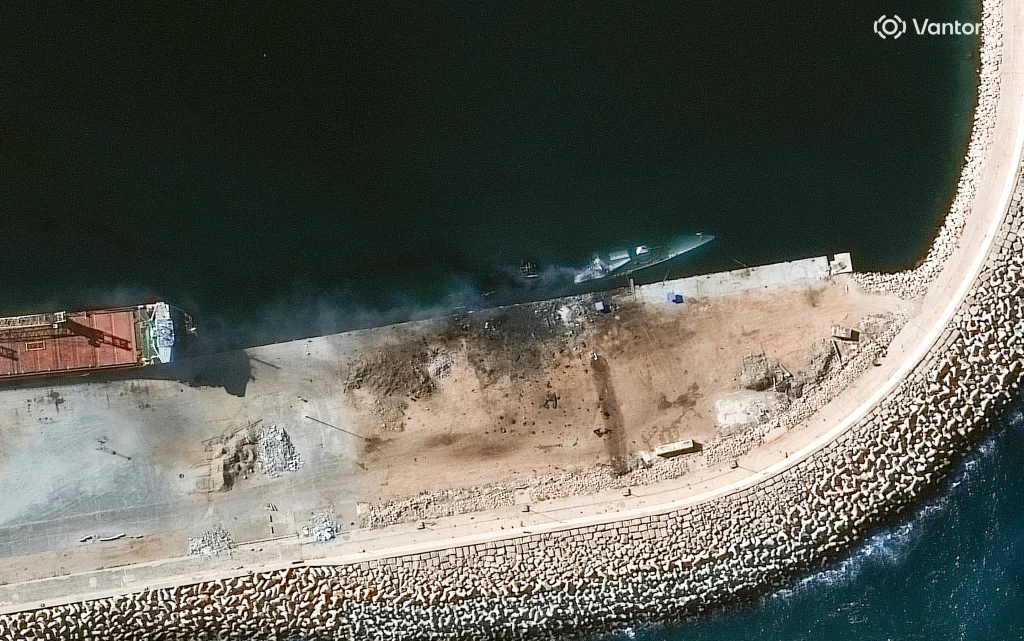
In the early hours of 22 November, an explosion struck a Russian Navy vessel docked at Benghazi’s naval facilities in eastern Libya. The resulting fire caused extensive damage, with satellite imagery subsequently showing the vessel capsized and largely submerged.
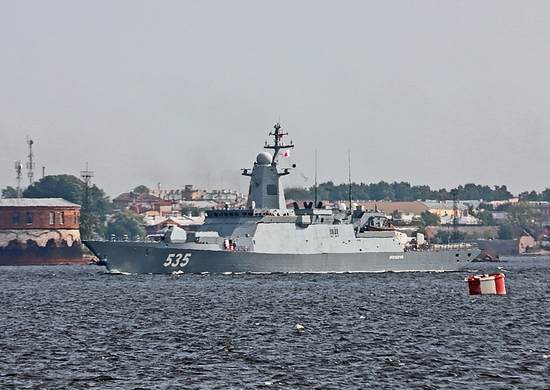
The ship was identified as the Merkury, a Russian Navy corvette commissioned in 2023. What initially appeared to be a suspected drone attack became an acknowledged Ukrainian military operation a day later, when President Volodymyr Zelensky confirmed that Ukrainian forces had targeted the vessel using unmanned naval systems.
The incident is significant for more than its military implications. Benghazi is a centre of Russia’s relationship with eastern Libya, making the attack a direct challenge to the security arrangements surrounding one of Moscow’s important regional partnerships.
It also raises a more uncomfortable question for Libya: to what extent can a country with divided political and military institutions prevent its territory, ports and infrastructure from becoming part of conflicts involving external powers?
Ukraine confirms attack on Russian corvette Merkury in Benghazi
The eastern-based Libyan authorities initially described the explosion as a suspected drone attack, stating that preliminary investigations indicated that the Russian vessel had been struck while docked at Benghazi port.
According to the administration, the ship was returning to Russia and had stopped in Benghazi to refuel and take on supplies under existing maritime cooperation arrangements.
The scale of the damage became clearer through satellite imagery supplied by Vantor. Images taken on 22 November showed the vessel heavily damaged, with most of its structure submerged and only part of its bow remaining visible above the water.
On 23 November, Zelensky confirmed that Ukraine had carried out the operation and a video was released from the Ukrainian Navy showing the attack.
According to the Ukrainian president, seven Ukrainian-made naval drones were deployed against Russian military assets off the Libyan coast. He said the operation resulted in the sinking of the Merkury, which he described as one of Russia’s newer naval vessels, commissioned in 2023.
Zelensky also claimed that a Russian Ka-27 helicopter was destroyed alongside the corvette and that a second target, the Russian dry cargo vessel MV Angara, was successfully hit.
Ukraine’s Security Service (SBU) subsequently described the operation as a special mission targeting Russian military assets. Its account stated that the unmanned vessels were transported to the operational area aboard a so-called mother ship before being launched towards their targets.
The Ukrainian claims have not yet been independently verified in their entirety. However, the satellite imagery provides substantial visual evidence of the damage sustained by the Merkury.
The eastern Libyan administration has called for a joint investigation with Russia to establish the circumstances and origin of the attack.
Why was a Russian Navy corvette in Benghazi?
The presence of the Merkury in Benghazi is central to understanding the wider significance of the incident.
Russia has steadily expanded its political and military relationships in eastern Libya, building particularly close ties with the forces commanded by Khalifa Haftar and the authorities operating from the east.
Since Libya’s political division deepened following the collapse of the previous political order, Moscow has viewed eastern Libya as an important partner in maintaining its regional influence.
For Russia, Libya offers a strategically positioned relationship in North Africa, close to the Mediterranean’s central shipping routes and within reach of important European, African and Middle Eastern theatres.
Its relationship with eastern Libya has also provided opportunities to maintain military and logistical connections beyond its immediate neighbourhood.
The eastern administration’s explanation that the Merkury had stopped to refuel and resupply while returning to Russia suggests that Benghazi was being used as a logistical point for Russian naval movements.
Although the full circumstances of the vessel’s visit remain unclear, the incident raises questions about the extent of Russian naval access to Libyan facilities and the arrangements governing that access.
It also highlights the potential vulnerability of military assets operating from facilities situated within a country experiencing prolonged political fragmentation.
For Moscow, the destruction of the Merkury is therefore not simply the loss of a naval vessel. It raises questions about the reliability and security of an important overseas partnership.
Could western Libya have played a role in the operation?
Perhaps the most politically sensitive aspect of the incident concerns reports about the possible launch location of the Ukrainian naval drones.
Initial reporting by the Associated Press, citing Libyan military officials, indicated that several Ukrainian sea drones may have been launched from a base operated by Ukrainian forces in western Libya.
The eastern authorities have subsequently called for an investigation into whether Ukrainian military personnel or facilities were present in the country and whether locations in western Libya were used to prepare and launch the unmanned vessels.
Zelensky’s confirmation established Ukrainian responsibility for the operation, but did not publicly establish the precise launch location or identify any Libyan authorities involved in facilitating it.
The SBU’s description of a mother ship being used to transport and launch the drones provides some insight into the operation’s logistics, but does not independently establish where that vessel was positioned or who supported its deployment.
These distinctions matter.
Libya’s internationally recognised Government of National Unity, based in Tripoli and led by Abdul Hamid Dbeibah, has warned against the use of Libyan territory, ports and territorial waters for military or logistical activities connected to external conflicts.
The government has also argued that arrangements involving foreign forces outside the state’s official framework threaten national sovereignty.
There is currently insufficient publicly available evidence to conclude that the Tripoli government authorised or directly supported the attack.
Nevertheless, the possibility of foreign military activity operating from western Libya will place additional pressure on an already complicated political and security environment.
For the eastern authorities, establishing whether Libyan territory was used to facilitate the operation is likely to become a central part of their investigation.
What does the attack mean for Libya’s divided authorities?
The incident also exposes the complications created by Libya’s competing political and military structures.
For the eastern authorities, the attack represents a direct security challenge involving a foreign military partner operating from facilities under their control.
Their relationship with Russia has developed over several years, encompassing political engagement, military cooperation and logistical arrangements. An attack on a Russian warship in Benghazi therefore raises questions about the security of those arrangements and the extent to which the eastern authorities can protect foreign military assets operating within their sphere of influence.
For the Tripoli-based government, the incident presents a different set of concerns.
Although the government has not been established as having any involvement in the operation, the possibility that foreign military assets or personnel could be operating from western Libya creates an uncomfortable political and diplomatic problem.
It risks further complicating relations between the rival authorities and could encourage additional foreign involvement in Libya’s internal security arrangements.
More broadly, the incident demonstrates how the country’s institutional division can create opportunities for external powers to pursue military and strategic objectives through relationships with competing Libyan actors.
This is precisely the type of vulnerability that a unified national security and military structure would be expected to address.
The UN warns against turning Libya into a battleground for foreign conflicts
The United Nations Support Mission in Libya (UNSMIL) has expressed serious concern over the attacks at Benghazi port and off the city’s coast.
In a statement published on 22 November, the mission called for an immediate, independent and transparent investigation to establish the facts and hold those responsible accountable.
It also stressed that Libya’s sovereignty, territorial integrity and the security of its citizens and assets must be respected.
Perhaps most importantly, UNSMIL warned against actions or rhetoric that could draw Libya into wider regional and international confrontations.
The mission reiterated that Libya cannot afford to become a battleground for foreign conflicts, while highlighting the need to reunify national institutions and strengthen their ability to safeguard the country’s sovereignty and security.
The statement reflects a broader concern about Libya’s exposure to international competition.
The country has relationships with several external military and political actors, but its fragmented institutional structure makes it difficult to establish consistent national oversight over foreign security arrangements.
The attack in Benghazi has brought that problem into particularly sharp focus.
A second vessel raises further questions about maritime security
The incident was not limited to the Russian corvette.
Ukrainian President Zelensky also claimed that the Russian dry cargo vessel MV Angara was struck during the operation. According to Kyiv, the ship had been used to transport Russian military equipment and weapons.
Ukraine’s Security Service described the vessel as part of Russia’s military logistics network, including supply routes associated with Syria and Libya.
Separately, Libyan authorities reported that a merchant vessel was struck by an explosive-laden sea drone off Benghazi. Reports identified the vessel as Maltese-flagged, while the Ukrainian account identified its second target as the MV Angara.
It remains unclear whether the Maltese-flagged vessel described in initial Libyan reporting was the same ship Ukraine identified as the MV Angara, or whether the reports concern separate targets. The identities and sequence of the maritime incidents require further clarification.
The distinction is important because an attack involving a commercial vessel raises additional concerns about civilian maritime traffic and the safety of international shipping.
The possibility of further drone activity off Libya’s coast also presents a challenge for the country’s maritime security forces.
Libya’s coastline is strategically important, not only for its energy exports but also for commercial shipping and regional connectivity. Any perception that its ports and surrounding waters are vulnerable to attacks connected to external conflicts could have wider consequences.
Could Russia strengthen its military presence in eastern Libya?
One of the most important questions following the attack is how Moscow will respond.
Russia has invested considerable diplomatic and military effort in developing its relationship with eastern Libya, particularly through its engagement with Khalifa Haftar and the forces under his command.
The relationship provides Moscow with strategic opportunities in the central Mediterranean and a broader regional presence connecting North Africa, the Sahel and the Middle East.
The loss of the Merkury could encourage Russia to reconsider the security arrangements surrounding its naval movements and logistical activities in Libya.
Possible areas of concern include the protection of visiting vessels, surveillance of maritime approaches, port security and coordination with eastern Libyan forces.
However, there is currently no confirmed indication that Russia intends to establish additional military facilities or significantly expand its presence in response to the attack.
Any such move would also need to be considered against the wider strategic environment, including Russia’s military commitments elsewhere and its need to maintain access to Mediterranean routes.
For eastern Libya, the incident creates a difficult balance: maintaining a valuable relationship with Moscow while avoiding further exposure to the consequences of the Russia-Ukraine conflict.
Libya’s strategic position is becoming increasingly complicated
The attack on the Merkury illustrates a broader problem facing Libya.
Despite years of international efforts to stabilise the country, its political and military institutions remain divided. External powers continue to maintain relationships with different Libyan actors, often pursuing interests that extend beyond Libya’s immediate domestic priorities.
Russia’s relationship with eastern Libya is one example. Turkey’s extensive involvement in western Libya is another.
The United States and European countries also have significant interests in Libya, particularly concerning energy security, migration, counterterrorism and regional stability.
This complex network of relationships gives Libyan authorities diplomatic and strategic opportunities. However, it also creates risks when external conflicts begin to affect the country’s territory and infrastructure.
The Benghazi attack demonstrates that military assets connected to an international conflict can become targets even when they are operating far from the conflict’s principal theatres.
It also raises questions about whether Libya’s competing authorities have sufficient coordination and institutional capacity to manage the security consequences of foreign military activity.
Without stronger national oversight, the country risks becoming increasingly exposed to decisions and confrontations that are not necessarily aligned with its own security interests.
What happens next?
Several developments will determine the longer-term significance of the attack.
First, the joint investigation announced by the eastern authorities and Russia will need to establish how the operation was conducted, where the drones originated and whether any Libyan facilities or personnel were involved.
Second, the response from Moscow will be important in determining whether the incident affects its military and logistical relationship with eastern Libya.
Third, the Tripoli government’s position will be closely watched, particularly if further evidence emerges concerning foreign military personnel or operational facilities in western Libya.
Finally, the UN’s call for an independent investigation will be important in preventing competing political narratives from further escalating tensions between Libya’s rival authorities.
The attack also raises a wider question about the security of Libyan ports and maritime infrastructure. Benghazi is unlikely to be the last Libyan location where the interests of foreign military actors intersect with the country’s internal divisions.
A warning about Libya’s exposure to international conflicts
The destruction of the Russian corvette Merkury is a significant military development, but its implications for Libya may ultimately prove more important than the vessel itself.
Ukraine has demonstrated an ability to strike Russian naval assets far beyond the Black Sea, while Russia’s military relationship with eastern Libya has become exposed to a conflict in which Libya is not formally a participant.
For the eastern authorities, the incident raises questions about the security of their relationship with Moscow. For the Tripoli government, it reinforces concerns about foreign military activities taking place outside a unified national framework.
For Libya as a whole, it highlights the consequences of continued institutional fragmentation.
The central issue is not simply whether Russia or Ukraine gains an advantage from the incident. It is whether Libya can prevent its territory, ports and strategic infrastructure from becoming instruments in a wider international confrontation.
Until the country develops a unified approach to foreign military cooperation and national security, incidents such as the attack in Benghazi will remain a reminder of how easily Libya’s internal divisions can become vulnerabilities in an increasingly competitive international environment.