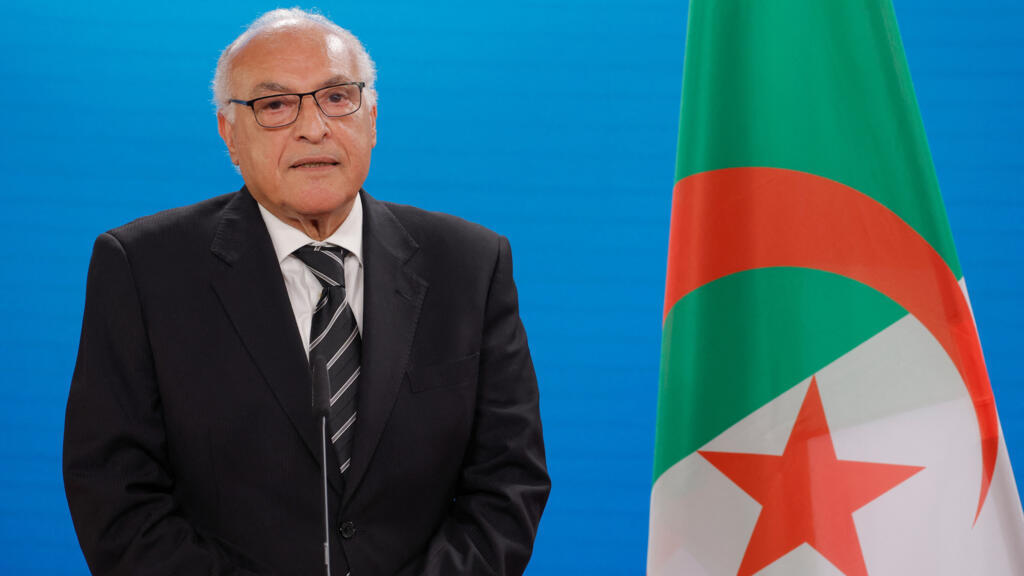
Algeria has once again urged the international community to align its efforts on Libya under a unified framework. The message reflects long-standing concerns in Algiers about fragmented diplomacy, overlapping foreign interventions, and the absence of a coherent roadmap for Libya’s political transition.
The renewed call comes at a time when Libya remains divided between competing institutions, fragile governance structures, and persistent foreign influence. While the language of “unity” is familiar in diplomatic statements on Libya, Algeria’s position highlights a deeper issue: international coordination has weakened rather than strengthened since the early post-2011 transition period.
This raises an important question. Can external actors still converge on a single Libya strategy, or has geopolitical competition permanently reshaped the conflict?
Algeria’s Strategic Doctrine: Stability Through Balance
Algeria’s approach to Libya is shaped by a consistent foreign policy doctrine built on non-intervention, respect for sovereignty, and regional stability. Unlike some regional actors that have pursued direct influence through military or ideological alignment, Algeria positions itself as a balancing power in North Africa.
Its core concern extends beyond Libya’s internal fragmentation to the wider regional spillover risks. These include cross-border insecurity, arms trafficking, militant mobility across the Sahel, and disruptions to trade and energy routes. For Algeria, Libya is not an isolated crisis but a structural security environment that directly affects North African stability.
This is why Algiers continues to emphasize unified international support rather than parallel or competing initiatives. It seeks to prevent Libya from becoming a proxy arena dominated by rival external powers and to avoid a scenario in which regional polarization hardens into permanent political division inside Libya.
Libya’s Fragmented Political Reality
Despite repeated UN-backed political processes, Libya remains institutionally split. Competing governments, shifting alliances, and localized power structures continue to undermine central authority.
The result is a governance environment defined by fragmentation rather than consolidation. Even when political agreements are reached, implementation often fails due to weak trust between actors, limited enforcement mechanisms, and the absence of unified national security institutions.
This fragmentation has created space for external actors to pursue selective partnerships inside Libya, often aligned with their own strategic priorities rather than a shared national framework. Over time, Libya’s political transition has become increasingly shaped by external alignment dynamics rather than internal consensus-building.
Competing International Agendas
Algeria’s call for unified international support reflects a persistent structural problem: the absence of a single coordinated external framework for Libya.
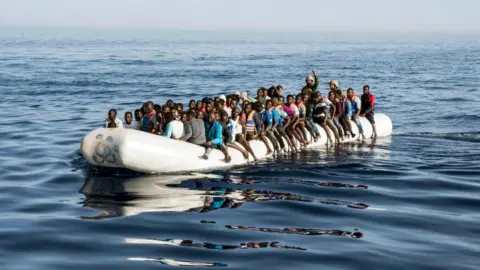
Multiple international and regional actors continue to shape Libya’s political and security landscape, but their objectives are often different. Some prioritize counterterrorism and border security, others focus on migration control across the Mediterranean, while several pursue energy access and economic influence. In parallel, various states engage through bilateral relationships with Libyan factions, reinforcing political fragmentation.
Even within broader Western engagement, approaches have varied between short-term stabilization priorities and longer-term institutional reform strategies. This lack of alignment has produced overlapping initiatives rather than a coherent strategy, weakening the overall effectiveness of international diplomacy on Libya.
Why Algeria’s Position Matters Now
Algeria’s renewed diplomatic messaging reflects growing concern that Libya’s instability is stabilizing in the wrong way. Instead of moving toward resolution, the conflict risks settling into a long-term equilibrium of division and managed instability.
This concern is driven by several developments. Libya’s divisions have become structurally embedded, with institutions in the east and west operating in parallel with limited coordination. Foreign involvement has also not meaningfully decreased, even if it has shifted from direct military intervention to political and economic influence. At the same time, regional instability across the Sahel and Mediterranean has increased the cost of continued fragmentation, making Libya’s trajectory more strategically significant than before.
For Algeria, these dynamics are especially urgent due to shared borders and direct exposure to security spillovers.
Energy, Security, and Regional Exposure
Libya’s energy sector remains central to its political economy and to broader Mediterranean geopolitics. Oil production volatility, infrastructure insecurity, and competing claims over revenue distribution continue to shape internal power balances.
At the same time, Libya sits at the intersection of migration routes, illicit trade networks, and transnational security threats. This makes it a critical node in regional stability calculations.
For Algeria, these risks are not theoretical. Instability in Libya directly affects border security, economic stability, and counterterrorism efforts across North Africa and the Sahel. This explains its consistent support for UN-led processes and resistance to fragmented or unilateral intervention frameworks.
The Limits of International Coordination
Despite repeated diplomatic efforts, international coordination on Libya remains weak. Agreements on principles such as sovereignty, elections, and institutional reunification often fail to translate into coordinated implementation.
One of the main challenges is the absence of enforcement mechanisms that can align external actors behind a single roadmap. Another is the lack of trust between key stakeholders, which leads to selective engagement and competing initiatives. Libya’s internal fragmentation further complicates this dynamic by enabling different external actors to justify engagement with different local authorities.
This creates a cycle in which internal division fuels external divergence, and external divergence reinforces internal fragmentation.
What Algeria Is Trying to Prevent
Algeria’s message reflects three core strategic concerns. It seeks to prevent Libya from sliding into permanent political division, to avoid further militarization of regional rivalries, and to contain the spillover effects of instability across the Sahel.
By calling for unified international support, Algeria is effectively advocating for a return to coordinated multilateral diplomacy. In this framework, Libya would be treated as a single political process rather than a set of competing spheres of influence.
Conclusion: A Closing Window for Consensus
Algeria’s renewed call highlights a central reality of the Libyan conflict. The challenge is no longer the absence of diplomatic frameworks but the absence of convergence between them.
Multiple actors remain engaged, but they do not act in coordination. Multiple political processes continue, but they do not converge. As a result, Libya remains trapped in a cycle of managed instability rather than meaningful transition.
Unless international actors realign their approaches, Libya risks remaining a long-term fragmentation case embedded in broader regional competition. Algeria’s warning is therefore not only about Libya itself, but about the declining effectiveness of collective diplomacy in a strategically critical region.