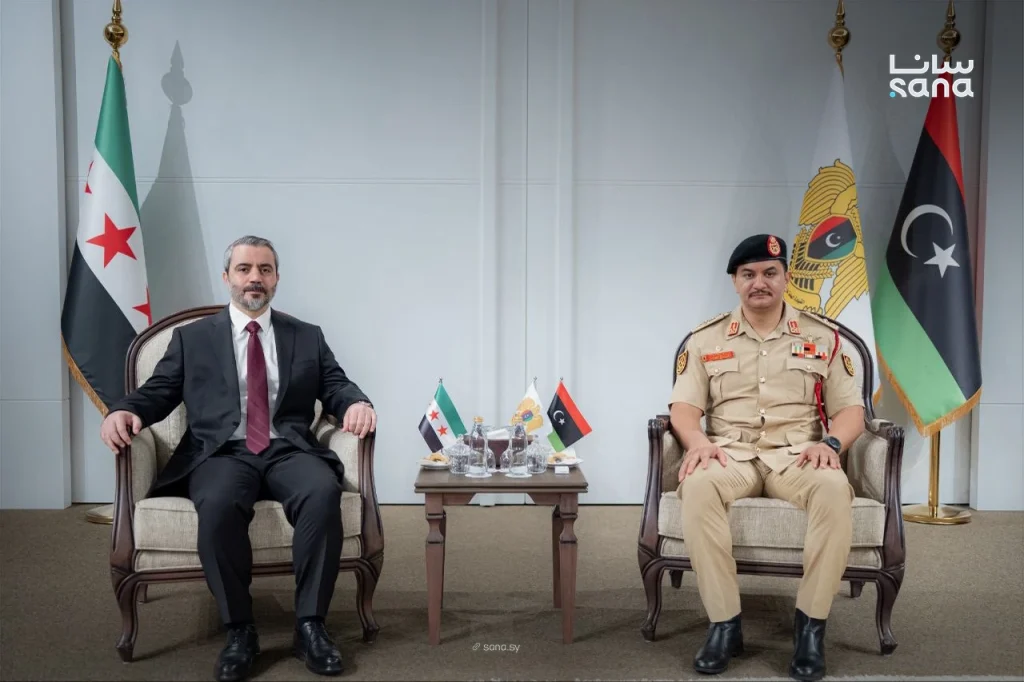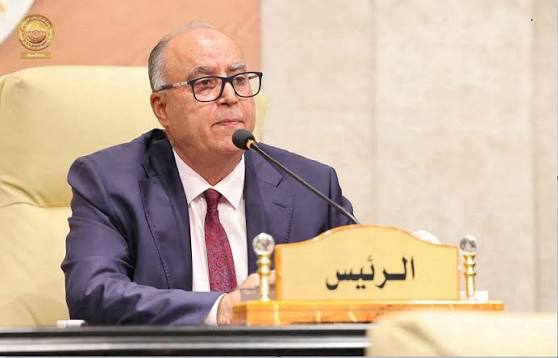
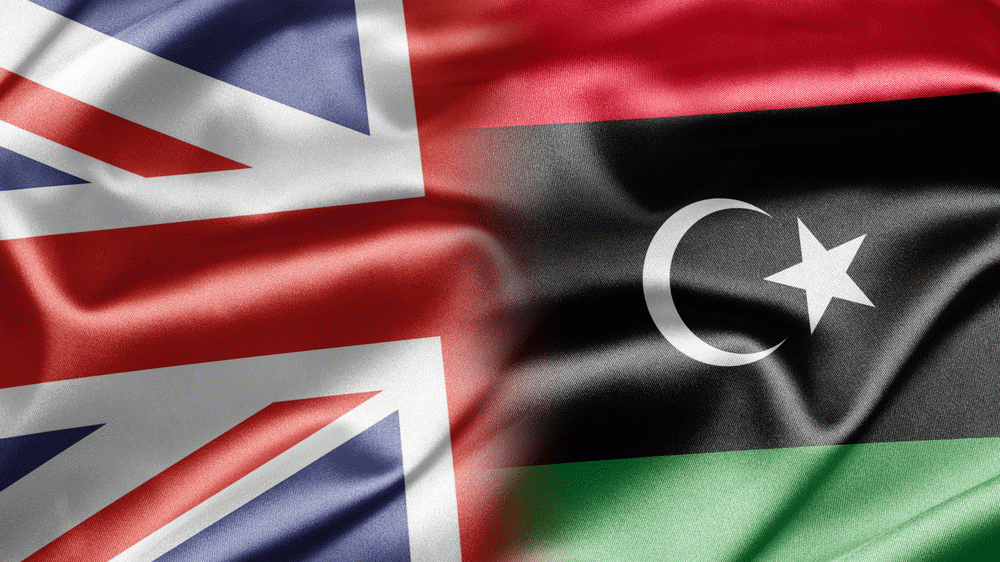
Libya and the United Kingdom have held new talks focused on advancing military training and security cooperation, signaling a fresh phase in bilateral relations at a sensitive moment for Libya’s future. While brief official statements often offer few details, the direction of travel matters. Military training usually reflects broader strategic intent, not just technical exchange.
For Libya, stronger cooperation with the UK could support long-standing efforts to improve professionalism, command standards, and institutional capacity inside the security sector. For Britain, engagement with Libya serves wider interests tied to Mediterranean stability, migration management, counterterrorism, and regional influence.
The talks also come as international competition in Libya continues to evolve. Turkey, Italy, Russia, France, and the United States all retain interests in the country. Britain now appears ready to play a more active role through training, advisory support, and institutional partnership.
If managed carefully, the relationship could help Libya strengthen state institutions rather than deepen factional divides.
Why Military Training Matters in Libya
Libya’s security crisis has never centered only on weapons or manpower. The deeper challenge has involved fragmented authority, overlapping armed groups, weak chains of command, and competing political centers.
Since 2011, successive governments have struggled to build unified national institutions. Many armed actors gained local influence, territorial control, or political leverage. That environment created a security system where loyalty often flowed through networks rather than formal structures.
Training can help address part of that problem.
Professional military education often focuses on leadership, logistics, planning, communications, discipline, technical skills, and civilian oversight. Those areas matter as much as battlefield capacity. A force with stronger command systems and clearer procedures can operate more effectively and reduce internal friction.
The UK has long experience in military education and officer development. British institutions place heavy emphasis on doctrine, leadership culture, and professional standards. If Libya draws on that expertise, it could improve the quality of future officers and specialized units.
Training also carries symbolic value. It signals that Libya seeks institutional development instead of endless militia politics. That message can reassure partners, investors, and citizens who want stronger state authority.
Still, training alone cannot solve structural political divisions. It can support reform, but it cannot replace it.
Why the UK Is Re-engaging Now
Britain has maintained diplomatic interest in Libya for years, though its role has often appeared quieter than that of some other powers. London views Libya through several strategic lenses.
First, Libya sits on Europe’s southern flank. Instability there can affect migration flows, organized crime networks, and energy markets across the Mediterranean. A more stable Libya reduces risks that spill into Europe.
Second, Libya remains an important energy state. It holds Africa’s largest proven oil reserves and significant gas potential. European governments continue to seek reliable regional energy partnerships.
Third, Britain wants influence in a region where several rivals remain active. Turkey has built strong defense ties in western Libya. Russia has sought strategic footholds through military presence and political leverage. Italy and France continue to pursue economic and security interests. The UK does not want to disappear from that landscape.
Military training offers a practical route back into relevance. It requires lower political risk than large troop deployments or overt intervention. It also builds relationships with future Libyan officers, officials, and institutions.
That model often creates long-term influence through expertise rather than force.
For Libya, cooperation with Britain also broadens its partnerships. Depending too heavily on any one foreign actor can create strategic imbalance. Diverse relationships provide more room to maneuver.
Opportunities and Risks for Libya
If Libya approaches this partnership carefully, several gains could emerge.
The first is institutional capacity. Better training can improve readiness, planning, maintenance, and operational coordination. Libya needs these basics across land, air, naval, and border units.
The second is professional culture. Modern armed forces depend on merit, discipline, accountability, and clear command authority. Those habits develop through education and repetition.
The third is international credibility. Security cooperation with respected partners can increase confidence among foreign governments and businesses considering deeper engagement with Libya.
The fourth is counterterrorism capability. Libya still faces risks from smuggling routes, extremist remnants, and remote border vulnerabilities. Specialized training could help address those threats.
Yet serious risks remain.
If training benefits one faction more than national institutions, it could worsen divisions. If political leaders treat reform as symbolism while preserving fragmented control, progress will stall. If foreign powers compete through proxies instead of institutions, Libya may repeat old cycles.
Transparency matters. Clear goals, inclusive structures, and alignment with national institutions will determine whether cooperation strengthens the state or simply empowers another network.
Libya also needs civilian leadership capable of setting priorities. Security reform should serve national stability, not narrow political agendas.
What Comes Next in 2026
The success of Libya-UK military cooperation will depend less on headlines and more on implementation. Real progress would include officer exchanges, technical programs, maritime security coordination, logistics support, medical training, and structured education pathways for Libyan personnel.
Britain could also contribute in areas beyond combat readiness. Cybersecurity, border management, engineering support, disaster response, and institution building all matter in modern defense systems.
For Libya, the larger question concerns integration. Can training programs feed into a unified national command structure? Can graduates return to institutions where merit matters? Can reforms continue regardless of political disputes?
Those questions remain unresolved.
Still, the renewed talks show that Libya retains strategic relevance and that outside powers see value in long-term engagement. Britain appears to believe that practical cooperation can deliver more than distant observation.
For Libyan authorities, this creates an opportunity. Security reform has often stalled because leaders focused on short-term political survival. External partnerships can help, but only if Libyan institutions drive the agenda.
A stable Libya needs professional forces under clear state authority. It needs secure borders, reliable command systems, and reduced dependence on armed patronage networks. Training with the UK will not achieve all of that on its own, but it could support meaningful steps in the right direction.
The broader signal is clear: international actors still view Libya as too important to ignore. As competition and cooperation both intensify in 2026, military partnerships will shape the balance of influence inside the country.